
The Supreme Court has clarified that the ongoing Air India Flight 171 crash investigation aims to determine the cause of the accident, not to assign blame.
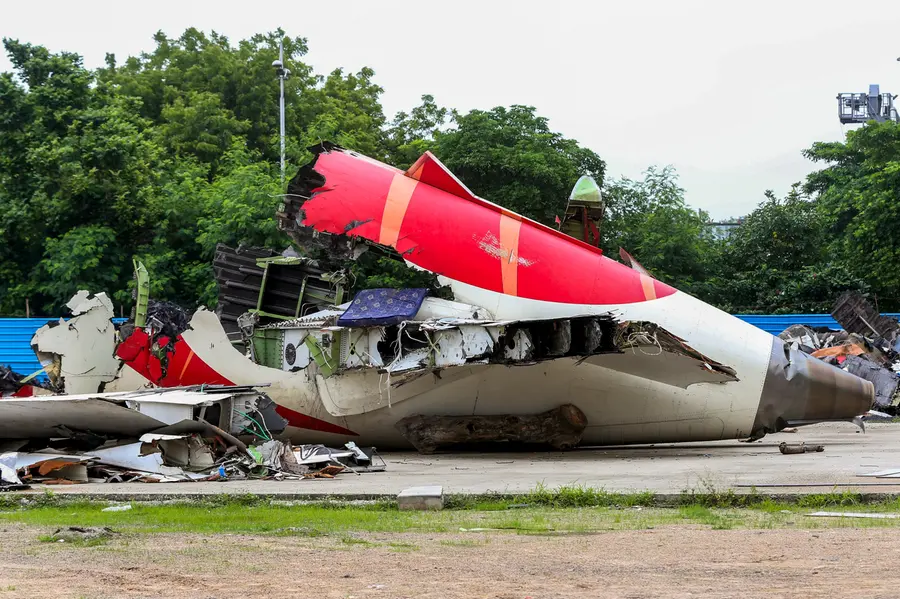
New Delhi: The Supreme Court on Thursday stated that the Aircraft Accident Investigation Bureau (AAIB) probe into the Air India Flight 171 crash at Ahmedabad Airport is not designed to hold any individual responsible, but to uncover the cause of the incident and prevent similar disasters.
A Bench of Justices Surya Kant and Joymalya Bagchi observed that the role of the AAIB, as defined under the Aircraft Act, 1934, and the Aircraft (Investigation of Accidents and Incidents) Rules, 2017, is strictly to identify the technical or procedural causes of air crashes and recommend safety measures. “The AAIB inquiry is not for apportioning blame on anyone. It is only to clarify the cause so that the same does not happen again,” Justice Bagchi said.
Also Read

The clarification came during the hearing of a petition filed by 91-year-old Pushkarraj Sabharwal, father of Commander Sumeet Sabharwal, one of the pilots who perished in the June 12 crash. The tragedy claimed 265 lives, including 241 passengers and crew, when the Boeing 787-8 aircraft bound for London’s Gatwick Airport crashed into a medical hostel complex shortly after take-off.
Mr Sabharwal, represented by senior advocate Gopal Sankaranarayanan, argued that the ongoing AAIB investigation lacked independence and had unfairly cast suspicion on his late son after media reports hinted at “pilot error.” He also sought a court-monitored probe to ensure transparency.
The petition referred to leaked preliminary findings that mentioned a cockpit exchange about a fuel switch. Solicitor General Tushar Mehta, appearing for the Union Government, said the investigation followed global standards set by the International Civil Aviation Organization (ICAO) and that “no blame is attributed to anyone.” He added that a clarification was issued soon after to prevent any misunderstanding.
Mehta further argued that India must adhere to international conventions, given that the crash involved foreign nationals, and warned that external interference could disrupt the technical investigation.
Advocate Prashant Bhushan, representing the NGO Safety Matters Foundation, countered that the law required the establishment of a Court of Inquiry in such a large-scale tragedy. He also highlighted recurring technical issues with Boeing 787 aircraft globally. Mehta dismissed these claims as “baseless panic.”
Justice Surya Kant intervened, urging both sides to keep the focus on the victims and the cause of the disaster rather than engaging in blame-shifting.
In an earlier hearing, the Supreme Court had reassured Commander Sabharwal’s father that his son was not being blamed, calling certain foreign media reports “nasty” and “misleading.” The court also noted that the preliminary AAIB report contained no mention of pilot error.
The Bench has directed the Centre to file a detailed response to the petition within two weeks, after which the matter will be heard again.
Published: 13 Nov 2025, 05:32 pm IST
Disclaimer: Kindly avoid objectionable, derogatory, unlawful and lewd comments, while responding to reports. Such comments are punishable under cyber laws. Please keep away from personal attacks. The opinions expressed here are the personal opinions of readers and not that of Mathrubhumi.