
US safety group claims the crashed Air India Dreamliner had a history of technical problems, including an in-flight fire, raising new questions in the ongoing investigation.
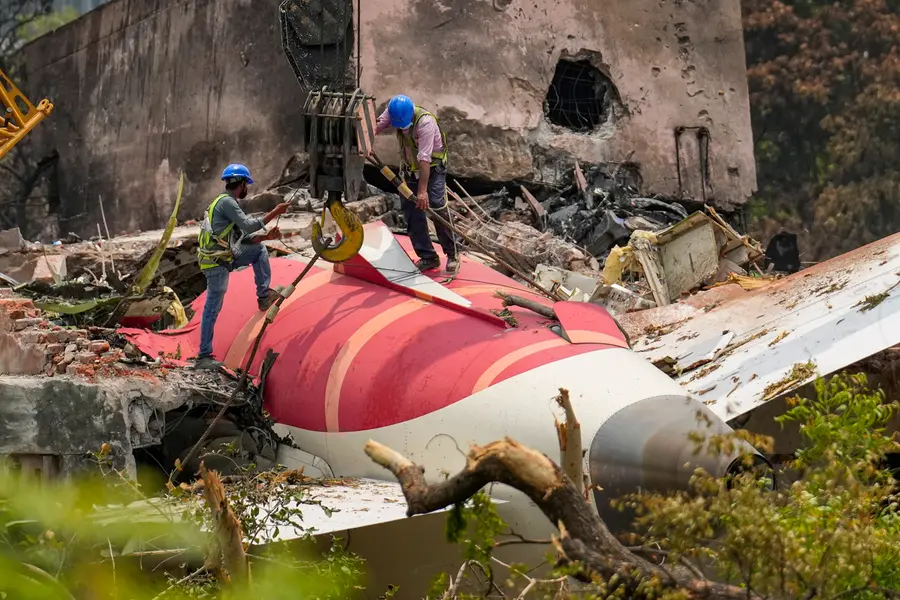
A US-based aviation safety organisation has claimed that the Air India Boeing 787 aircraft that crashed in Ahmedabad in June 2025 had a long history of serious technical problems, including an incident involving an in-flight fire, according to a BBC report.
The Boeing 787 Dreamliner crashed shortly after take-off from Ahmedabad on June 12, 2025, while operating a flight to London. The accident killed 260 people, making it one of the deadliest aviation disasters in India’s recent history.
While the official investigation is still ongoing, an interim report released in July sparked major public debate. Boeing has declined to comment on the claims made by the safety group.
Claims sent to the US Senate
The allegations were made by the Foundation for Aviation Safety (FAS), a US-based campaign group. The organisation has submitted a detailed presentation to the US Senate, stating that its findings are based on internal documents it has obtained.
The aircraft involved, registered as VT-ANB, was among the first Boeing 787 Dreamliners ever built. It completed its first flight in late 2013 and entered Air India’s fleet in early 2014.
According to the Foundation for Aviation Safety, the aircraft began experiencing technical problems from the very first day of its service. The group claims these issues were caused by a “wide and confusing variety of engineering, manufacturing, quality and maintenance problems.”
The group alleges that the aircraft suffered repeated electronic and software failures, including circuit breakers tripping frequently, wiring damage, short circuits, power loss and overheating of electrical components.
The foundation also said its concerns are not limited to this single aircraft. It cited nearly 2,000 failure reports involving other Boeing 787 aircraft in countries such as the United States, Canada and Australia.
One of the most serious incidents reportedly occurred in January 2022, when a fire broke out in the P100 power distribution panel. This panel is one of five units that distribute high-voltage electricity from the engines throughout the aircraft.
The group said the pilots received fault warnings while descending into Frankfurt Airport. After landing, the damage was found to be so severe that the entire panel had to be replaced.
India’s Aircraft Accident Investigation Bureau (AAIB) is leading the investigation into the Ahmedabad crash, with assistance from US authorities.
A preliminary report released last year included a section that drew strong attention. It stated that shortly after take-off, the fuel control switches were moved from “run” to “cut-off,” stopping fuel supply to the engines.
The report added: “In the cockpit voice recording, one of the pilots is heard asking the other why he cut off. The other pilot responded that he did not do so.”
This led some commentators to suggest possible pilot error. However, lawyers representing the victims’ families, pilots’ organisations, safety experts and aviation campaigners have strongly objected, saying that a technical fault cannot be ruled out and that focusing only on pilots may be premature.
Published: 22 Jan 2026, 02:00 pm IST
ABOUT THE AUTHOR

Related Topics
Disclaimer: Kindly avoid objectionable, derogatory, unlawful and lewd comments, while responding to reports. Such comments are punishable under cyber laws. Please keep away from personal attacks. The opinions expressed here are the personal opinions of readers and not that of Mathrubhumi.