
SC verdict reserved on presidential reference concerning timelines for Governors and President`s assent to state bills. Kerala and Tamil Nadu oppose, citing existing judgments.
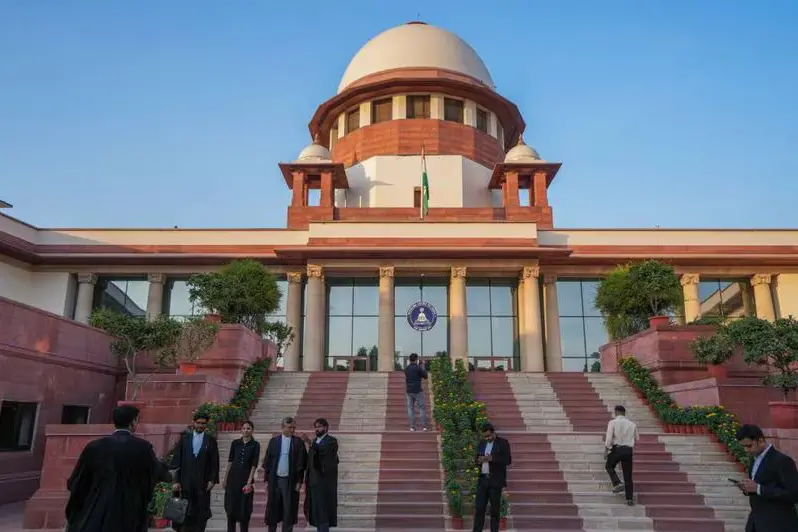
New Delhi: In a crucial constitutional face-off, the Supreme Court on Thursday reserved its verdict on a presidential reference that seeks clarity on whether the judiciary can impose fixed timelines on Governors and the President for assenting to bills passed by state legislatures.
The case holds particular weight for opposition-ruled states like Kerala and Tamil Nadu, which have long voiced concerns over Governors allegedly sitting on bills indefinitely, a move they argue disrupts federal governance and legislative intent.
The matter was heard by a Constitution Bench led by Chief Justice B R Gavai, along with Justices Surya Kant, Vikram Nath, P S Narasimha and A S Chandurkar. After 10 days of intense legal arguments, the bench concluded the hearing and reserved its opinion on the reference submitted by President Droupadi Murmu under Article 143(1) of the Constitution.
Why did Kerala and Tamil Nadu oppose the presidential reference?
Senior advocates K K Venugopal (for Kerala) and Kapil Sibal (for Tamil Nadu) argued that the President’s questions have already been answered through previous Supreme Court judgments, including the landmark April 8 verdict that mandated Governors to act on bills within a “reasonable time.”
They emphasised that the President’s reference was unnecessary, as existing rulings had already addressed the limits of gubernatorial discretion, particularly under Article 200, which outlines how a Governor must handle bills passed by the state legislature.
What's the Constitutional question at the heart of the matter?
The reference by the President seeks clarity on whether the Supreme Court can judicially enforce timelines for Governors (under Article 200) and the President (under Article 201) when dealing with bills.
The court raised a key point during the hearing:
"When the President herself is seeking reference then what is the problem? Are you really serious about contesting this?" the bench asked the opposing states.
"It is very clear that we are sitting in an advisory jurisdiction," the CJI noted.
Centre vs States:
While BJP-ruled states like Maharashtra, Madhya Pradesh, Uttar Pradesh, Odisha, Goa and Chhattisgarh defended the autonomy of the Governor and the President, arguing against any timeline being imposed by courts, opposition states, including Tamil Nadu, West Bengal, Kerala, Karnataka, Telangana, Punjab and Himachal Pradesh, warned of governors stalling democratically passed laws under political influence.
The friction was most visible in Tamil Nadu, where the state government and Governor R N Ravi have been locked in a long-standing tussle over bills pending assent. The April 8 verdict in that case had already laid down that Governors cannot delay bills indefinitely.
Published: 11 Sept 2025, 02:50 pm IST
Related Topics
Disclaimer: Kindly avoid objectionable, derogatory, unlawful and lewd comments, while responding to reports. Such comments are punishable under cyber laws. Please keep away from personal attacks. The opinions expressed here are the personal opinions of readers and not that of Mathrubhumi.
