
Abhijeet Dipke has questioned India’s Instagram crackdown as nearly 1.95 lakh social media blocking orders in five months raise concerns over censorship, transparency and public accountability.
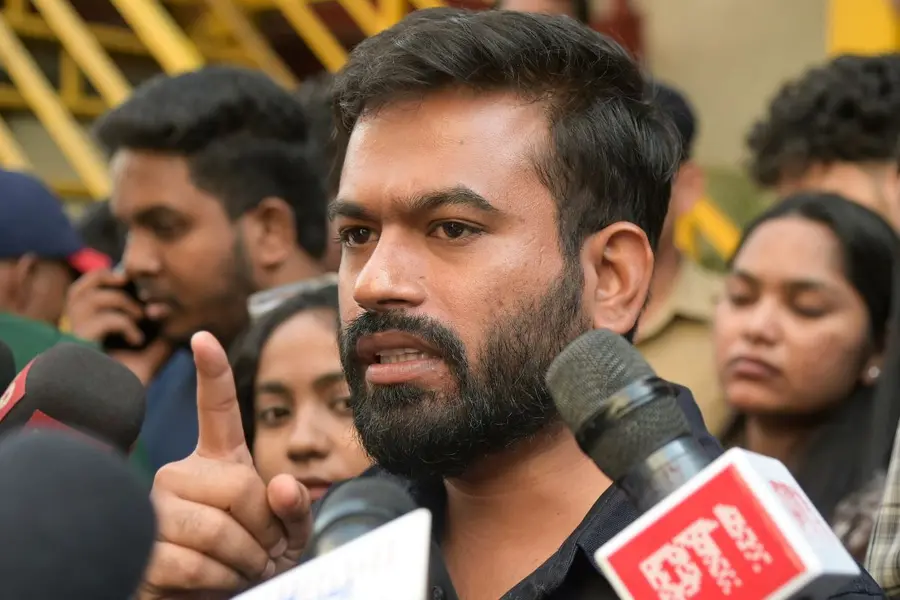
Abhijeet Dipke has criticised the crackdown on Instagram accounts and content in India, arguing that restricting social media posts will not eliminate the public grievances that prompt people to question the government.
His remarks come amid a wider debate over government-directed content restrictions, the transparency of takedown orders and the impact of censorship on freedom of expression.
In a social media post, Dipke argued that Instagram was merely a platform for people to raise questions, while the underlying issues existed beyond the digital space.
He warned that removing accounts and posts could deepen distrust rather than address the concerns being expressed online.
Dipke, associated with the satirical political platform Cockroach Janta Party (CJP), has previously raised concerns about restrictions affecting its social media presence.
In September, he alleged that Meta removed several of the platform’s Instagram posts despite them not violating its Community Guidelines.
He questioned whether raising public-interest issues and demanding government accountability was being treated as a violation of platform rules.
Social media takedowns come under scrutiny
The controversy comes against the backdrop of a significant increase in government directions seeking the removal or restriction of online content.
According to data reported by The Indian Express, government agencies issued approximately 1.95 lakh blocking orders to Instagram, Facebook and YouTube between March and July 2026.
This averaged around 1,275 orders a day, with Instagram accounting for nearly one lakh orders during the five-month period. Facebook received approximately 80,000 orders, while YouTube received nearly 15,000.
The figures require an important distinction: these are blocking orders, not a confirmed daily count of individual accounts or posts removed. A single order can cover multiple pieces of content or accounts.
The scale of the restrictions has raised questions about how platforms process takedown requests and whether they adequately review the legal basis of government directions before complying.
Reports have also highlighted Meta’s integration of its systems with the government’s Sahyog portal, which facilitates the transmission of content-removal notices.
Critics have raised concerns that automated compliance could leave insufficient room for independent legal scrutiny before content is restricted.
Journalists and content creators report restrictions
Concerns over social media restrictions have extended beyond CJP. The Internet Freedom Foundation (IFF), a digital rights organisation, said several journalists and news creators covering protests in Delhi had their Instagram posts or accounts restricted in October.
In an update published on October 23, the organisation said four accounts for which it had assisted with legal notices were restored on October 19 and 20. It also raised concerns about the lack of clear explanations identifying the specific legal provision, authority or content behind certain restrictions. These findings reflect the organisation’s account of the cases.
Political cartoonist Satish Acharya also reported that India restricted his Instagram account more than once.
His account was restored after an earlier restriction in October, before he reported another block later that month.
These cases have raised concerns about the impact of content restrictions on political commentary and reporting.
Legal framework governing online content
Government-directed content restrictions operate under provisions of the Information Technology Act, 2000, and the rules governing intermediaries.
Section 69A of the Act empowers the Centre to direct the blocking of public access to online information on specified grounds, including national security, sovereignty and public order, subject to the prescribed procedure.
Separately, Section 79(3)(b), read with Rule 3(1)(d) of the Information Technology (Intermediary Guidelines and Digital Media Ethics Code) Rules, 2021, provides a framework for action against unlawful online content following qualifying notices.
The two routes have distinct legal requirements and should not be treated as interchangeable. A recent legal development has also brought transparency into focus.
In an October 5, 2026, ruling on blocking a news company's Facebook page, the Punjab and Haryana High Court set aside the restriction after finding the police intimation invalid.
The case has renewed questions about the authority issuing blocking notices and the procedural safeguards available to affected parties.
Debate over censorship and accountability
Dipke’s criticism centres on the distinction between removing online expression and addressing the reasons behind it.
He argues that restricting access to social media accounts cannot, by itself, resolve concerns about governance, public policy, or accountability.
The debate also raises questions about balancing the prevention of unlawful online activity with the protection of legitimate public discussion.
While authorities can invoke statutory provisions to restrict content on legally specified grounds, critics argue that opaque or inadequately explained decisions risk undermining confidence in the process.
Available reporting shows that government blocking orders have increased and that journalists and creators have reported restrictions.
It does not independently establish that every restriction was unlawful or that all actions targeted criticism of the government.
The central question remains whether content restrictions can achieve their intended objectives without compromising transparency and legitimate public expression.
As Dipke’s remarks underline, removing a post may limit its visibility, but it does not automatically resolve the concerns that prompted its publication.
Published: 28 Oct 2026, 12:12 pm IST
ABOUT THE AUTHOR

Related Topics
Disclaimer: Kindly avoid objectionable, derogatory, unlawful and lewd comments, while responding to reports. Such comments are punishable under cyber laws. Please keep away from personal attacks. The opinions expressed here are the personal opinions of readers and not that of Mathrubhumi.