
CJP founder Abhijeet Dipke remains in preventive custody and is expected to appear before a Special Executive Magistrate, while AISA chief Neha Bora has been released after overnight detention ahead of the Connaught Place protest.
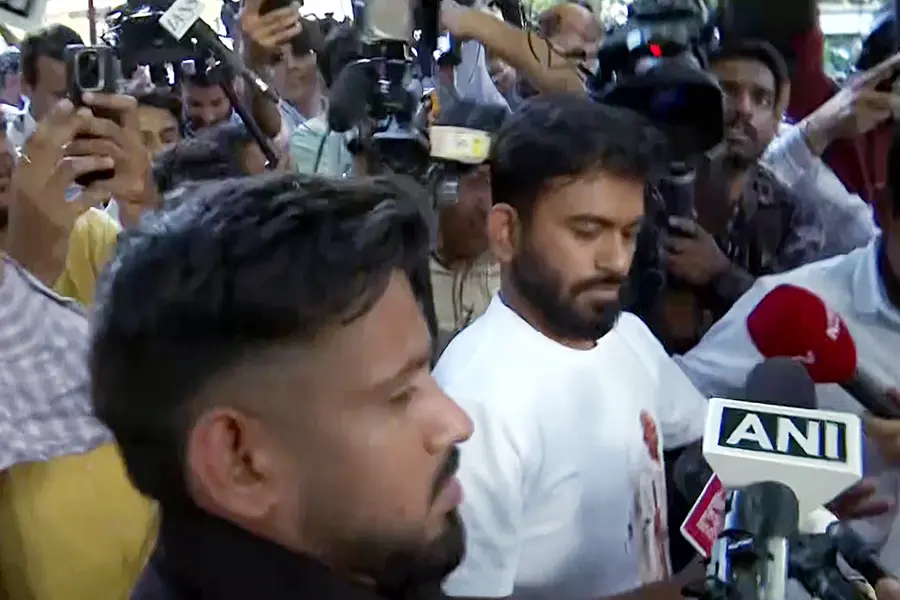
New Delhi: Delhi Police placed Cockroach Janata Party founder Abhijeet Dipke under preventive arrest and released All India Students’ Association president Neha Bora on Saturday, a day after both were detained ahead of the ‘Lehra Do Tiranga’ protest march in Connaught Place.
Dipke was detained on Friday while travelling to join the ‘Lehra Do Tiranga’ march organised by the CJP at Central Park in Connaught Place. Delhi Police subsequently placed him under preventive arrest under Sections 126 and 170 of the Bharatiya Nagarik Suraksha Sanhita (BNSS), citing apprehensions of a breach of peace. He is expected to be produced before a Special Executive Magistrate (SEM).
Also Read

The latest action marks Dipke’s second detention in a week. He was previously detained alongside CJP members Ashutosh Ranka and Saurav Das ahead of an October 10 protest against Chief Election Commissioner Gyanesh Kumar. They were subsequently released by an Executive Magistrate on the condition that they maintain public peace for one year, with a reported surety bond of ₹50,000.
CJP legal head Ratna Singh alleged that Dipke’s location was unknown and that lawyers had not been allowed to meet him. In a post on X, she wrote: “Abhijeet is arrested & will be produced before SEM court. His location still unknown, lawyers haven’t met.”
Singh later said he was expected to be produced before the court around noon on Saturday.
Neha Bora released after overnight detention
AISA president Neha Bora was released early Saturday after completing the formalities associated with her detention under Section 65 of the Delhi Police Act. She had been detained ahead of the proposed march and held for several hours.
Following her release, Bora criticised the police action, alleging that protesters were being detained without valid reasons and kept in custody for extended periods.
“For a very long time in this country, it has been the case that people are detained without any valid reason and made to sit [in custody] for hours,” she said.
Bora demanded the release of Dipke and other detained demonstrators. She argued that the protesters were ordinary citizens seeking accountability and protection of their voting rights. She also questioned the justification for holding people overnight at police stations.
The CJP had earlier alleged that Dipke was taken to an undisclosed location and denied access to lawyers and party associates. AISA had similarly raised concerns about Bora’s whereabouts during her detention.
Why were the protesters marching?
The detentions came ahead of the CJP’s ‘Lehra Do Tiranga’ march in Connaught Place on October 16. The demonstration was part of a wider protest movement involving opposition parties, student groups and civil society organisations.
Protesters have demanded the resignation of Chief Election Commissioner Gyanesh Kumar and raised concerns about alleged irregularities in electoral rolls and the Election Commission’s Special Intensive Revision (SIR) exercise.
Opposition groups have questioned the transparency and implementation of the voter-list revision process. The Election Commission’s actions have faced criticism from political opponents, who have demanded greater accountability in electoral procedures.
Delhi Police had issued notices to Dipke before the march, citing restrictions in force in Connaught Place and a previous undertaking relating to public peace. Restrictions under Section 163 of the BNSS were also cited in connection with the planned gathering.
The march was heavily restricted by police deployment, and several protesters were detained as authorities sought to prevent a breach of peace.
Preventive detention and the right to protest
- What do Sections 126 and 170 of the BNSS mean?
Section 126 provides for requiring a person to show cause why they should not be ordered to execute a bond for keeping the peace where the statutory conditions are met. Section 170 empowers police to arrest to prevent the commission of certain cognisable offences when the legal requirements are satisfied. These are preventive provisions; their invocation does not, by itself, establish that a person has committed an offence.
- What is the role of Section 163?
Section 163 of the BNSS allows a competent authority to issue urgent orders in cases of nuisance or apprehended danger. Such orders can impose restrictions on gatherings or other activities where the legal conditions are met. Whether a particular restriction or detention was justified depends on the order issued, the circumstances and the applicable law.
- What is the wider significance?
The detentions highlight the tension between maintaining public order and protecting the right to peaceful assembly. The police have cited preventive measures, while the organisers and protesters have questioned the necessity and manner of the detentions. Allegations about access to lawyers and the whereabouts of a detained person are distinct from the legal basis for preventive action and must be assessed on their own facts.
The immediate developments are Dipke’s expected appearance before the Special Executive Magistrate and the release of Bora. The wider dispute remains tied to demands for accountability from the Election Commission and concerns over the electoral-roll revision process.
Published: 17 Oct 2026, 10:48 am IST
ABOUT THE AUTHOR
Disclaimer: Kindly avoid objectionable, derogatory, unlawful and lewd comments, while responding to reports. Such comments are punishable under cyber laws. Please keep away from personal attacks. The opinions expressed here are the personal opinions of readers and not that of Mathrubhumi.