
Weddings in Bihar face uncertainty as grooms remain stuck abroad due to Middle East tensions, flight disruptions and rising airfares
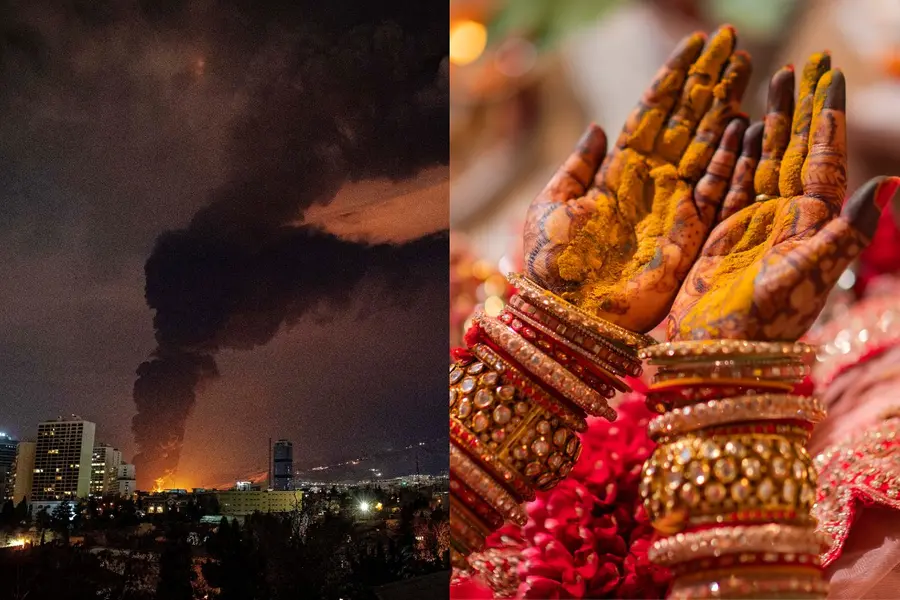
In Bihar, wedding preparations are in full swing, yet many ceremonies hang in uncertainty. Several families have fixed marriage dates, but the grooms remain stuck overseas due to escalating tensions in the Gulf region. Flight cancellations and rising airfares, triggered by the ongoing conflict involving the United States, Israel and Iran, have disrupted travel plans, leaving families anxious.
Khandail village of Sherghati block in Gaya district has long benefited from the earnings of migrant workers in Gulf countries. Remittances have transformed the village, with improved infrastructure such as a bank, an ATM, a health sub-centre and modern concrete houses now visible across the area. However, the same overseas connections are now causing distress as uncertainty grows.
More than 400 young men from Khandail and neighbouring villages including Imlithan, Jaipur, Ratanpur and Pandaul under Cherki panchayat are employed in Gulf nations. Almost every household has a family member working abroad. Traditionally, many of them return home during Eid and Bakrid, but this year, the conflict has disrupted that routine.
Wedding plans in doubt
Several weddings are scheduled for March, but families are unsure whether the ceremonies will proceed as planned or need to be postponed.
One such family is that of Jalil Shah. His son’s wedding is set for March 30 in Erki village in Jehanabad. Invitations have already been distributed, yet his son remains stranded in Qatar. The groom had booked a ticket for March 26, but the flight has been cancelled twice.
Shah explained that all preparations have been completed and the family is hoping the wedding procession can take place if his son manages to arrive in time. Despite the uncertainty, the family remains optimistic.
Adjusting plans amid challenges
Alongside travel disruptions, families are also dealing with practical difficulties. Shah’s family is facing a shortage of LPG cylinders, prompting them to instruct the cook to prepare meals using a traditional wood-fired stove. They are also prepared to give up the hotel venue if needed.
Village head’s husband Javed Khan said that many families have started preparing alternative arrangements. If the groom cannot return on time, the nikah ceremony may be conducted online.
Khan added that even within his own family, two weddings are planned, with one groom in Bahrain and another in Qatar, and neither has been able to travel back so far.
Limited options and hope for help
Residents acknowledge that the situation is beyond the control of local authorities, as it is driven by international developments. However, they are hopeful that the Indian Embassy may provide some assistance to stranded workers.
According to villagers, conditions in countries such as Kuwait and Qatar are particularly difficult. Nasir Khan, who recently returned home after spending Rs 60,000 on an air ticket, said that people are facing sleepless nights due to missile attacks and are often forced to take shelter in bunkers or remain out on the streets.
Conflict disrupts lives and travel
The crisis stems from a war involving the United States, Israel and Iran, which began on February 28 when US and Israeli forces carried out strikes on Iranian targets. Iran responded with missile and drone attacks across the region, including strikes aimed at US bases and infrastructure in Gulf countries.
This escalation has severely impacted air travel. Several Middle Eastern countries have temporarily shut their airspace, leading to widespread flight cancellations. Thousands of passengers, including migrant workers, have been left stranded.
Published: 23 Mar 2026, 09:31 pm IST
Related Topics
Disclaimer: Kindly avoid objectionable, derogatory, unlawful and lewd comments, while responding to reports. Such comments are punishable under cyber laws. Please keep away from personal attacks. The opinions expressed here are the personal opinions of readers and not that of Mathrubhumi.
