
The CBI chargesheet says the post-mortem examination and the subsequent medical board constituted by AIIMS Delhi concluded that Twisha died by suicide
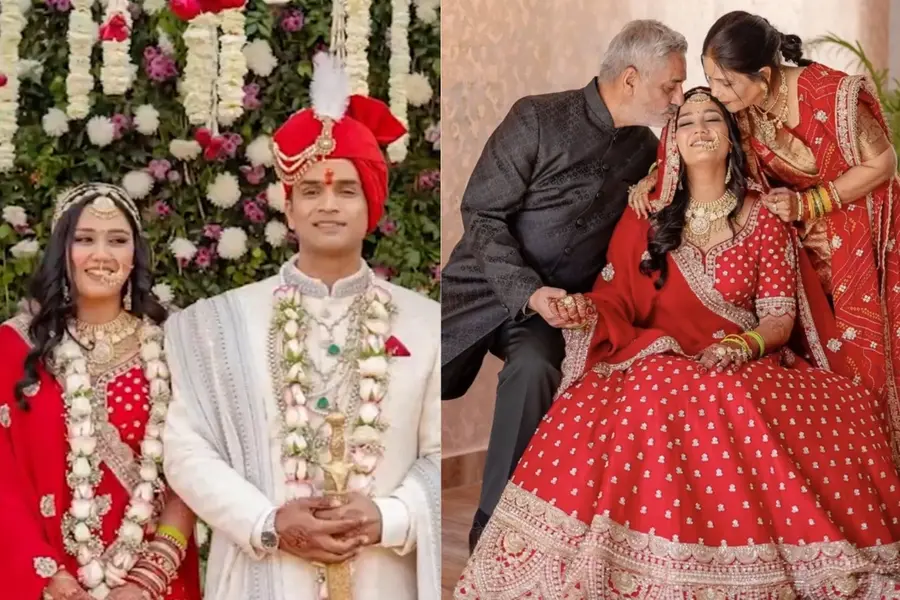
New Delhi/ Bhopal: The CBI has filed a chargesheet against lawyer Samarth Singh and his mother, retired district judge Giribala Singh, in connection with the death of actor-model Twisha Sharma, accusing the two of subjecting her to mental cruelty and abetting her suicide.
Twisha, 33, was found hanging at her marital home in Bhopal on May 12, five months after she married Samarth. The chargesheet invokes provisions of the Bharatiya Nyaya Sanhita relating to cruelty by a husband or his relatives, abetment to suicide and common intention. The CBI has also invoked provisions of the Dowry Prohibition Act, according to the material submitted in the case.
Also Read

Here is what the chargesheet says about the events leading up to Twisha's death and the evidence gathered by the agency.
What happened on the night Twisha died?
According to the CBI's account, the evening of May 12 saw a series of calls and messages between Twisha, her family and her sister-in-law Rashi Abrol.
At 7.51 pm, Twisha called Abrol and allegedly complained that Samarth was pressuring her to transfer a Rs 20 lakh investment into the Chinese stock market. She had refused, according to the chargesheet.
The situation allegedly escalated later in the evening. At around 9.20 pm, Twisha called Abrol again while crying. She allegedly told her that she had asked Samarth to sleep in a separate bedroom because of her back pain, following which he became violent and aggressive. The call ended abruptly.
At 9.29 pm, when Abrol called back, Twisha was reportedly only sobbing before the call was disconnected.
The last message
At 9.36 pm, Twisha sent what the CBI has described as her final message to Abrol.
In the message, she asked her sister-in-law to ask Samarth to collect her remains the following day and said she wanted to die in peace. The CBI has treated the message as a key part of the digital evidence in the case.
Four minutes later, CCTV footage allegedly showed Twisha walking alone towards the terrace.
At 9.41 pm, she made a WhatsApp call to her father. According to the chargesheet, she was crying, said Samarth had become aggressive and violent, and asked her family to come to Bhopal immediately. Her final outbound call was to her mother at 10.05 pm, during which she again spoke about Samarth's alleged aggression.
What does the CCTV footage show?
The CBI has relied on CCTV footage from the residence to reconstruct the final minutes.
After Twisha's mother repeatedly tried to contact her, she also called Giribala. According to the chargesheet, Giribala did not answer until 10.10 pm. After being told that Twisha was crying, she left her room at 10.16 pm to check on her.
Giribala allegedly found the ground floor empty and called Twisha's phone at 10.18 pm, but there was no response.
Five minutes later, CCTV footage allegedly showed Samarth and his mother heading towards the terrace, where Twisha was found hanging using what the chargesheet describes as a gymnastic belt. Samarth subsequently took her to AIIMS Bhopal.
What did the forensic examination find?
The CBI chargesheet says the post-mortem examination and the subsequent medical board constituted by AIIMS Delhi concluded that Twisha died by suicide.
The five-member medical board was constituted following a Madhya Pradesh High Court order and conducted the second autopsy on May 24. Its final opinion reportedly found no injuries of medico-legal significance indicating physical assault or a struggle.
The board also examined the disputed ligature material. Its opinion concluded that the cause of death was asphyxia due to ante-mortem hanging and that the manner of death was suicidal.
This finding is significant because Twisha's maternal family had initially alleged that she may have been murdered, while her in-laws maintained that she had died by suicide.
What does the CBI allege against the husband and mother-in-law?
The agency alleges that Samarth and Giribala subjected Twisha to sustained mental cruelty and psychological harassment, which ultimately left her with no option but to take her own life.
Twisha's family had also accused the two of mental abuse, physical violence and dowry-related torture. The family alleged that her in-laws were unhappy with the dowry given at the time of the marriage.
The chargesheet invokes BNS provisions concerning cruelty by a husband or his relatives, abetment to suicide and common intention. The CBI has also named the two under provisions of the Dowry Prohibition Act.
Is the investigation over?
The CBI is still awaiting complete forensic extraction of data from Twisha's and Samarth's phones, as well as DVR footage from CCTV cameras at Giribala's residence. The agency has indicated that additional charges, including possible evidence tampering, could be considered and that the number of accused could increase as the investigation progresses.
Some FSL reports are also awaited, according to Twisha's father.
Giribala has separately moved the High Court seeking bail.
What the chargesheet establishes — and what it does not
The chargesheet does not allege that Twisha was physically assaulted immediately before her death; the medical board found no injuries suggestive of an assault or struggle.
Instead, the CBI's case centres on alleged mental cruelty and psychological harassment, supported by the digital trail of messages and calls, CCTV footage, witness statements and other material collected during the investigation.
(Disclaimer: If you or someone you know is experiencing emotional distress, mental health challenges, or thoughts of self-harm, seek professional support without delay. You can contact Tele-MANAS, a 24x7 mental health helpline by the Ministry of Health and Family Welfare, at 14416 or 1800-891-4416.)
Published: 18 Aug 2026, 08:08 am IST
ABOUT THE AUTHOR
Related Topics
Disclaimer: Kindly avoid objectionable, derogatory, unlawful and lewd comments, while responding to reports. Such comments are punishable under cyber laws. Please keep away from personal attacks. The opinions expressed here are the personal opinions of readers and not that of Mathrubhumi.