
Top court flags grave lapses in probe and medical response; seeks records, warns of strict action.
Ghaziabad/New Delhi: The Supreme Court on Friday expressed deep concern over the handling of a case involving the alleged sexual assault and murder of a 4-year-old girl in Ghaziabad, citing serious lapses by the police and refusal of treatment by private hospitals.
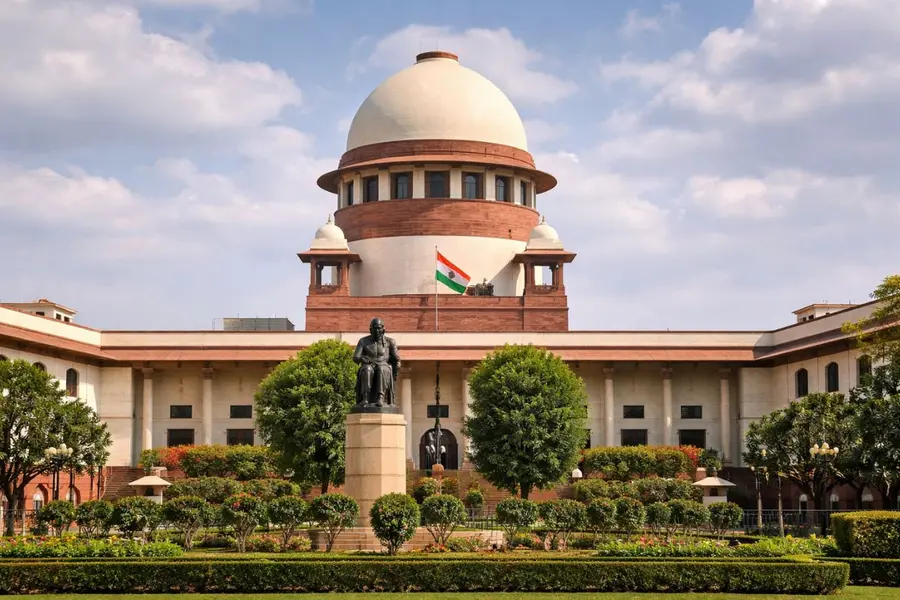
A bench comprising Chief Justice Surya Kant, Justice Joymalya Bagchi, and Justice Vipul M Pancholi directed the Ghaziabad Police Commissioner and the Station House Officer (SHO) of Nandgram police station to appear before the court on April 13 with complete case records.
The court indicated that the investigation may be conducted under its supervision within a fixed timeline, either by a Special Investigation Team (SIT) or a central agency.
During the hearing, senior advocate N Hariharan, appearing for the victim’s father, submitted that video evidence in the case was deeply disturbing and said it “shook his conscience.”
He told the court that the child was alive at a certain stage, but the case was initially treated by the police as one of murder.
The court took note of the post-mortem findings, which indicated that an object had been inserted into the child’s private parts.
However, the First Information Report did not initially include charges of rape or invoke provisions under the Protection of Children from Sexual Offences (POCSO) Act.
The bench also flagged the conduct of two private hospitals, Khajan Singh Manvi Health Care and St. Joseph (Mariam) Hospital, which allegedly refused to admit the child despite her critical condition.
The child was subsequently taken to a government hospital, where she was declared dead. The court has issued notices to both hospitals.
Further, the court recorded allegations that the victim’s family was mistreated by the police and asked to remain silent. The incident took place on March 16, while the FIR was registered on March 17. The accused was arrested on March 18.
Observing that the matter raises serious concerns about institutional response, the Supreme Court said it will closely monitor the case and ensure accountability at all levels.
Published: 11 Apr 2026, 08:50 am IST
Related Topics
Disclaimer: Kindly avoid objectionable, derogatory, unlawful and lewd comments, while responding to reports. Such comments are punishable under cyber laws. Please keep away from personal attacks. The opinions expressed here are the personal opinions of readers and not that of Mathrubhumi.
