
Between 2006 and 2011, a truck driver from Salem became one of India’s most fearsome serial killers: M Jaishankar, branded “Psycho Shankar” for over 30 rapes, murders and robberies across Tamil Nadu and Karnataka.
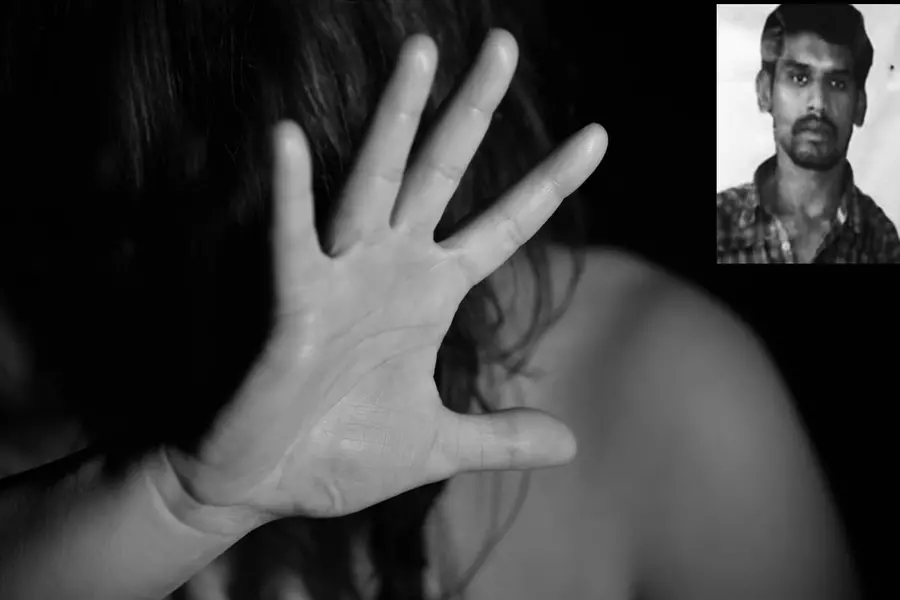
February 27, 2018: Parappanna Agrahara prison on the outskirts of Bengaluru.
The jailer and other prisoners raised an alarm. One of the prisoners had committed suicide by slitting his own throat with a broken blade. There is a saying 'If you play with the sword, you will die with the sword.' In this case, it was 'when you kill others, you will kill yourelf.' The man was M Jaishankar.
In a period of 5 years between 2006-2011, he made life hell with his involvement in over 30 cases of rapes, murders and robberies. No wonder the Press gave him the moniker of 'Psycho Shankar'.
He was born in a village of Salem district, Tamil Nadu, in 1977. He studied till class 12, and he could speak Tamil, Kannada and Hindi. His career started off as a truck driver. But the demon inside of him woke up and he became a changed man.
By 2008, news began filtering in about sex workers at roadside dhabas, and women in isolated farm houses being targeted by a serial killer. They were being kidnapped and then the bodies of the prostitutes were being found in isolated fields. They were raped and chopped up by a machete. This was brutal!
Also Read: More stories from the Crime Files
Unknown to the public, Jaishankar used to carry a black bag with him at all times. This bag contained his machete. His first crime to be reported happened on July 3, 2009, when he attempted to rape and murder 45-year-old P Shyamala in Perandahalli.
By August 2009, he had raped and murdered 12 women, and raped another six women. But one case would grab the limelight, and the hunt to find and arrest him would begin.
On August 12, 2009, Jaishankar raped and murdered a 39-year-old police constable, M Jayamani. Originally stationed at the Kangeyam all-women police station, Jayamani was on temporary duty at Perumanallur, during the visit of deputy chief minister MK Stalin.
Jaishankar kidnapped her, and raped her several times before killing her. The police recovered Jayamani's body a month later, on September 19. The police were angry because one of their own had been targeted and killed brutally.
Also Read: The serial-killer tailor: Chilling case of India's highway reaper
A manhunt began. The Tirupur police launched a manhunt and finally nabbed Jaishankar on October 19 and landed in Coimbatore central prison. He was jailed at the Coimbatore Central Prison. By this time, he had been charged with 13 separate counts of rape and murder in Tiruppur, Salem and Dharmapuri.
On March 18, 2011, the police took Jaishankar to a fast-track court in Dharmapuri, for a murder case trial. The next day, armed reserve police constables M Chinnasamy and Rajavelu were assigned to escort him back to Coimbatore.
Jaishankar, who was being brought to Coimbatore Central Prison, insisted that he would travel only by super deluxe bus on the night of March 18 from Salem. When one of the constables went in search of a super deluxe bus, he gave the slip at around 9:30 pm. On March 19, Chinnasamy shot himself in guilt, in front of his colleague Rajavelu. Investigations revealed that there were people in the prison who had helped him.
After his escape Jaishankar went on a rampage. Shankar allegedly raped and murdered six women in Karnataka's Bellary within a month after the escape. He was also accused of killing a man and a child in Dharmapuri district.
The police in Tamil Nadu and Karnataka had put out notices and issued posters seeking information to nab the accused. A special team went to Bangalore to nab him, but he escaped.
In April 2011, the police traced his mobile phone to Delhi. And then in May 2011, the police traced his mobile calls to Mumbai. And then it was switched off. Maybe he became aware that his phone was being tracked!
On May 5, 2011, the Coimbatore Police received a phone call from the Chiradurga Police -- they had Jaishankar in their custody! The police, who had lost track of him, were overjoyed. And so two months after his escape, Jaishankar was arrested again.
The demon inside Jaishankar had woken up and he had tried to molest a woman working in the fields in the Elagi village in the Chitradurga area. She resisted and then raised an alarm. People rushed to help her and they recognised him as they had seen his photograph on 'wanted' posters that had been displayed in hotels, railway stations and bus stands across various towns in Tamil Nadu and Karnataka.
They handed him over to Chitradurga police, who then informed Coimbatore Police. After his 2011 arrest, Jaishankar was kept at the Parappana Agrahara Central Jail in Bangalore. He was sentenced to 27 years in prison. At the Bangalore jail, he underwent treatment for psychiatric problems.
And then came the incident that made Jaishankar famous and a household name. On September 1, 2013, Jaishankar made a daring escape from the high security prison. He had been planning it for two months and it was as dramatic as a Hollywood movie!
On August 31, 2013, the police took Jaishankar to the court in Tumkur near Bangalore. After returning, Jaishankar said that he was not feeling well and he was admitted to the prison hospital. He had calculated his escape very carefully. He had noticed that guards came to inspect his cell every half hour and knew he had this 30-minute window to escape. He managed to secure a duplicate key and used it at 2 am on September 1, 2013, when the daily change of guards took place. The police suspected that an insider helped him get the duplicate key.
He wore on a police uniform and casually walked through 2 gates leading from the hospital to the garden, that had been conveniently left open by 'careless guards'. Jaishankar had inside help once again. He then scaled a 20-foot wall, then walked atop a 15-foot wall and finally scaled the 30-foot (9.1 m) high compound wall. He managed to cross the electric fence safely, since it was miraculously not functional that night. He reportedly carried with him a bamboo pole balancing on the walls and a bedsheet to serve as a cushion over the glass pieces on the wall top. He was injured during the escape, and drops of blood were found outside the outer wall.
His escape became national news. Eleven jail staff, including three wardens, two jailors and six security guards, were suspended following his escape to reprimand them for allowing the escape.
The police issued a red alert to all police stations in Karnataka, and urged women to be careful, especially late at night and when traveling through isolated places. They announced a reward of ₹500,000 for any information leading to his arrest.
The police also printed 10,000 wanted posters and 75,000 pamphlets with different photographic profiles of Jaishankar, in five languages - Hindi, Kannada, Marathi, Tamil, and Telugu. They were determined to erase the embarrassing incident and capture him again!
The special police team that had been set up to track him down found that Shankar had developed a friendship with a prisoner, Abdul Mujassim Pasha, who had been jailed in a dowry harassment case. Incidentally, Pasha had been released before Shankar’s escape. The police tracked down Pasha and found that Jaishankar had contacted Pasha after escaping and had asked for a motorcycle.
The police applied pressure on Pasha and he cracked. He confessed that Shankar was hiding in a shed, a few kilometres from the prison, and then he led the police team to the hideout on September 6, five days after the escape. Jaishankar was once again arrested!
During his escape, Jaishankar suffered a leg fracture while leaping from the 30-foot-high wall surrounding the prison compound. Despite the injury, he refrained from contacting his family in Tamil Nadu. The government spent ₹75,000 for the treatment of his fractured leg at Victoria Hospital, where he underwent surgery on September 23.
Following the completion of the leg surgery, Jaishankar was transferred to Central Prison, Bangalore, to commence serving his sentence. He was assigned to a high-security cell equipped with round-the-clock CCTV surveillance and additional lighting.
The cell's lock was intentionally placed beyond his reach. In the event of illness, it was decided that Jaishankar would receive treatment within his cell rather than being transported to a hospital. Extra security measures were implemented during his trial escorts to minimize the risk of escape.
Despite the surgery, Jaishankar did not recover completely. He was provided a wheelchair and he moved around with its help. He was also shifted to the high security block and was kept in isolation. The isolation had pushed him to depression. The prison officials made him do yoga and meditation. But nothing helped.
On February 25, 2018, Jaishankar unsuccessfully tried to escape again, but failed. After this, he was held in solitary confinement.
Subsequently, on February 27, 2018, he committed suicide by slitting his own throat with a shaving blade, which he had acquired from a barber the day before. The jail staff found him lying in a pool of blood at around 2:30 am during their daily rounds, and provided him first aid. He was later moved to Victoria Hospital, where he was declared dead at 5:10 am.
In the end, M Jaishankar who had killed so many, died by his own hands.
The author is a true crime bestselling author. He is the author of the bestselling book ‘The Deadly Dozen: India’s Most Notorious Serial Killers’, ‘India’s Money Heist: The Chelembra Bank Robbery’ and ‘The Hills Are Burning’.
Published: 22 Jun 2026, 11:04 am IST
Related Topics
Disclaimer: Kindly avoid objectionable, derogatory, unlawful and lewd comments, while responding to reports. Such comments are punishable under cyber laws. Please keep away from personal attacks. The opinions expressed here are the personal opinions of readers and not that of Mathrubhumi.
