
B Saroja Devi, the iconic ‘Abhinaya Saraswathi’ of Indian cinema, passed away at 87, leaving behind a legacy across four languages and over 200 films
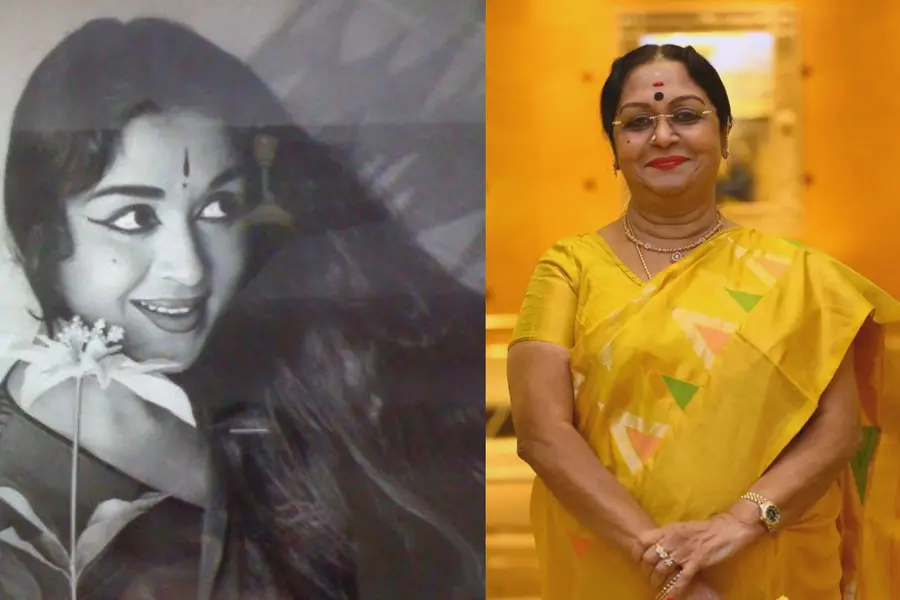
B Saroja Devi, one of Indian cinema’s most celebrated actresses, passed away at the age of 87.
Fondly called Abhinaya Saraswathi, she left behind an unparalleled legacy in Indian film history. She acted in over 200 films across four languages—Kannada, Tamil, Telugu, and Hindi—and is often regarded as the first female superstar of South Indian cinema.
How did her journey in cinema begin?
Born on 7 January 1938 in Bengaluru, Saroja Devi was the fourth daughter of Bhairappa, a police officer, and Rudramma, a homemaker. Encouraged by her father to learn classical dance, she performed across studios before being discovered by filmmaker B R Krishnamurthy. Though she initially declined offers, she eventually entered films at age 17 with the 1955 Kannada classic Mahakavi Kalidasa, which won a National Award.
What was her breakthrough role?
Her career in Tamil cinema took off with Nadodi Mannan in 1958, where she starred opposite M G Ramachandran. Their on-screen chemistry proved iconic—M G R considered her his lucky charm alongside J Jayalalithaa. Together, they appeared in 26 consecutive blockbusters, solidifying her as a dominant force in Tamil cinema.
What made her career record unique?
B Saroja Devi achieved the rare feat of playing the female lead in 161 consecutive films from 1955 to 1984. Her presence spanned four major Indian film industries. In Kannada cinema, she starred in landmark films like Mallammana Pavada (1969), Nyayave Devaru (1971), and Amarashilpi Jakanachari (1964), the first full-colour Kannada film.
Success across languages
Yes, Saroja Devi was successful in Hindi films such as Paigham, Sasural, Opera House, and Pyaar Kiya To Darna Kya. In Telugu cinema, she worked with leading stars like N T Rama Rao in hits like Seetarama Kalyanam and Jagadeka Veeruni Katha. Her multilingual success made her a pan-Indian star long before the term became common.
National recognition and awards
She was awarded the Padma Shri in 1969 and the Padma Bhushan in 1992. She also received the Kalaimamani Award from the Tamil Nadu government and an honorary doctorate from Bangalore University. These honours recognised not only her artistic contributions but also her influence on Indian cultural life.
Did she retire after marriage?
After marrying Sri Harsha in 1967, she considered retirement. However, M G R and Dilip Kumar reportedly encouraged her to continue. She went on to star in several more successful films, particularly in Kannada alongside Dr Rajkumar in titles like Babruvahana (1977) and Bhagyavantharu (1977).
Later years and public life
Following her husband's death in 1986, she gradually withdrew from acting but remained engaged in public and cultural life. She chaired the National Film Awards jury in 1998 and 2005, and continued to support younger actors and filmmakers. Her last appearance was a cameo in Natasaarvabhowma (2019), starring Puneeth Rajkumar.
Legacy of a screen legend
B Saroja Devi’s career is a testament to versatility, grace, and endurance. Known for her expressive eyes, dignified screen presence, and deep emotional range, she was admired across generations. Her influence stretched beyond the screen—into fashion, cultural leadership, and mentorship. Her passing marks the end of an era, but her legacy remains etched in the history of Indian cinema.
Published: 14 Jul 2025, 11:25 am IST
Related Topics
Disclaimer: Kindly avoid objectionable, derogatory, unlawful and lewd comments, while responding to reports. Such comments are punishable under cyber laws. Please keep away from personal attacks. The opinions expressed here are the personal opinions of readers and not that of Mathrubhumi.
