
Throughout cinema history, groundbreaking movies have demystified the tech behind the magic.
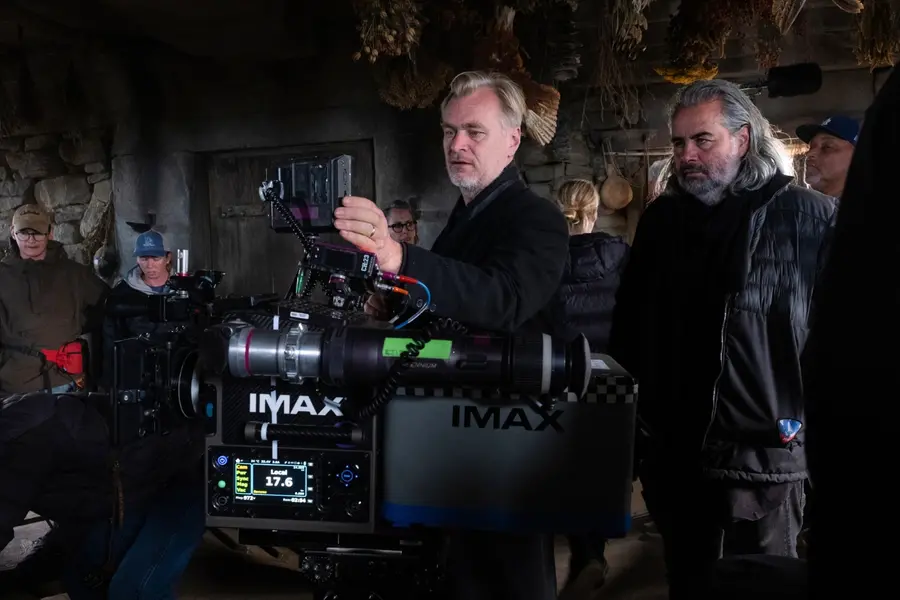
Even before Christopher Nolan’s ‘The Odyssey’ was released in cinema halls, the film had already stirred a conversation on the internet—one that is unlikely to die down anytime soon. Despite its stellar cast comprising Matt Damon, Tom Holland, Anne Hathaway, and others, and being an adaptation of Homer’s ancient Greek epic ‘Odyssey’, the film has sparked huge curiosity around IMAX 70mm. A highly specialised camera format that was previously discussed only among filmmakers and projectionists, it has now prompted moviegoers to search the internet for terms such as '15/70 film', 'IMAX 70mm', and 'IMAX Laser'.
But this isn’t the first time a film’s release has made movie buffs Google a technical filmmaking term to understand it better and talk about it more. Over the years, several films have triggered similar searches, helping audiences not only learn about filmmaking technology but also understand what goes into making a blockbuster and creating a spectacular cinematic experience.
Here are four technologies that became part of popular culture because of certain films.
ALSO READ: Why India won't get the full ‘The Odyssey’ experience: The missing IMAX 70mm factor
Bullet time
Remember the iconic rooftop shootout scene from ‘The Matrix’ where Keanu Reeves’ Neo bends backwards to dodge bullets fired by an agent at him? The scene was shot using the ‘bullet time’ visual effect, which helped the cinematographer to pan the camera around Reeves in slow motion.
The visual effect technology helped to dramatically slow down the action and let the camera move freely around the character. The effect was achieved after using dozens of still cameras, which were triggered simultaneously, and were later digitally stitched together.
Though the technology was used before, it became extremely popular after the film’s release. In fact, it has been imitated a lot in the history of cinema, including Bollywood’s Shah Rukh Khan starrer ‘Main Hoon Naa’.
Performance capture
James Cameron’s ‘Avatar’ is one of the most beloved science fiction films of all time. The film, which was originally released in 2009, before it was made into a blockbuster hit franchise, is credited for making performance capture technology a known thing. Thanks to performance capture, the Na’vi characters were brought to life, and how!
ALSO READ: From 'The Odyssey' to 'Saving Private Ryan': Hollywood's costly missions to rescue Matt Damon
This technology not only records an actor’s movement but is also able to capture the subtlest facial expression, including the movements of the eyes, which helps bring such characters to life. Performance capture helps digital characters to replicate the performances of a human with utmost accuracy. It is this very technology that enhanced the visual storytelling of the film.
Dolby Atmos
Sound is a very crucial aspect of watching a film. And Dolby Atmos is one such sound technology that has enhanced the film-watching experience. The surround sound technology is so immersive that it doesn’t just let you hear from the front or the sides, but it amplifies every sound. For instance, it helps you hear footsteps movie across the cinema hall, making you feel as if you’re inside the very scene.
Although this technology arrived much before the release of the 2013 film ‘Gravity’, it’s this Alfonso Cuaron directorial that made viewers understand how audio can also become an important tool of storytelling.
ALSO READ: Nolan reveals 'The Odyssey' isn't the first film he planned to premiere in India
Digital de-ageing
While David Fincher's 'The Curious Case of Benjamin Button' is the film that is widely regarded for bringing the digital de-ageing technology to mainstream cinema, it's Martin Scorsese's 'The Irishman' that popularised it more among the masses. It’s a technological process that uses visual effects and artificial intelligence to make an actor appear decades younger, without having to replace his/her performance. This technology was used to make Brad Pitt look younger in ‘The Curious Case of Benjamin Button’, winning an Academy Award for ‘Best Visual Effects’. It also helped Scorsese’s ‘The Irishman’ to showcase younger versions of Robert DeNiro, Al Pacino, and Joe Pesci, across various decades.
Published: 16 Jul 2026, 10:58 pm IST
Related Topics
Disclaimer: Kindly avoid objectionable, derogatory, unlawful and lewd comments, while responding to reports. Such comments are punishable under cyber laws. Please keep away from personal attacks. The opinions expressed here are the personal opinions of readers and not that of Mathrubhumi.
