
While "Stranger Things" continues with a planned animated spinoff, its original model of lengthy production cycles and immense budgets is unlikely to be replicated as the industry prioritizes profitability.
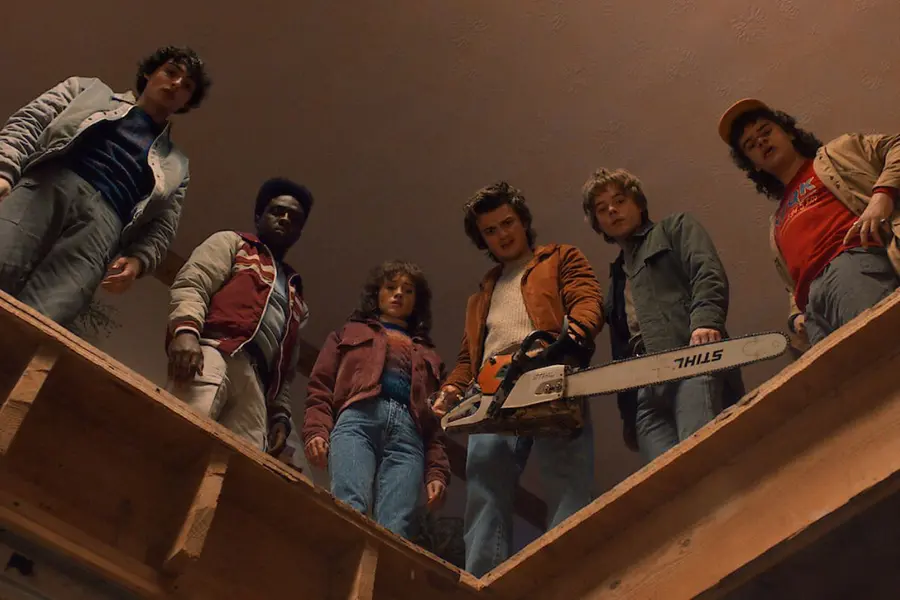
Netflix's cultural juggernaut "Stranger Things" concludes its nine-year run on January 1 at 06:30 AM IST with a two-hour-and-five-minute finale that industry observers say represents the last gasp of Peak TV's big-budget blockbuster era.
The series finale, titled "The Rightside Up," will stream globally on Netflix while simultaneously screening in over 620 theatres across the U.S. and Canada. According to co-creator Ross Duffer, 1.1 million people have RSVP'd for theatrical showings, with 3,500 showtimes completely sold out. The dual release strategy, unprecedented for a Netflix episode, underscores the show's unique status in the streaming landscape.
Season 5 has already shattered viewership records, with Volume 1's four episodes garnering 59.6 million views in their first five days, marking Netflix's biggest English-language debut ever. The milestone represents a 171% increase over Season 4's 2022 premiere, though the earlier season had three days of viewing compared to five.
The End of Blockbuster Television
The production represents a financial watermark unlikely to be replicated. According to Puck, Netflix spent between $400 million and $480 million on Season 5's eight episodes, roughly $50 million to $60 million per episode, making it one of television's most expensive productions ever. That figure dwarfs the $48 million budget for Season 1 in 2016, a 900% increase.
"The Peak TV era is over, and in 2025, the industry said farewell to big-budget mega-hits like Stranger Things, shifting focus to leaner productions," TheWrap reported on December 29. The sentiment echoes throughout Hollywood as streamers pull back from expensive, slow-burning projects. Disney CEO Bob Iger told CNBC in 2023 that content glut "diluted focus and attention," announcing plans to scale back original programming.
Entertainment Strategy Guy, an anonymous former streaming executive, noted that "Disney is saying that money, instead of going to streaming, is now going back to theatrical". Even acclaimed shows like "Andor," which cost $650 million for 24 episodes, ended after just two seasons despite critical praise and strong ratings.
A New Model Emerges
The show's three-year gaps between recent seasons, Volume 1 released November 26, Volume 2 on Christmas Day, and the finale on New Year's Eve, illustrate the patience Netflix extended to its flagship property. Industry analysts say such indulgence is increasingly rare. Studios now favour faster turnarounds and leaner budgets, with HBO's "The Pitt" exemplifying the shift: 15 episodes shot in one location, reminiscent of network television's efficiency.
Co-CEO Ted Sarandos acknowledged at the Season 5 premiere in Los Angeles that while "House of Cards" was pivotal, "our true breakthrough came when we introduced 'Stranger Things'". The franchise has generated over $1 billion in revenue since 2020, according to analytics firms.
Netflix plans an animated spinoff, "Stranger Things: Tales from '85," for 2026, ensuring the property's continued exploitation. But the original series' model, movie-length episodes, years-long production cycles, and budgets exceeding blockbuster films, appears destined for extinction as the industry recalibrates for profitability over prestige.
The Duffers told Netflix's Tudum that bringing the finale to theatres was "something we've dreamed about for years". For viewers, the New Year's Eve premiere offers a chance to witness the end of both Hawkins' battle with the Upside Down and television's most audacious era.
Published: 30 Dec 2025, 09:32 am IST
Related Topics
Disclaimer: Kindly avoid objectionable, derogatory, unlawful and lewd comments, while responding to reports. Such comments are punishable under cyber laws. Please keep away from personal attacks. The opinions expressed here are the personal opinions of readers and not that of Mathrubhumi.
