
A peace bus, a snub, and a phone call that blew Pakistan's cover, the true Kargil story Netflix didn't fully tell
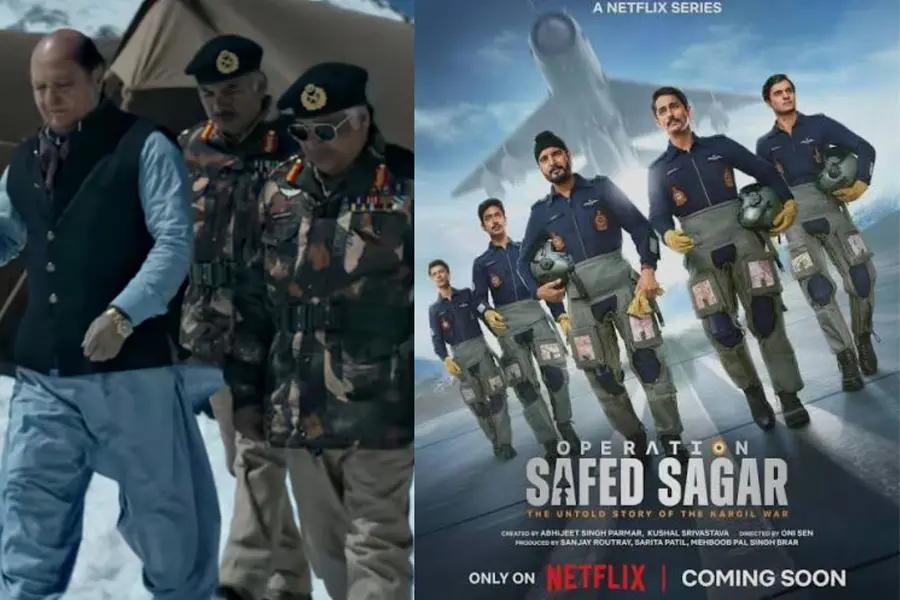
Netflix's ‘Operation Safed Sagar’ dramatizes the Indian Air Force's role in the 1999 Kargil War, centering on the Golden Arrows Squadron. While the show follows its pilots' missions, its political backdrop closely tracks real events.
How peace talks turned into a war
Early 1999 saw India and Pakistan pursuing better ties, capped by Prime Minister Atal Bihari Vajpayee's Lahore visit and the Lahore Declaration with Nawaz Sharif that February. Simultaneously, Pakistani troops under Army chief General Pervez Musharraf were occupying Kargil heights along the Line of Control, initially disguised as Kashmiri militants.
Once India recognized the scale of the intrusion, the Kargil War broke out, and the IAF launched Operation Safed Sagar to help reclaim the peaks.
The Golden Arrows (No 17 Squadron), commanded by Wing Commander BS Dhanoa, flew reconnaissance and strike sorties in punishing high-altitude terrain, among them Squadron Leader Ajay Ahuja, portrayed by Siddharth in the series.
Also Read: Operation Safed Sagar: Know about the real IAF mission behind Netflix’s upcoming series
Vajpayee's bus journey
The show's depiction of Vajpayee's bus trip is factual. As part of the new Delhi–Lahore bus link, Sharif personally invited Vajpayee to inaugurate the service from Lahore rather than Delhi.
Vajpayee made the journey in February 1999, a widely seen symbol of reconciliation, one that collapsed months later with the Kargil intrusion.
The border insult no one talked about
Also grounded in fact, when Vajpayee arrived in Lahore, Pakistan's three service chiefs, Musharraf included, skipped the customary reception at Wagah, a notable breach of protocol.
The series reflects this with Musharraf greeting Vajpayee by hand but withholding a formal salute.
Also Read: ‘I didn’t want to do injustice to a martyr’: Siddharth on ‘Operation Safed Sagar’
Did Musharraf sideline Sharif?
The series takes the position that Musharraf largely excluded Sharif from planning until the intrusion was underway. The real record is contested, Sharif has said he wasn't fully briefed, while Musharraf maintained otherwise.
In a 2006 interview, Musharraf produced photos of Sharif visiting the Kel sector on February 5, 1999, claiming the Prime Minister was briefed there by senior officers and even addressed troops, evidence, in Musharraf's telling, that Sharif knew before the Lahore summit.
The series recreates this meeting almost frame-for-frame, cutting to the actual 1999 photograph of Sharif and Musharraf shaking hands.
The intercepted tapes
One of the series' most dramatic beats draws on real intelligence work. In May 1999, Musharraf then in Beijing held unsecured phone calls with Lt Gen Mohammad Aziz Khan in Rawalpindi.
India's R&AW intercepted these conversations, and the government later released excerpts as proof of direct Pakistani military involvement, undercutting Islamabad's official line that Kashmiri mujahideen alone were fighting.
The series' biggest creative liberty isn't inventing events. It's choosing a side in the one dispute historians still haven't settled, how much Nawaz Sharif actually knew.
Published: 10 Aug 2026, 10:59 am IST
ABOUT THE AUTHOR

Disclaimer: Kindly avoid objectionable, derogatory, unlawful and lewd comments, while responding to reports. Such comments are punishable under cyber laws. Please keep away from personal attacks. The opinions expressed here are the personal opinions of readers and not that of Mathrubhumi.