
From marriage and separation to family expectations, Kannada film Ruby-Cube explores the emotional complexities of three generations under one roof.
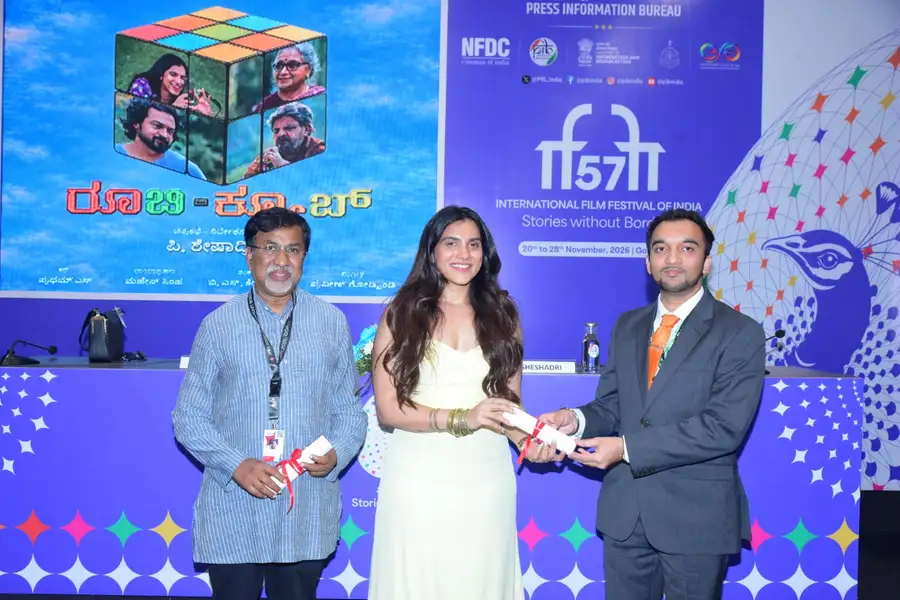
Kannada feature film Ruby-Cube, directed by P Sheshadri, explores the changing dynamics of the Indian family system through the emotional experiences of three generations. The filmmaker and lead actor Vainidhi Jagadish discussed the film's themes at a media interaction on the sidelines of the 57th International Film Festival of India (IFFI) in Goa.
Panaji (Goa): Kannada feature film Ruby-Cube explores the complexities of human relationships, family expectations and changing emotional bonds within the Indian family system. Director P Sheshadri and lead actor Vainidhi Jagadish discussed the film at a press conference held on the sidelines of the 57th International Film Festival of India (IFFI) in Panaji on November 22.
Speaking about his approach to filmmaking, Sheshadri said he does not actively search for stories but waits for narratives that genuinely appeal to him and inspire him to bring them to the screen.
Describing Ruby-Cube as his 13th feature film, he said the story draws on real-life experiences and examines the different dimensions of relationships within Indian families.
Sheshadri compared human life to a Rubik's Cube, explaining that just as the puzzle contains multiple colours and combinations, people and their relationships have several shades and dimensions.
He said his films are not necessarily intended to deliver a particular message but aim to create an emotional connection with audiences.
The filmmaker also highlighted IFFI's role in providing films with greater visibility and offering opportunities to connect with wider audiences and cinema enthusiasts.
What is 'Ruby-Cube' about?
Set during a short family vacation at a hill station, Ruby-Cube brings together three generations under one roof.
The story follows Rohini, a psychologist, who reunites with her former husband Moorthy after their daughter Chitra brings them together while dealing with difficulties in her own marriage.
As the family spends time together, unresolved emotions, past relationships and questions of responsibility emerge. Through these interactions, the film examines how family members navigate changing expectations, personal challenges and emotional conflicts.
Speaking about her character, Vainidhi Jagadish highlighted the emotional layers of the narrative and its focus on contemporary family relationships.
She explained that the story follows a daughter returning to her parental home and gradually observing the dynamics between her parents. The film portrays how individuals within a family may lead different lives while continuing to negotiate relationships and expectations.
Jagadish described the narrative as subtle and understated, with an emphasis on everyday experiences rather than dramatic confrontations.
The media interaction offered insights into the creative vision behind Ruby-Cube and its exploration of family relationships. Its screening at IFFI 2026 forms part of the festival's showcase of diverse cinematic voices and storytelling traditions.
The press conference was moderated by Animesh Vaze.
Why films about family relationships remain relevant
Ruby-Cube places the Indian family system at the centre of its narrative, examining how relationships evolve as people navigate marriage, separation, parenthood and personal responsibilities.
By bringing three generations together in a shared setting, the film creates space to explore differences in expectations and emotional experiences within a family. Its focus on everyday interactions and unresolved feelings also reflects a style of storytelling that prioritises character development and emotional realism over dramatic plot twists.
The film's presentation at IFFI provides an opportunity for Kannada cinema to reach audiences beyond its regional market.
Published: 23 Nov 2026, 05:58 pm IST


ABOUT THE AUTHOR

Related Topics
Disclaimer: Kindly avoid objectionable, derogatory, unlawful and lewd comments, while responding to reports. Such comments are punishable under cyber laws. Please keep away from personal attacks. The opinions expressed here are the personal opinions of readers and not that of Mathrubhumi.