
“Cranes are flying” is a Soviet anti-war film made in 1957, which won the Palme d'Or at the 1958 Cannes Film Festival. The film happened to be the inaugural film of Chitralekha film society, which pioneered the film society movement in Kerala, with its screening which began in August of 1965. To see this anti-war film directed by Mikhal Kalatozov today, one does not need to search the archives of various institutions including that of Mos film, the 99 year old Soviet era film studio in the 125 acre sprawling Lenin Hills in the outskirts of Moscow, but just subscribe to the Soviet films YouTube channel, ‘Mosfilm’.
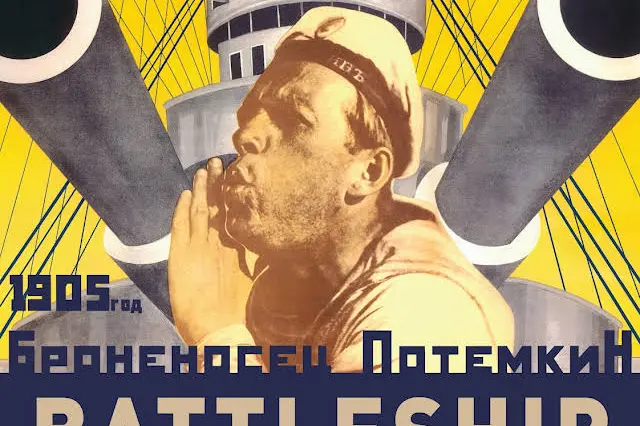
The resurrected Soviet films have arrived in the global film stage vigorously with a strong presence of its old classics which changed the world of filmmaking. These films include all classics of Sergei Eisenstein and Andrei Tarkovsky. Mosfilm has made available these films in full HD format. The former’s Alexander Nevsky (1938), Battleship Potemkin (1925) and much of the latter’s filmography- Ivan’s Childhood (1962), Andrei Rublev (1966), Solaris (1972), The Mirror (1975), and Stalker (1979) are available. Apart from the films of the Russian maestros, Oscar winning “Dersu Usala” by Aikra Kurosawa of Japan, Mosfilms has its own pride of place in global film history. “Over 120 films have been restored during the recent years,” says Evgeny Dolgikh, of Mosfilms, in an email interview. “Restoration of films from a collection of archives with over 2,000 films is taking place. 7-10 films are being restored per year. All works are restored by Mosfilm without public funding. There is a special department that deals with restoration - PC Telekino and computer graphics.” They claim to have five million viewers for their YouTube channel on Soviet and Russian Films across the globe now.

Romance of Malayalees, especially in Thiruvananthapuram, with Soviet films, is an ongoing affair though it started with “Cranes are flying”. The Russian cultural centre recently held a film festival in honour of the Russian director Karen Shakhnazarov, in August this year. As part of the event, screenings of the films "White Tiger,'' "A Horseman Called Death," "Courier," "Ward No. 6" and "The Vanished Empire" were held. The organisers were the Russian House in Thiruvananthapuram, the Mosfilm studio and the Chavara Cultural Centre. Also, very few film buffs know that the first camera of Chitralekha Film unit was a Russian made Konvas with which G Aravindan shot his first film “Utharayanam”. Konvas movie camera is a museum piece at the Mos studio in Moscow now.
Mosfilm, hitting its century next year, has a long and heroic history of filmmaking, being pioneers in the early stages of development of film language. It was here Sergei Eisenstein developed his new film editing styles, which revolutionised film making. Directors like Sergei Bondarchuk introduced socialist realism in films, which was a new genre of the cold war times.
Cinema went to Russia soon after it was introduced in Paris by Lumiere brothers in 1895. In the first decades of the twentieth century, there were already several film studios in Russia. The most well-known among them were the studios of Alexander Khanzhonkov and Joseph Ermoliev.
After the 1917 Revolution, the Soviet government quickly understood how valuable the cinema was as a powerful propaganda tool, and in 1919 by a special decree it nationalised all the existing film studios. "While the people are illiterate, the most important forms of art for us are cinema and circus," said Lenin, the founder of the Soviet Union on the arts and social communication methods.
When the government nationalised the studios, Khanzhonkov Film Studio became the first factory of Goskino. Another one (the third one) was located in the building of the former Ermoliev studio. The consolidation of these two old studios in 1923 laid the foundation for Mosfilm. In November 1923, the work of the new enterprise began with the shooting of Boris Mikhin film "Na krilyah vvys'" (On the wings up in the sky). The film was released in January 1924. From that period, the studio began working as the established creative team, and that date is considered to be the birthday of the studio. The mid-1920s witnessed the emergence of Sergei Eisenstein's "Battleship Potemkin'' and other Goskino factory-studio directors Lev Kuleshov, Abram Room, Vsevolod Pudovkin for the first time. Soon they all made history with their films at Mosfilm.
As cinema attracted the best of minds and the Soviet communist party encouraged the new experiments in film making, a decision was made to build not just a new studio, but a fundamentally new cinema town, where all the stages of film production would be concentrated. The idea was to combine the entire filming process- shooting, post-production, film development, printing, and release of the film from one location. This was then unheard in Europe. The young directors Eisenstein, Alexandrov and cameraman Eduard Tisse had already familiarised themselves with such a concept, after a trip to the USA and witnessing the emergence of Hollywood in its formative stage. Their trip was in the 1920s and they wanted a Soviet answer to Hollywood. That gave birth to the Mosfilm idea complete with studio, technical and creative team and floors inspiring an entire generation of filmmakers and giving us some excellent genre films of resistance by Eisenstein, Pudovkin etc.
On November 20, 1927, on the Lenin Hills (near the village Potylikha) the foundation for a new film studio was solemnly laid. That was the place where the city ended, and the countryside area near Moscow began - with small village houses, gardens, and cottages. There was also a summer pavilion on the Sparrow hills, where Muscovites came on weekends to spend their leisure time and to drink tea from the samovar admiring the village outskirts of Luzhniki.
By the end of January 1931, the first and the third film studios, they call them factories, of Soyuzkino began to move in the new building, the construction of which was at that moment far from complete. On February 9, 1931 the grand opening of the new film factory took place.
In March, it was united with the Moscow sound factory in Lesnaya street and was named Moscow united factory ''Soyuzkino" on the occasion of the 10th anniversary of the October Revolution. The first decade of Mosfilm saw some popular films like "Vesyolye rebyata" (Jolly Fellows) and comedies such as "Circus" and "Volga-Volga," in which Lyubov Orlova starred, the actress beloved by many people. But the Second World War changed everything. The 950 workers of Mosfilm joined the Moscow Communist militia to resist the fascist Germans and 146 of them died and over 600 won various medals after the war.
Though the Soviet government shifted the Mos film studio to Almaty during the war, they decided to restart film making and by the end of 1943 all the main studio workshops worked with a full load. A total number of films created on Mosfilm during the war is about twenty, including the famous "Ivan Grozny" (Ivan the terrible) by Sergey Eisenstein, "Nashestvie" (The Invasion) by Abram Room. During the war time, Mosfilm began to produce colour films. In 1944, on the special equipment created by the studio, one of the first colour films was shot - "Ivan Nikulin, the Russian sailor" (directed by I.Savchenko). In 1946 the film "Kamennyy tsvetok" (The Stone Flower) won an international award at the Cannes Film Festival for the best usage of the colour. At that time, such masters as Alexander Dovzhenko, Ilia Pyryev, Yuli Raizman, Sergei Yutkevich, Boris Barnet, Lev Arnshtam, Aleksandr Ptushko, Aleksandr Zarkhi, Mikhail Kalatozov and the others were working at the studio. Although in the first decade after the war, as it had been in the war years, Mosfilm didn't experience an influx of the young directors, as well as the whole Soviet cinema. But by the mid-1950s and early 1960s the situation changed rapidly. These were the years of the new talents. In these years Grigory Chukhrai won the audience with the films "Sorok pervyy" (The Forty-First) and "Ballada o soldate" (Ballad of a Soldier). Sergei Bondarchuk at the first Moscow film festival won a prize for his film "Sudba Cheloveka" (Fate of a Man). "Letyat zhuravli" (The cranes are flying) by Mikhail Kalatozov was awarded Palme d'Or at the eleventh International Cannes Film Festival.
Most of these collections are included in the Soviet film resurrection programme by Mos film and some are already available on YouTube. “First of all, films by masters - Sergei Bondarchuk, Leonid Gaidai, Georgy Daneliya, Eldar Ryazanov, Vladimir Menshov, Karen Shakhnazarov - films that are rightfully included in the Golden Collection of Soviet Cinema and are being restored. However, we believe that over time, the entire Mosfilm film library - more than 2,000 films - should be digitised and restored. Much depends on the condition of the source materials - film, negative, etc. The tapes, the legal rights to which belong to Mosfilm, are subject to restoration,” Evegeny pointed out.
More than 600 films have been made freely available on YouTube (important - not all films have been digitally restored, some are posted as scanned copies). In addition, Mosfilm's English-language YouTube channel was launched in autumn 2021. At the moment, 105 films are uploaded to the channel (including the film epic "Liberation" - 5 episodes and the series "Anna Karenina. Vronsky's Story" - 8 episodes).
The films are presented in HD, Full HD and 4K high-definition format. Incidentally, USA and India tops the chart of the views of Soviet films on YouTube. Out of the 2 lakh subscribers of Mosfilm, USA has a strong presence with - 12%. India has - 9.5%, Philippines - 9%, Indonesia - 5.5%, Great Britain - 4.1%, Vietnam - 3.1%, Canada - 2.8%, Australia - 2.2% and Japan - 1.7%. Many subscribers actively participate in discussions, share positive impressions of watching movies, Evgeny observed. “We are ready to show our films on television in India. We are ready to participate in thematic weeks of Russian cinema in India. It is likely that this cooperation will resume after overcoming all the consequences of the COVID-19 pandemic,” he said. Going by the Mosfilm programme, It is a rare opportunity for the existing film societies and regional film festivals in India to catch up with the old world charm of Mos films.
In Moscow, the remerged Mosfilm studio has become a place of tourist attraction with its archive and huge scenic compound in the outskirts of Moscow. With old cars to studio properties and equipment, they showcase their film heritage to the new generation, apart from making new films there.
The English-language resource of the film studio on YouTube was created taking into account all the needs of a foreign audience. There are English descriptions of films, original posters, stories around the film, certain settings, etc. All this allows YouTube to recommend Mosfilm films for viewing in English-speaking countries, and the channel itself has become another tool for promoting Soviet and Russian films abroad. Though the channel cannot be viewed on the territory of Russia and the CIS for technical reasons, all films that Mosfilm will publish on the localized English Channel are already available on the studio's main channel (including those with foreign subtitles). The total resource base is steadily moving towards a figure of over 5 million subscribers (4.89 million at the moment).
Countries and ideologies will come and go, but arts and films are here to stay. Just as Eisenstein and Tarkovsky films, the films of Mosfilm studio are here to stay for generations.
(V K Cherian is senior writer on films and author of the books” India’s film Society Movement: The Journey and Its Impact” Sage 2017, and Chalachitra Vicharam – V C Books)
(Photos: https://en.mosfilm.ru/main.php)
+9
Published: 17 Oct 2022, 05:29 pm IST
Related Topics
Disclaimer: Kindly avoid objectionable, derogatory, unlawful and lewd comments, while responding to reports. Such comments are punishable under cyber laws. Please keep away from personal attacks. The opinions expressed here are the personal opinions of readers and not that of Mathrubhumi.