
I’m currently working on a biopic of former Formula One racer Narain Karthikeya
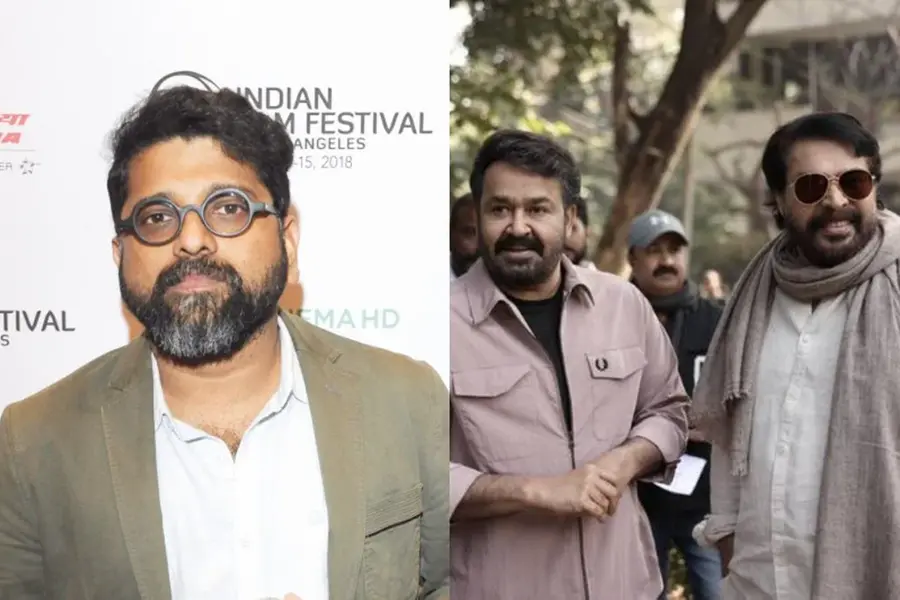
A distinct theme and narrative style are the signature trademarks of director Mahesh Narayanan. His films like Malik, Take Off, and Ariyippu stand as testaments to his ability to blend artistic depth with social relevance. Excerpts from the conversation with the director:
A film uniting Malayalam’s two great actors is in the works. What are the expectations for this film?
About 60% of the shoot is complete. Alongside Mammootty and Mohanlal, the film features a large ensemble cast. I can’t reveal much more right now. It’s a film that blends commercial elements with my style. A lot of hard work has gone into it. It’s designed as a mainstream theatrical experience, but I’ve tried to retain my creative identity in it.
You’re also producing Thalavara along with this film. How do you manage both roles—director and producer—simultaneously?
Thalavara hits theaters on the 22nd. I began working on it some time ago. I moved on to the new film only after completing all pre-production for Thalavara. My co-producer, Shebin Backer, handles the rest. What remains for me now is just the post-production work.
Tell us more about Thalavara.
The film is directed by Akhil, who earlier made Archana 31 Not Out. He’s a promising filmmaker. The story is drawn from Akhil’s personal experiences. The protagonist, played by Arjun Ashokan, is a person with vitiligo. The story explores his life in a heartfelt yet light-hearted manner. That ability to handle significant subjects with a lighter touch is something I find truly intriguing about this new generation of filmmakers.
Your films like Ariyippu, Take Off, and Malik are rooted in real-life events. How does that influence your storytelling?
Every film I make originates from a story, incident, or experience that deeply affected me. I aim to create films with substance, and I try to ensure that no two of my films resemble each other. Malik is very different from Take Off, and Ariyippu is different again. Ariyippu was an academic exercise for me. On the other hand, the current project with Mohanlal and Mammootty is a big-budget commercial film intended for a wider audience—but I’ve still tried to preserve my style.
You’ve taken on multiple roles—editor, screenwriter, director, producer. Any plans to act?
No. I entered the industry as an editor. I studied editing in film school. My journey began with editing films like Vishwaroopam, Beautiful, Ennu Ninte Moideen, and Traffic. Later, Rajesh Pillai, the director of Traffic, encouraged me to write Mili. In fact, Malik was the first script I wrote intending to direct, but it didn’t happen at that time. I prefer going with the flow. Later, I also worked on the script and cinematography of Malayankunju. I believe the future belongs to independent artists—filmmakers who can handle all aspects of the craft. That’s why I try to learn and do everything myself.
Was C U Soon part of that evolving approach?
Absolutely. It was born out of an experimental thought—“Can we make a film using just a mobile phone?” This was during the COVID lockdown. Everyone was working from home, and this film proved that cinema could also adapt to that model.
Have friendships helped your growth in the industry?
Yes, definitely. Friends give you the courage to experiment. Fahadh Faasil, for example, supported C U Soon. Kunchacko Boban was there for Ariyippu. Behind the current Mammootty–Mohanlal project too, there’s similar encouragement. In fact, it was Fahadh who urged me to pitch the story to Mammootty. I believe in building strong relationships with every film I work on. It’s meaningful when a producer is willing to back your next film because of the trust built from the previous one.
Fahadh appears in most of your films. Is there a special creative bond there?
Yes. Since we’re close friends, Fahadh instantly understands my ideas. I grasp his thoughts just as quickly. He knows all the stories I have in mind. That kind of synergy helps immensely.
You don’t seem to churn out films rapidly. What’s your process?
I never write scripts with a specific actor in mind. I write the story first, and then figure out who fits the character. I’m not interested in increasing my film count. Every film is as challenging as my first one. But I enjoy that struggle.
Your films have brought change to Malayalam cinema without courting controversy. How do you maintain that balance?
I strive to depict real events without distortion. But I’m not a documentary filmmaker—I'm a fiction filmmaker. So, I do fictionalise certain elements. Still, I try to present them in a way that reaches the common audience. For instance, while making C U Soon, I worried whether people would actually read text messages on screen. But the feedback reassured me. That kind of audience response shapes how I approach each film.
You often incorporate politics into your films. Is that intentional?
Politics is shaped by the environment we live in. It’s impossible to completely avoid it in cinema. The important thing is how and to what extent it is addressed. Of course, one doesn’t need to bring politics into every film. In a purely commercial film, certain responsibilities may have to be set aside. But when possible, I do take on the challenge of discussing politics—and I don’t shy away from it.
With the rise of OTT, is the shift away from theaters a challenge?
I’ve made only one film directly for digital—C U Soon. Malik was made for theaters but had to release on OTT due to COVID. That film stayed unreleased for almost two years. During the pandemic, Kerala was among the first to shut down theaters and the last to reopen. Producers faced huge financial challenges. So, Malik went to OTT to help the producer recover some investment.
The people who were most disheartened by that were the sound team. Sushin Shyam composed the music, and Vishnu Govind, who did the sound mixing, won the National Award. Ironically, only the award jury saw Malik in a theater! I still hope to re-release it theatrically someday.
Malayankunju was originally planned for OTT, but when A.R. Rahman joined as the composer, we reconsidered and opted for a theatrical release. I believe both platforms should coexist. Films suited for theaters should be seen there. These days, it’s harder to attract people to theaters. Earlier, the turning point of a film would come around the 20th minute—now it needs to happen by the 5th. People’s attention spans are shorter, and they get entertainment instantly on their phones. Theaters must offer something more compelling than that.
Who are your biggest influences and references in filmmaking?
My friends from film school have been a constant influence. They are my lifelong support system. Since I started as an editor, I had the opportunity to work with many directors and writers early on. If I ever have doubts, I can call any of them without hesitation. They’ve all influenced my journey. I learned through discussions with them how a film truly takes shape.
The recent National Film Awards sparked much controversy. Do you believe awards define a film’s value?
Awards are decided by committees whose choices reflect their personal taste, politics, and perspectives. There’s no use arguing about it. Under any government, policies and decisions will reflect their agendas—even in the arts. I don’t believe awards determine a film’s true worth. What matters most is whether your film reaches your audience. That’s enough for me.
What’s next for Mahesh Narayanan?
I’m currently working on a biopic of former Formula One racer Narain Karthikeyan. I'm co-writing the screenplay with writer-director Shalini, and it's the first time I’m co-writing a script with someone else. I’ll only consider new projects after finishing work on the films currently in production.
Published: 24 Aug 2025, 03:41 pm IST
Related Topics
Disclaimer: Kindly avoid objectionable, derogatory, unlawful and lewd comments, while responding to reports. Such comments are punishable under cyber laws. Please keep away from personal attacks. The opinions expressed here are the personal opinions of readers and not that of Mathrubhumi.
