
From ‘Padmavati’ to ‘Ghooskhor Pandat’, Bollywood’s long history of title changes resurfaces amid fresh controversy.
New Delhi: The decision to rename ‘Ghooskhor Pandat’ following objections to its allegedly casteist title has once again spotlighted a familiar trend in Hindi cinema — films altering titles, lyrics or promotional content after facing protests, legal challenges or social backlash.
Filmmaker Neeraj Pandey’s Manoj Bajpayee-starrer joins a long list of Bollywood projects that were forced to rework their public identity in response to sensitivities raised by different groups, often ahead of release.
Over the years, several high-profile films have navigated similar turbulence:
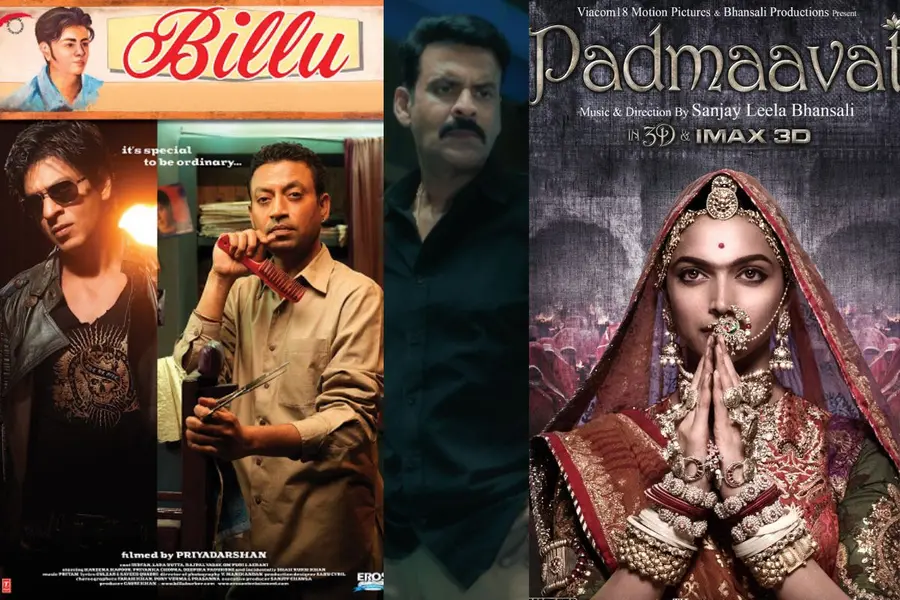
One of the most prominent cases was Sanjay Leela Bhansali’s 2018 historical drama ‘Padmavati’, which was later renamed ‘Padmaavat’. The film, starring Deepika Padukone, Ranveer Singh and Shahid Kapoor, was mired in controversy over claims that it portrayed queen Padmavati in poor light. Members of the Karni Sena vandalised sets, issued threats and demanded a ban, while objections were also raised by Muslim groups over the depiction of Alauddin Khilji. Despite being cleared by the censor board, the film underwent a re-evaluation, following which a title change was recommended. Both Bhansali and Padukone received death threats during the period.
In 2009, Shah Rukh Khan-produced ‘Billu Barber’, directed by Priyadarshan and starring Irrfan, faced objections from hairdressers’ associations in Mumbai, who argued that the word ‘barber’ was casteist. The makers eventually shortened the title to ‘Billu’. Khan later invited members of the association to the film’s premiere. The film featured Irrfan as a village barber whose childhood friend grows up to become a superstar.
The Akshay Kumar–Kiara Advani starrer ‘Laxmmi Bomb’ was renamed ‘Laxmmi’ ahead of its 2020 release after the Karni Sena issued a legal notice alleging that the original title was disrespectful to goddess Laxmi. Directed by Raghava Lawrence, the film revolves around a man possessed by a transgender ghost seeking justice.
Bhansali encountered similar resistance with his 2013 film ‘Ram-Leela’, which eventually released as ‘Goliyon Ki Raasleela Ram-Leela’. Religious groups objected to the use of the names ‘Ram’ and ‘Leela’, prompting the Madhya Pradesh High Court to order a title change. The film, inspired by Shakespeare’s ‘Romeo and Juliet’, starred Ranveer Singh and Deepika Padukone as lovers from rival gangster families in Gujarat.
In 2019, Ekta Kapoor-produced ‘Mental Hai Kya’ was rechristened ‘Judgementall Hai Kya’ after the Indian Psychiatric Society flagged the original title as insensitive to people with mental health conditions. The Kangana Ranaut–Rajkummar Rao film centres on a character with a history of institutionalisation.
The 2018 debut film of Aayush Sharma, ‘Loveratri’, produced by Salman Khan Films, also ran into trouble, with protesters claiming the title disrespected the Navaratri festival. Set against the backdrop of garba celebrations, the film was renamed ‘Loveyatri’ to avoid further opposition.
Similarly, Kartik Aaryan–Kiara Advani starrer ‘Satyanarayan Ki Katha’ was retitled ‘Satyaprem Ki Katha’ in 2023 after concerns were raised about hurting religious sentiments, as Satyanarayan is another name of Lord Vishnu. Director Sameer Vidwans said the original title emerged organically but the team was willing to make the change.
Yash Raj Films’ 2022 historical ‘Prithviraj’, starring Akshay Kumar, added the prefix ‘Samrat’ after objections from the Karni Sena, becoming ‘Samrat Prithviraj’. The film draws from Chand Bardai’s accounts of the Rajput king’s life and romance with Sanyogita.
Title changes were not the only course corrections. In the 2007 Madhuri Dixit film ‘Aaja Nachle’, the word ‘mochi’ was removed from the title song after then Uttar Pradesh chief minister Mayawati banned the film, calling the lyric casteist.
Vishal Bhardwaj’s ‘Kaminey’ also saw a lyrical alteration, with the word “teli” muted in the song “Dhan Te Naan” following community objections, and replaced with “dilli”.
Likewise, a line in the song “Radha” from Karan Johar’s ‘Student of the Year’ was modified after religious groups objected to the use of the word “sexy”, which was later replaced with “desi”.
As the “Ghooskhor Pandat” episode shows, filmmakers continue to walk a fine line between creative expression and public sentiment in India’s charged cultural landscape.
PTI
Published: 10 Feb 2026, 09:40 pm IST
Related Topics
Disclaimer: Kindly avoid objectionable, derogatory, unlawful and lewd comments, while responding to reports. Such comments are punishable under cyber laws. Please keep away from personal attacks. The opinions expressed here are the personal opinions of readers and not that of Mathrubhumi.
