
Chiyaan Vikram faced online criticism after sharing a video featuring a Lar Gibbon, with questions later raised about how the animal was acquired and whether the required documentation was in place
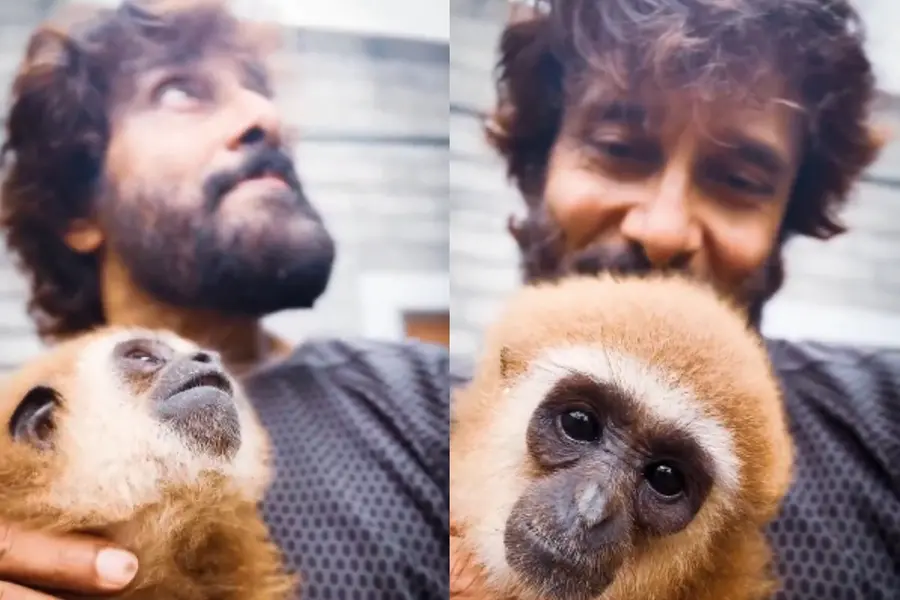
A video of actor Chiyaan Vikram spending time with a Lar Gibbon has landed him in the middle of a wildlife controversy.
What initially appeared to be a light-hearted interaction with the animal quickly drew attention online, with viewers questioning how the gibbon came to be in a private setting and whether the necessary permissions were in place.
Vikram later removed the video, but the discussion did not stop there. Wildlife concerns and questions about the ownership of the animal have since spread across social media and prompted reports of an enquiry.
Why the gibbon has raised questions
The animal seen in the video has been identified as a Lar Gibbon, scientifically known as Hylobates lar. The species is protected under international wildlife-trade rules and is listed under CITES Appendix I, which places particularly strict controls on international trade.
CITES says Appendix I covers species threatened with extinction and that trade in their specimens is subject to strict regulation, with international commercial trade generally prohibited except in limited circumstances.
That does not, by itself, mean that every Lar Gibbon kept in India is automatically being held illegally. The legal position can depend on how the animal was acquired, its origin and whether the required documents, certificates or permissions exist.
A recent report cited claims that the gibbon had been brought from Manipur to Erode in Tamil Nadu in June and alleged that it had been officially purchased. Those claims have not been independently confirmed by an official finding at this stage.
Where CK Ranganathan comes into the story
The controversy has also brought businessman CK Ranganathan into the conversation. Ranganathan, the founder-chairman of CavinKare, is the father of Manu Ranjith, who is married to Vikram's daughter Akshita.
Reports have claimed that Chennai wildlife officials visited Ranganathan's residence after the video was posted and that questions were raised about the animal.
However, there has so far been no confirmed public finding that Vikram or Ranganathan violated wildlife laws. A report published by The Times of India also noted that allegations about the animal's origin and ownership remain unverified.
That distinction is important, particularly when questions of wildlife law and private ownership are involved.
What does the law say about exotic wildlife?
India's rules around exotic animals are not as simple as saying that every non-native animal is illegal to own.
The legal position can depend on the species, its conservation status, where it came from and the paperwork accompanying it. A CITES-listed animal can also be subject to international trade restrictions and Indian regulations.
A CITES document examining India's wildlife-trade framework notes that possession of certain scheduled species is regulated under the Wildlife (Protection) Act and can require a certificate of ownership from the Chief Wildlife Warden. It also points out that not every CITES Appendix I species is automatically included in India's domestic schedules, making the exact legal status dependent on the species and applicable provisions.
So, in the case of the Lar Gibbon seen with Vikram, the key question is not simply whether it is an exotic animal. It is whether its acquisition, movement and possession complied with the applicable rules and documentation requirements.
Why wildlife activists are concerned
Lar Gibbons are wild primates rather than domesticated pets. They are native to parts of Southeast Asia and have faced threats including habitat loss and hunting. The species is also listed as endangered in conservation references.
The concern around celebrity posts involving protected wildlife also goes beyond one individual animal. Such videos can make keeping wild animals in private settings appear normal or desirable, particularly when shared with a large audience.
The backlash against Vikram's video has therefore become part of a wider conversation about exotic animal ownership and the responsibilities that come with displaying wild animals online.
The video was taken down within a day, but screenshots and reactions continued to circulate online.
Some social media users questioned whether the animal had been legally acquired, while others criticised what they saw as the casual treatment of a protected wild species. One widely shared reaction accused Indian laws of being applied differently to wealthy people.
At the same time, it is worth separating online speculation from established facts. As of now, reports have raised questions about the animal and its ownership, but there has been no confirmed official conclusion establishing that Vikram committed a wildlife offence.
For now, the controversy remains less about the short video itself and more about a larger question: when a wild and protected animal appears in someone's home or social media post, what documentation and permissions are actually required?
Published: 11 Aug 2026, 05:13 pm IST
ABOUT THE AUTHOR

Related Topics
Disclaimer: Kindly avoid objectionable, derogatory, unlawful and lewd comments, while responding to reports. Such comments are punishable under cyber laws. Please keep away from personal attacks. The opinions expressed here are the personal opinions of readers and not that of Mathrubhumi.