

Explore Kappa CULTR 2026 in Kochi & Psyfyi`s vision for India`s electronic music scene. Discover community, culture & book tickets now!
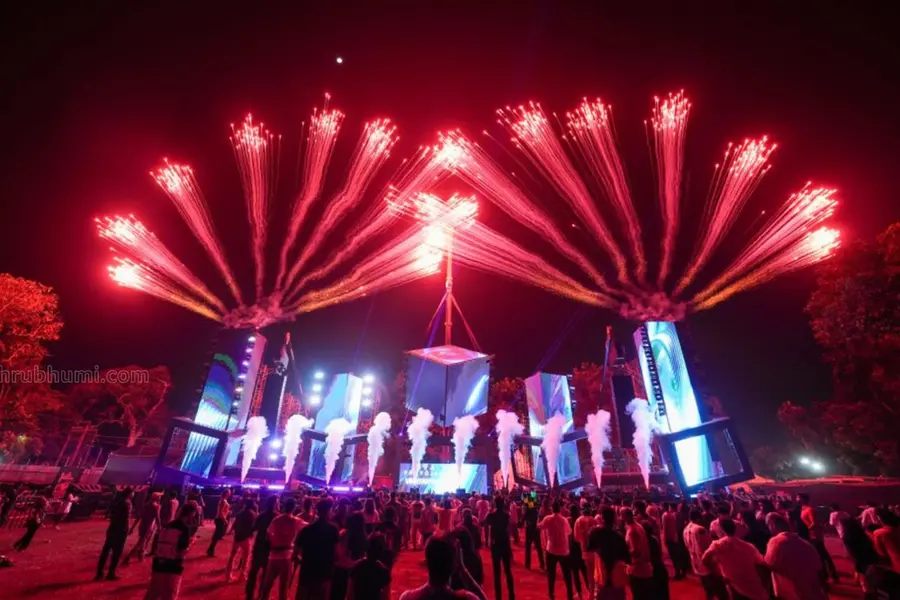
As Kappa CULTR 2026 gears up to transform Bolgatty Palace, Kochi into a three-day electronic music and culture destination from February 20–22, the festival has partnered with Psyfyi Magazine to amplify India’s fast-evolving rave and underground music movement. Founded by culture-first entrepreneur Ayushman, Psyfyi has emerged as one of the country’s most influential platforms documenting electronic music, festivals, and youth subcultures.
Speaking to Mathrubhumi, Ayushman, whose journey spans India’s club circuits and the UK’s iconic festival spaces, shared insights into how electronic music in India is moving beyond nightlife into a powerful community-driven culture.
Here are excerpts from his interview as Kappa CULTR prepares to host some of the most exciting names in global and Indian electronic music this February in Kochi.
Book Tickets Now for Kappa CULTR 2026
Q. In India, electronic music is often framed as party culture. You frame it as community and identity. Where do you think that misunderstanding comes from?
Electronic music is extremely diverse, but in India, it is often reduced to a narrow idea of nightlife and partying. That misunderstanding comes from surface-level exposure. People usually see only the loudest, most commercial version and miss the deeper layers. Globally, electronic music grew from communities, not clubs. It came from people who felt like outsiders, who needed a space built on love, respect, freedom of expression, and collective energy. In India, electronic music often becomes an escape for like-minded people to unite without judgment. It is not just about dancing; it is about belonging, shared values, and identity. When you spend time inside the scene, you realise it is closer to a cultural movement than a party trend.
Q. Electronic music is still evolving here. Having seen the UK’s festival economy, what do you think are the gaps that currently hold India back?
The first gap is government and local institutional support. In the UK, festivals are treated as cultural assets and economic drivers. There are clear policies, licensing systems, and city-level support. In India, electronic music still operates in a grey zone, which limits scale and long-term planning.
The second gap is care for attendees. Internationally, organisers focus deeply on safety, crowd flow, sound quality, sanitation, harm reduction, and overall experience. In India, this mindset is improving but is still inconsistent.
The third and biggest gap is stigma around the rave scene. Raves are often misunderstood as chaotic or irresponsible. In reality, authentic electronic music gatherings are about consent, safety, community care, and respect. What is often imagined as reckless is, in many cases, more organised and value-driven than mainstream nightlife.
Q. Do you think mobility in childhood makes someone more open to subcultures? Or does it also create a search for community that you are now building through Psyfyi?
Mobility in childhood definitely creates openness. Growing up across different cities exposes you to multiple languages, behaviours, music styles, and social structures at an early age. That exposure removes fear of the unfamiliar. At the same time, it does create a deeper search for community. When you do not belong to just one place, you start valuing spaces where people connect through shared ideas rather than geography. Psyfyi is a natural extension of that journey. It is not tied to one city or class; it is tied to a mindset.
Q. Was there a particular city or moment that first made you feel, “this is my culture now,” like electronic music feels like home?
That moment happened in London. Experiencing spaces like Fabric, Ministry of Sound, and Printworks completely shifted my understanding of what electronic music could be. These were not just clubs; they were cultural institutions. The sound systems, the diversity of people, the respect for artists, and the sense of shared energy made it feel like home. That is where I got the calling that India, with its massive youth population and deep musical heritage, could build something equally powerful. That realisation became the foundation for PSY FYI.
Q. What was the moment when you realised Psyfyi should move from just a content page to a space for the community?
When people started reaching out with genuine love and trust. At the same time, I became more aware of how many challenges artists, creators, and organisers face in this industry, from lack of visibility to unfair economics. Psyfyi could not remain just a media page. It needed to become a platform that supports, amplifies, and protects the ecosystem. That shift happened organically, driven by responsibility rather than ambition.
Q. Clothing is a language, especially in subcultures. What does Psyfyi’s merchandise say about the Indian rave identity today?
Psyfyi merchandise functions like a uniform for the counterculture community. It signals belonging without needing explanation. We focus on high-quality fabrics because longevity matters in subcultures; these are not disposable trends. We also work closely with independent designers and artists, providing them with paid gigs and royalty structures so they earn from every piece sold. The merch reflects an Indian rave identity that is confident, conscious, and rooted in fairness rather than fast fashion.
Q. You built this after Covid, when live events were at their weakest. What told you it was the right time instead of the worst time?
Covid forced everyone to confront isolation. It reminded us how deeply humans need connection and shared experiences. I knew that once restrictions were lifted, people would return to dance floors with even more intensity. Electronic music thrives on release and togetherness, and I could sense that the comeback would be massive. That instinct proved right as India witnessed the rise of large-scale festivals and renewed energy across the scene.
Q. If Psyfyi becomes a global cultural bridge, how do you want the world to first experience Indian electronic music?
Indian electronic music is already gaining international attention, with nearly 40 percent of our audience coming from outside India. I believe the strongest global identity will emerge from blending Indian classical elements with electronic music. Instruments like the sitar, tabla, and shehnai bring emotional depth that resonates universally. We are also seeing Indian festivals like Karacus Marakus expanding to international destinations such as Thailand, which is a major win for the scene. This export of sound, stories, and aesthetics will only accelerate.
Q. What convinced you that Kappa CULTR is the right stage for India’s electronic music community right now?
Kerala has always had a deep, soulful connection with music and art. The cultural sensitivity of the people, combined with Kerala’s natural beauty, makes it an ideal setting. Kappa CULTR brings a world-class lineup while respecting local context. It represents where Indian electronic music is headed: global in quality, local in soul.
Book Tickets Now for Kappa CULTR 2026 – Feb 20–22
Q. When you curate or support an event, what is the first thing you look for?
The first thing is intention. A strong lineup matters, but storytelling, community vibe, and production ethics matter more. I look for events that understand why they exist, not just how many tickets they can sell. When intention is clear, everything else aligns naturally.
Q. When international artists share the stage with Indian artists, what kind of cross-pollination are you expecting at Kappa CULTR 2026?
True exchange, not hierarchy. When international and Indian artists share a stage as equals, it leads to creative learning on both sides. Indian artists gain global exposure and technical insights, while international artists absorb Indian rhythm, spirituality, and storytelling. At Kappa CULTR 2026, this cross-pollination can push Indian electronic music into a more confident, globally relevant phase without losing its identity.
Published: 30 Jan 2026, 08:42 pm IST
ABOUT THE AUTHOR
Related Topics
Disclaimer: Kindly avoid objectionable, derogatory, unlawful and lewd comments, while responding to reports. Such comments are punishable under cyber laws. Please keep away from personal attacks. The opinions expressed here are the personal opinions of readers and not that of Mathrubhumi.