

From "Marry me, Juliet" to "I wouldn't marry me either," Taylor Swift's lyrics have chronicled her belief in love and marriage. Everything was slowly leading to this moment.
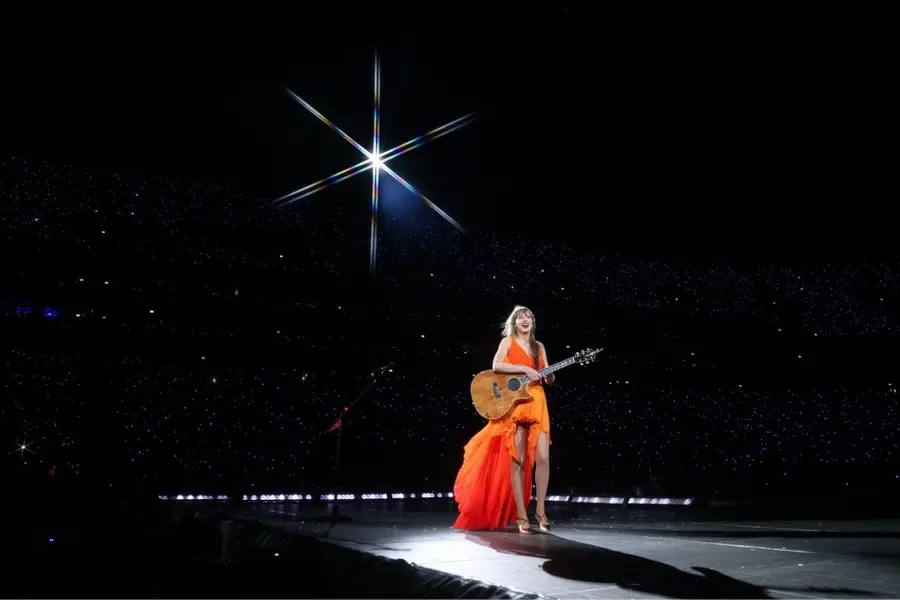
For nearly two decades, Taylor Swift has turned her love life into one of pop music's most detailed emotional diaries. Every album had a different chapter, fairytale crushes, painful heartbreaks, complicated long-term relationships and, eventually, a renewed belief in forever.
Long before wedding bells became real life, they were already echoing through her discography.
Also Read
At 18, ‘Love Story’ gave the world the most unforgettable proposal, "Marry me, Juliet, you'll never have to be alone." It was the fantasy ending every hopeless romantic wanted.
‘Speak Now’ imagined interrupting someone else's wedding to declare true love, while years later the vault track ‘Foolish One’ acknowledged that fairy tales don't always choose the heroine, "I'll get your longing glances, but she'll get your ring."
Those early songs dreamed about marriage. The albums that followed questioned it.
By the time ‘Lover’ arrived, Swift's idea of commitment had matured. Instead of dramatic proposals, she celebrated everyday intimacy. "Can I go where you go?" was not a pickup line, it sounded as a lifelong promise, while "Ladies and gentlemen, will you please stand?" was close to wedding vows.
Then came ‘Paper Rings,’ where she famously declared, "I'd marry you with paper rings." It wasn't about diamonds or grand gestures anymore, it was about choosing someone, with or without the expensive symbolism.
Then everything changed.
On ‘Folklore’ and ‘Evermore’, weddings became symbols of heartbreak instead of happily-ever-afters.
‘Champagne Problems’ centered on a proposal that ended in rejection. ‘Tolerate It’ showed what it feels like to remain devoted to someone who barely notices you're there.
Even ‘the last great american dynasty’ opened with "The wedding was charming, if a little gauche," proving that marriage had become another storytelling device, one that carried disappointment than celebration.
That emotional uncertainty became deeply personal on ‘Midnights’.
Swift openly questioned society's obsession with defining women through marriage. On ‘Lavender Haze,’ she dismissed ‘the 1950s shit they want from me,’ pushing back against constant speculation about whether she'd become someone's bride. "All they keep asking me is if I'm gonna be your bride," she sang, making it clear that public expectations often felt more exhausting than romantic.
At the same time, ‘Midnight Rain’ was about the tension between ambition and domestic life. "He wanted a bride, I was making my own name," Swift admitted her take on how different dreams can quietly pull two people apart. It wasn't necessarily a rejection of marriage itself, it was a recognition that timing, priorities and personal growth matter just as much as love.
Then came the lyric that hit fans like a punch to the chest, "I wouldn't marry me either."
Released later as ‘You're Losing Me,’ the song peeled back the confidence of previous albums and exposed the devastation underneath. Paired with "I'm a pathological people pleaser," said the insecurity that creeps into a relationship that's already slipping away.
Suddenly, all those earlier songs about refusing society's expectations felt more layered. Was she rejecting marriage or protecting herself from wanting something she wasn't going to get?
By the time ‘The Tortured Poets Department’ arrived, marriage appeared everywhere, but mostly as an almost.
‘But Daddy I Love Him’ rushed headfirst into reckless romance, teasing, "No, you can't come to the wedding," as if daring the world to object.
‘loml’ painted an even sadder picture, telling how quickly a relationship moves from fantasy to forever, "You and I go from one kiss to gettin' married." Then came the devastating realization, "Talking rings and talking cradles," only for those dreams to dissolve into "How we almost had it all."
Few images in Swift's songwriting are more haunting than "Dancing phantoms on the terrace,” "ghosts of a future that never happened, lingering where wedding guests might have stood.
Across all these albums, marriage was never really the destination. It was shorthand for being chosen, feeling secure, imagining a future, and believing someone would stay.
The teenager singing "Marry me, Juliet," the woman insisting she didn't care about becoming "your bride," the heartbroken narrator confessing "I wouldn't marry me either," and the dreamer envisioning "rings and cradles" aren't contradictions. They're different versions of the same person, growing in public.
Perhaps that's why these songs don't tell one love story, they tell many. They remind us that hope can become doubt, certainty can become heartbreak, and sometimes the dreams we insist we've outgrown are simply waiting for the right person to make them feel possible again.
Published: 06 Jul 2026, 01:07 pm IST
ABOUT THE AUTHOR
Disclaimer: Kindly avoid objectionable, derogatory, unlawful and lewd comments, while responding to reports. Such comments are punishable under cyber laws. Please keep away from personal attacks. The opinions expressed here are the personal opinions of readers and not that of Mathrubhumi.