
In this candid chat, the ‘Taare Zameen Par’ actor talks about playing the antagonist, the art of subtlety, breaking free from typecasting, and why patience is still key to good storytelling
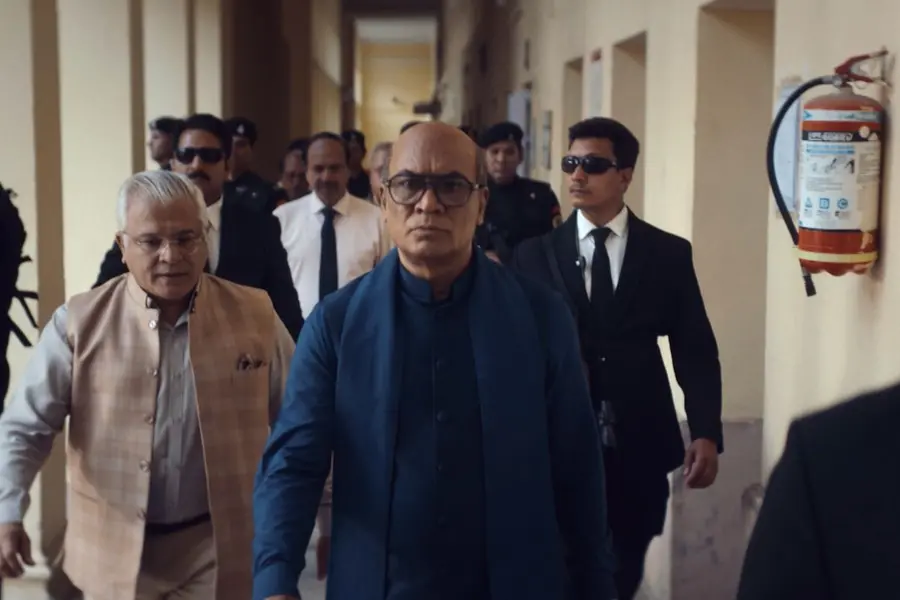
Known for bringing quiet intensity and emotional depth to every role he takes on, Vipin Sharma is stepping into a darker, more complex space with ‘Maharani 4’.
The ‘Taare Zameen Par’ actor, who has since built a diverse body of work across films and OTT joins the popular Sony LIV political drama as Huma Qureshi’s arch-nemesis.
In a conversation with Mathrubhumi English, Vipin spoke at length about stepping into a fan-favourite franchise, playing with power dynamics on screen, resisting typecasting, and why subtlety and preparation still matter in an evolving industry. Read excerpts:
How did Maharani 4 happen for you, and what drew you towards this role?
I’ve been in touch with Subhash Kapoor ji for a long time. I have a tendency that whenever I watch a film I like, I reach out to the maker — just to express that I appreciate their work. I feel that creates a sense of connection, a like-mindedness. So, we stayed in touch through messages and met a few times.
Eventually, this opportunity came along. I was very excited because ‘Maharani’ already has three popular seasons, and it’s a great series to be a part of.
Since this is the fourth season of a successful show, does that add any pressure when you're joining it?
There is always pressure with every project, whether it's a franchise or something new. But yes, being part of something already so popular does bring extra pressure. You want to contribute something meaningful and help take it further.
As a viewer, what do you think sets ‘Maharani’ apart from other series in this genre?
In storytelling, the shows that succeed usually have amazing characters — and ‘Maharani’ has many. The story doesn't stay in one place; it keeps moving and is very dynamic. Every character, big or small, shines at some point. That's the strength of the writing and how the show is made.
You're playing the arch-nemesis of Huma Qureshi’s character. What emotion do you want the audience to feel when they see you on screen?
Power dynamics are always interesting because the balance can shift at any moment. That drama between the two characters is quite amazing. I hope the audience enjoys that aspect — the unpredictability and the tension.
In a show about power and strategy, how do you build those mind games on screen? Does it come from the writing, or do you add your own layers?
A lot comes from the writing. The writers have spent a lot of time fine-tuning everything. As an actor, you must be careful not to turn it into something it’s not — not make it a cliché. You just enhance what’s already there without overdoing it. When the writing is powerful, I prefer to underplay. The writing should shine on its own.
Without revealing spoilers, was there a moment during filming that really stood out for you?
The first promo with Huma—when we shot that scene, I was very excited. I didn’t know it would become the first promo of the season. It turned out really well. Also, I learnt something meaningful — that there is inherent dignity and grace in power. That was a beautiful takeaway for me.
Did you look to any real-life politicians for inspiration for this role?
No. I never look for external inspiration, not even for remakes. I avoid watching references because I want to create the character entirely on my own. I focus only on the text — the dialogues, the situation. I want to be as invisible as possible and let the character emerge naturally. If you rely on references, you end up colouring the role unnecessarily.
As an actor with years of experience, do you think acting as a craft has changed with time?
Yes, it evolves. Around the world, new acting techniques and approaches are constantly emerging. Earlier in India, actors did multiple shifts, so they didn’t have time to read scripts — that’s why narrations existed. Narration is an Indian concept. Dialogues also had a particular style earlier. Now, subtle and natural acting is more accepted than melodrama. It's changing, and it will keep changing.
Is there anything you think the industry is missing today compared to earlier times?
I don’t compare much, since my first film was ‘Taare Zameen Par’ in 2007. But I do feel we should spend more time preparing — on the writing, on scene exploration, and on rehearsals. We rush too much. I wish we slowed down and spent more time refining things.
You once mentioned facing typecasting after ‘Taare Zameen Par’. Did you manage to break that?
Yes, but it required effort. After ‘Taare Zameen Par’, I got many similar roles — strict, angry father roles. I had to say no to a lot of work. If you do something well, people want you to repeat it. But you must avoid becoming a cliché. It’s difficult because you're saying no to money and opportunities, but it’s important.
If you were offered the same role in ‘Taare Zameen Par’ today, would you change anything?
I would love to explore a more fluid version of him. Maybe show regret earlier in the story rather than only at the end. Perhaps express anger differently. But that original version has such a strong impact that it’s hard to imagine another version.
After ‘Maharani 4’, what can we expect from you next?
‘The Family Man 3’ is releasing next month. I’ve also done ‘Kis Kisko Pyaar Karoon 2’ with Kapil Sharma. And there are a couple of web shows in post-production.
Published: 05 Nov 2025, 05:13 pm IST
Related Topics
Disclaimer: Kindly avoid objectionable, derogatory, unlawful and lewd comments, while responding to reports. Such comments are punishable under cyber laws. Please keep away from personal attacks. The opinions expressed here are the personal opinions of readers and not that of Mathrubhumi.
