
The director praises his talented cast, including Roshan Mathew and Mohit Raina, highlighting their collaborative spirit and commitment to their roles.
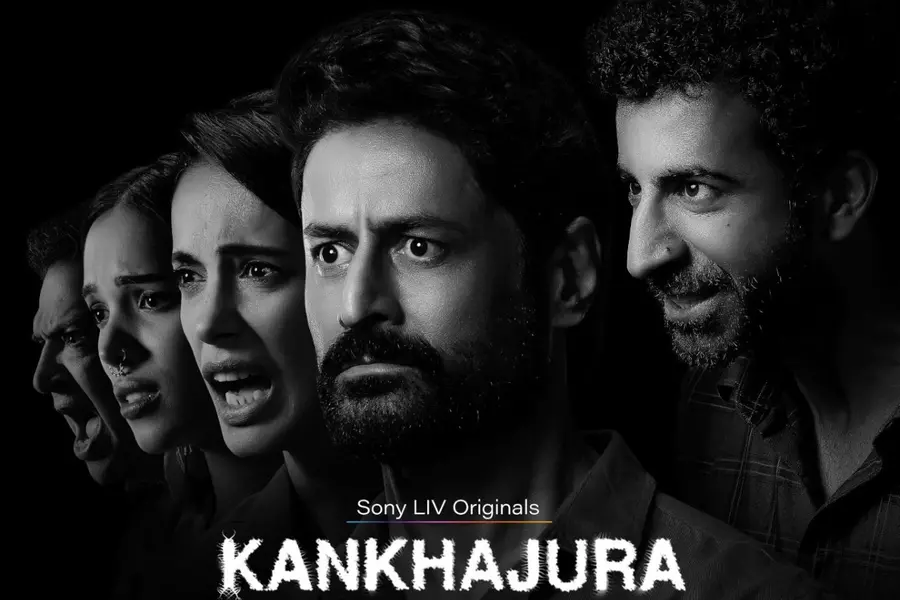
Bringing a story from one culture into the heart of another is no easy feat, especially when it demands retaining its emotional intensity and psychological depth. With ‘Kankhajura’, the Indian adaptation of the Israeli series ‘Magpie’, director Chandan Arora took on that very challenge, crafting a narrative that feels both globally relevant and deeply rooted in its Indian context.
The psychological thriller, which has been winning praise since its premiere on SonyLIV, showcases Arora’s nuanced storytelling.
In an exclusive interview, he dives into the creative choices and challenges behind the adaptation, while also reflecting on his dynamic collaboration with lead actors Roshan Mathew and Mohit Raina.
‘Kankhajura’ has got a shout-out from the film industry, including Karan Johar. How are you feeling about the love it is receiving from everyone?
You know how it feels when anything you have done is well-received and appreciated? It’s just that!
It’s very good that in today’s day and age, when the attention span is so short, ‘Kankhajura’ is getting this kind of traction.
It’s really great and encouraging for people like us who like to try out different things. It’s a good thing when it’s not just a clutter-breaker or the mood of the season, yet manages to hit a home run - it’s a very encouraging thing.
In 'Kankhajura', you worked with actors like Roshan Mathew and Mohit Raina. How did you approach directing them to bring out the complex dynamics required for their roles?
A director’s job is half done if he gets actors of his caliber. Fortunately, the full process of this project coming together happened so quickly that there was this excitement that everybody was feeling right at the outset, which was able to get translated into the workshops and then later during the shooting.
Kudos to the SonyLIV team for going for actors of this kind. They gave us quite a free hand, and even the actors were all ready to roll up their sleeves and play their respective parts. It was a very good marriage of the characters who are being played by the actors. It was very enjoyable.
'Kankhajura' is an adaptation of the Israeli series 'Magpie'. What motivated you to undertake this adaptation, and what challenges did you face in contextualizing it for the Indian audience?
Rather than adapting the scenes and the screenplay into an Indian setting, what we tried to do was, we tried to create fictional back stories of the characters, like who are these people and why are they doing what they are doing, and what is it that is making them who they are.
That sort of became the direction that the actors could also take. They knew who they were. It was not like how do we make this scene Indian? But because now we were making the whole progression with these characters, which are very rooted in Goa, in that world, which is why even that world also came alive.
It was this approach right at the beginning that helped us, otherwise, I don’t know how we could have gotten it this right.
The protagonist, Ashu, is portrayed with layers of vulnerability and manipulation. What was your vision for this character, and how did you guide Roshan Mathew to embody these complexities?
When you work with actors like Roshan Mathew, who are very sincere, and their portrayals of human elements are very responsible, their approach to their craft is very academic, rather than going for the mood of it… I think everybody in the cast is like that.
Their approach to their work is very academic, if I can say so, vven though some people came from Marathi theatre, Marathi films, some are local Goans, some came from a television background, and some from a Malayalam cinema background.
But their language of cinema was very similar. What we had a grip on was how we wanted the audience to feel about Ashu right from the get-go, and the writing also helped it.
Ashu has a different relationship with all the characters, so their characters also play a role in making who he is. The way Leena treats him, the way Shardul treats him, or the way Amy treats him, all of those things go into making him who he is.
When stalwarts like them or people who take their work seriously bring on their A-game when the cameras roll, then it’s just about making sure that we get the emotion of what we want the audiences to feel.
It’s not about getting just one character right, but the whole thing has to work in unison.
Are there any behind-the-scenes anecdotes or challenges during the making of 'Kankhajura' that stand out to you? Perhaps moments that were particularly rewarding or unexpected?
Honestly speaking, barring one or one-and-a-half days, every day on the way back from the set, my DoP and I have discussed that we’ve got some gold.
Every day we came back with gold because the material was so exciting, the locations were so beautiful, and the actors were so good. But if I have to talk about this one thing, then there is one particular scene which comes towards the end of the series, where Ashu is tied up at an under-construction place, and Max (played by Mohit) comes there.
There is a play out between the two brothers where their entire past comes in front of them, and they realize who has done what. That particular scene, for all of us, is very special.
I remember when we finished shooting it, everybody started applauding at the end of it. Even we didn’t know how they (Roshan and Mohit) were going to, and even the actor didn’t know how they were going to do the scene. It was such an emotionally charged scene that we did the basic mechanical setup for it.
But when the actors got into the feel of their characters and the scene, the cameras were rolling, we didn’t stop. Rajiv had also lit it up so beautifully. That scene, we all feel, was a brilliant one. It was like magic was happening, and we all saw it.
You began your journey in the film industry as an assistant director and editor, collaborating with notable filmmakers like Ram Gopal Varma and R Balki on projects such as 'Pyaar Tune Kya Kiya', 'Company', and ‘Cheeni Kum’. How did these experiences shape your approach when you transitioned to directing?
It has helped a lot. Editing is such an important part of filmmaking. To be even a fly on the wall in the meetings of so many people that you have mentioned, you always get to learn something. But to collaborate with them on such an important department, I can’t put a value on it or put words to it. With every interaction, you get to learn so much.
With a strong background in editing, how does this influence your directorial decisions on set? Do you find yourself visualizing the edit while directing scenes?
I’m sure subconsciously it might happen. But that much, all the technically sound directors know how their shot is going to be cut, and that’s how they shoot. Having said that, I don’t edit my material at all; there is always someone else who does it. I would not like to deprive myself of another set of brains, another set of hands working with the material.
The more able-minded and good technicians are on your team, the better it is. But when it’s working for other people, the mindset is completely different because you are giving vision to somebody else’s vision, you are adding muscles to somebody else’s strength. And that is a different process completely, and I don’t enjoy doing it for myself at all.
Even when I tend to be on the sets, it is more about the performances, how that moment can be turned into something so real that people believe that it’s actually happening.
Of course, technically one is aware that a shot is needed here or a shot will be cut there - that is something that almost all technically sound directors know. I’m sure there is an advantage, but I’m not very conscious about it.
Published: 05 Jun 2025, 06:55 pm IST
Related Topics
Disclaimer: Kindly avoid objectionable, derogatory, unlawful and lewd comments, while responding to reports. Such comments are punishable under cyber laws. Please keep away from personal attacks. The opinions expressed here are the personal opinions of readers and not that of Mathrubhumi.
