
Divya Dutta on ‘Mayasabha’, Yash Chopra memories, and why she still scares herself with new roles
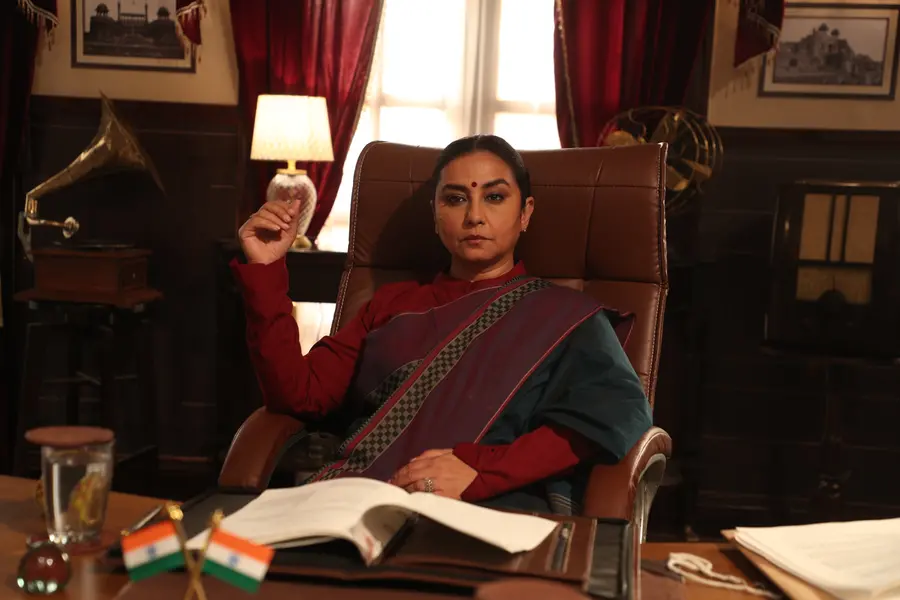
In a candid and heartfelt conversation with Mathrubhumi, acclaimed actor Divya Dutta opened up about her latest political drama 'Mayasabha', directed by Deva Katta, marking her Telugu debut.
Known for bringing emotional depth and authenticity to every character she plays, Divya discusses what drew her to the series, her approach to performance, and why she believes in constantly reinventing herself. From sharing memorable anecdotes about working with legends like Yash Chopra and Rakeysh Omprakash Mehra to reflecting on the evolution of roles for women in Bollywood, Divya talks about her journey in cinema.
Q: We’ve seen the trailer of ‘'Mayasabha'’ and it looks very promising. What were the aspects that drew you to the script and your character?
First and foremost, it was the uniqueness of the plot. It’s a very novel concept—something you probably haven’t seen on screen before. The drama, the intrigue, and the grandeur with which it’s made—it all stems from the director’s vision. Every role in the show is beautifully written, especially the rivalry between two friends, and my character plays a pivotal turning point in the story. It felt like one of those projects that you instantly know you want to be part of. 'Mayasabha' was an immediate “yes” for me.
Q:When you were actually playing the character, was there a particular moment or scene that made you feel your decision to do this was absolutely right?
The very first moment I stepped onto the set—it all felt just right. This is my first foray into the Telugu world, but the language never felt like a barrier. Everything was so beautifully articulated and communicated to me. I felt an instant sense of belonging—to the role, the unit, and the story itself.
What really stayed with me are the magical nuances of the scenes—the silences, the pauses, the twists, the games being played. As an actor, I thoroughly enjoyed performing. But even as a viewer watching myself, it was super fun. That rarely happens.
Q: Since the show revolves around political legacy and power, how did you prepare for the mindset of your character? Were there any real-life female politicians who inspired your performance?
Honestly, I’m not someone who does a lot of “homework” in the traditional sense. I trust my directors deeply—they do their prep, and if their brief satisfies me, I don’t feel the need to dig further. This script was so well-written, and the subtleties between the lines were where the real magic lay.
So I simply surrendered to the process. Sometimes you just have to dive into the pool, relax, and enjoy the swim. That’s what I did. I held my director’s hand metaphorically, flowed with the character, and gave it my all. And I think it turned out pretty kick-ass!
Q: You've played a wide range of roles over the years. Is there any kind of character that still scares or excites you—something you haven’t done yet but would like to try?
I’d love to do something that scares me. I think stepping into unexplored territory is essential for growth—it pushes you out of your comfort zone, and that’s where true discovery lies.
While it’s lovely to do what you’re good at, I believe in constantly reinventing myself. My entire career has been about rediscovery—doing something new, surprising both myself and my audience. And that’s a journey I want to continue.
Q: Do you feel Bollywood offers enough nuanced roles for women today? You've been part of the industry for years—what changes have you seen, and what changes do you hope for?
I wouldn’t say there are enough roles, but there’s certainly a wider and richer variety now. The roles are far more layered, and we’re telling more stories centered around women—exploring facets that were ignored earlier. That’s beautiful.
However, I feel the focus should stay on storytelling rather than slipping into the star system, which is now seeping into OTT too. The beauty of OTT lies in its authenticity—it introduces you to new characters, fresh perspectives. These characters could be played by stars, newcomers, or solid performers—but they need to fit the part.
We now have great writers and directors, and actors have more work than ever before. So yes, these are largely good times. But like always, there’s room to fine-tune.
Q: You’ve been part of impactful projects like 'Baghban', ‘Veer Zaara’, and now 'Mayasabha’. When you look back at your journey, how do you think you’ve evolved as an actor?
I’ve always believed in flowing with the tide rather than resisting it. That’s helped me remain relevant through changing times. For me, the best compliment is when someone from the audience says, “We relate to her.” That emotional connection means the world to me.
The key is to keep rediscovering yourself—unearth a new version of yourself with every role. You can’t rest on past achievements. Keep digging, keep working, and move forward. That self-work should never stop.
Q: You’ve worked with legendary filmmakers like Yash Chopra and Rakeysh Omprakash Mehra. What qualities do you think make a director unforgettable?
Their sensitivity and warmth. That’s what makes them see characters in ways others can’t. I grew up on Yashji’s films—his movies shaped my understanding of romance. So being part of Veer-Zaara with him was a full-circle moment.
Rakeysh Mehra, on the other hand, always challenged me. From playing a bold, uninhibited woman in ‘Delhi-6’ to being part of ‘Bhaag Milkha Bhaag’, he pushed me to explore facets of myself I never imagined. That ability—to see beyond an actor’s past work—is truly rare and admirable.
Q: Do you recall any memorable moments with Yash Chopra on set—something that stayed with you?
Oh yes! I still remember my very first shot for 'Veer Zaara'. It was a long monologue in a dialect I wasn’t even fluent in. I thought I’d dub it later, but was told we were using sync sound—I had to get it right then and there.
I was nervous. But Yashji looked so calm, as if to say, “What’s the big deal?” That ease, that quiet confidence—it transferred to me. We used to converse in Punjabi, which made me feel even more at home. And guess what? I nailed the shot in one take. He truly celebrated his actors, made them feel special, and gave them the space to shine.
One of your most iconic roles was in 'Baghban'—as the not-so-nice daughter-in-law. Did you ever receive strong reactions from the audience after the film?
Forget others—I gave myself a hard time! I was just 19 and very new to the industry. I used to go home feeling terrible after delivering such mean dialogues to someone I absolutely adored—Mr Amitabh Bachchan.
I remember one morning, I greeted him with a very glum “Good Morning.” He noticed and said, “You’re not being nice to me.” I defensively said, “Sir, I’m just saying my dialogues.” And he smiled and reminded me, “Exactly. You’re just saying your lines—you don’t mean them.”
That was the moment I learned to separate reel from real.
Q: 'Baghban' is famously one of those films kids hesitate to watch with their parents—because it inevitably turns into a ‘you better not do this to us!’ moment. Did you ever feel that awkwardness while watching it yourself?
That’s such an interesting observation—I’ve actually never heard that before! But I can imagine parents using it as a reference point to make their case (laughs). Personally, I’ve only watched 'Baghban' once, when it was released. After that, I couldn't bring myself to see it again—I felt I was just too cruel in it! But thankfully, my family has always been very chilled out. And yes, it’s quite something that even after all these years, the film continues to resonate so strongly. That says a lot about its lasting impact.
Q: How was it working with director Deva Katta on 'Mayasabha'? What did you learn from him, and how did you navigate the Hindi-to-Telugu transition?
Let me keep the language transition as a surprise—you’ll see when you watch the show! But as for Deva Katta, he’s an absolute delight to work with. He’s known as a sensation, and rightly so.
He’s simple, sharp, intelligent, and extremely sensitive—a lethal combination for a director. He knows exactly how he wants a scene to play out, right down to each beat and pause. There were moments on set when I would literally jump with joy in my sari, excited by how a scene turned out. I felt like a child again, having fun.
He brought his story to life through me like an artist painting on a blank canvas. His vision is truly mesmerising.
Q: Finally, after 'Mayasabha', what can audiences look forward to next from you?
Coming up, I have another web show on Jio, two films with Manoj Bajpayee, a biopic with Neeraj Kabi, and a romantic film with Jimmy Shergill. So yes—lots of exciting work ahead!
Published: 02 Aug 2025, 11:08 am IST
Subscribe to our Newsletter
Disclaimer: Kindly avoid objectionable, derogatory, unlawful and lewd comments, while responding to reports. Such comments are punishable under cyber laws. Please keep away from personal attacks. The opinions expressed here are the personal opinions of readers and not that of Mathrubhumi.
