

Huma Qureshi gives it everything but is that enough to save a thriller that takes its time to find its pulse?
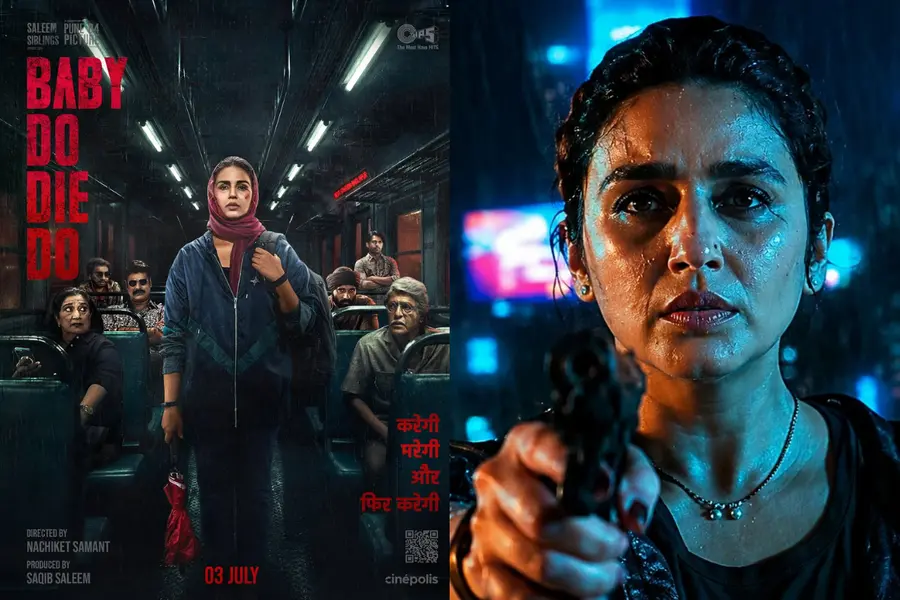
At a time when Bollywood thrillers often mistake relentless action for tension, ‘Baby Do Die Do’ chooses a slower, mood-driven approach. It isn't a film that grabs you from its opening scene.
In fact, its first half tests your patience with measured pacing and an unhurried narrative. But if you stay with it, the second half is better that it gradually moves into a thriller anchored by one of Huma Qureshi's strongest performances to date.
Directed by Nachiket Samant, the film follows Baby Karmarkar (Huma Qureshi), a deaf and mute contract killer who works for a powerful real-estate syndicate while carrying the emotional scars of her sister's murder. The mystery surrounding her past unfolds gradually, with the story blending revenge, trauma, and crime against the backdrop of Mumbai's rain-soaked streets.
The film's biggest challenge is its opening hour. While it establishes Baby's world and introduces several key characters, the narrative takes longer than necessary to find its rhythm.
The mystery is average and the screenplay spends too much time laying the groundwork, making portions of the first half feel stretched. There are moments when you wait for the story to truly begin, and that wait can be frustrating.
Fortunately, things become better after the interval. As secrets begin to unravel and the emotional stakes become clearer, the film finds its footing. The pacing tightens, and the tension builds.
The film belongs almost entirely to Huma Qureshi. Playing a protagonist who cannot communicate through dialogue is an enormous challenge, yet she conveys grief, anger, vulnerability, and determination almost entirely through her expressions and body language.
Without resorting to melodrama, she makes Baby an emotionally layered character. It's the kind of performance that reminds you how much can be communicated without words, and easily ranks among the finest of her career.
Sikandar Kher brings quiet menace to his role, while Chunky Panday pleasantly surprises with a restrained performance that adds weight whenever he appears. Seema Pahwa is dependable as always, and Rachit Singh provides warmth in a role that prevents the narrative from becoming overwhelmingly dark. The supporting cast contributes effectively without overshadowing the central story.
Technically, ‘Baby Do Die Do’ is considerably only impressive because of its cinematography that embraces a neo-noir aesthetic, using Mumbai's rain, shadows, and narrow streets to create an immersive atmosphere throughout.
What also works in the film's favour is its central idea. A deaf and mute assassin could easily have been reduced to a gimmick, but the film largely avoids exploiting Baby's disability for sympathy. Instead, it becomes an organic part of who she is and how she navigates the dangerous world around her.
That said, the screenplay isn't without flaws. Certain twists become predictable for viewers familiar with revenge thrillers, and a few narrative conveniences require suspension of disbelief.
The first half's sluggish pace also prevents the film from becoming consistently gripping. With better editing and a more engaging opening act, the emotional payoff in the latter half could have landed even harder.
Despite these shortcomings, ‘Baby Do Die Do’ succeeds to give Huma Qureshi a role that showcases her range as an actor.
‘Baby Do Die Do’ is a soft thriller that demands patience but not a big-scream as the posters and trailer suggest.
Rating: 2.5/5
Published: 04 Jul 2026, 10:23 am IST
ABOUT THE AUTHOR
Related Topics
Disclaimer: Kindly avoid objectionable, derogatory, unlawful and lewd comments, while responding to reports. Such comments are punishable under cyber laws. Please keep away from personal attacks. The opinions expressed here are the personal opinions of readers and not that of Mathrubhumi.