
Millions of children across the world continue to miss out on education and a safe childhood due to labour, highlighting the urgent need for stronger action against exploitation.
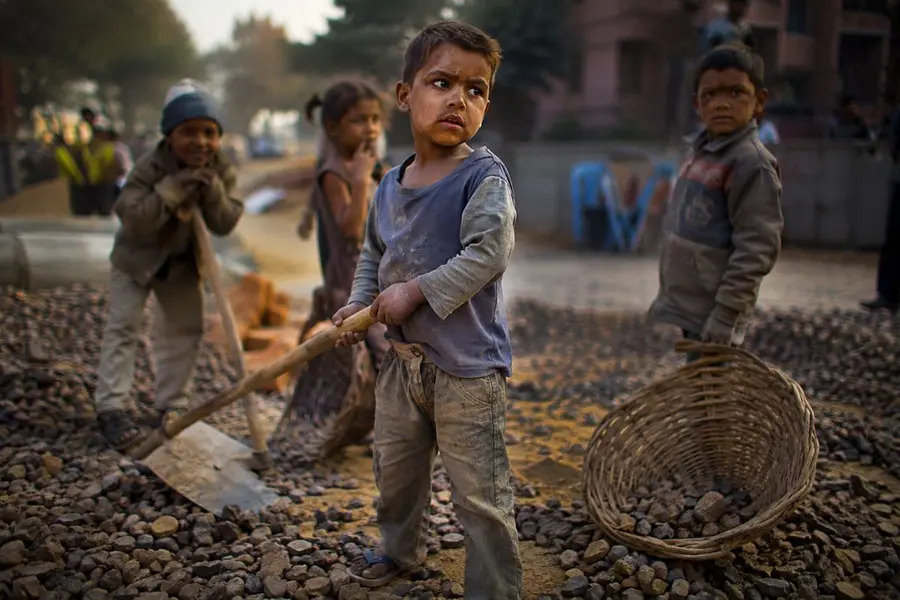
World Day Against Child Labour is observed every year on June 12 to raise awareness about the plight of millions of children who are deprived of their childhood, education, and basic rights due to child labour.
The global observance serves as a reminder that every child deserves a safe environment, quality education, and opportunities to grow without being forced into work.
The day was first launched by the International Labour Organisation (ILO) on June 12, 2002, to draw attention to the widespread issue of child labour and mobilise governments, businesses, civil society organisations, and communities to eradicate it.
More than two decades later, child labour remains one of the world's most pressing social challenges.
The theme for World Day Against Child Labour 2026 is ‘Red card to child labour: Fair play for children, decent work for adults.’
Inspired by the universal language of sports, the campaign urges societies to reject child labour and ensure that children are in classrooms and playgrounds rather than workplaces.
Global scenario:
According to the latest estimates released jointly by the ILO and United Nations Children's Fund (UNICEF), nearly 138 million children were engaged in child labour globally in 2024.
Of these, around 54 million were involved in hazardous work that threatens their health, safety, and development. Africa continues to record the highest prevalence of child labour, while Asia and the Pacific account for the second-largest number of affected children.
Indian scenario:
In India, the fight against child labour has seen notable progress, yet challenges persist. Census 2011 data showed that approximately 10.1 million children between the ages of 5 and 14 were working.
While this marked a decline from 12.6 million in 2001, experts say poverty, school dropouts, migration, family debt, and economic vulnerability continue to push children into labour.
India has strengthened its legal framework through the Child Labour (Prohibition and Regulation) Amendment Act, 2016, which prohibits the employment of children below 14 years in all occupations and restricts adolescents from working in hazardous industries.
The government’s National Child Labour Project (NCLP) and various educational welfare schemes have also contributed to reducing child labour.
However, activists caution that hidden forms of child labour remain widespread in sectors such as agriculture, domestic work, small manufacturing units, construction, mining, street vending, and the informal economy.
The rise of digital platforms and supply-chain complexities has further highlighted the need for stronger monitoring mechanisms.
The issue is closely linked to the United Nations Sustainable Development Goals (SDGs), particularly Target 8.7, which calls for the elimination of child labour in all its forms.
However, experts warn that the world is unlikely to meet the target without accelerated action.
On this World Day Against Child Labour, governments, employers, educators, and citizens are being urged to work together to ensure that every child enjoys the right to learn, play, dream, and build a better future.
Ending child labour is not merely a policy goal, it is a moral responsibility shared by all.
Messages to share on World Day Against Child Labour
- Every child deserves a classroom, not a workplace.
- Childhood is for learning, dreaming, and growing, not labouring.
- Say no to child labour and yes to education.
- Protect children today for a stronger tomorrow.
- End exploitation. Empower education.
- Let children hold books, not burdens.
- Together, we can create a world free from child labour.
- Every child has the right to a safe and happy childhood.
- Stop child labour. Start opportunities.
- A child's future should never be sacrificed for survival.
Published: 12 Jun 2026, 07:26 am IST
Related Topics
Disclaimer: Kindly avoid objectionable, derogatory, unlawful and lewd comments, while responding to reports. Such comments are punishable under cyber laws. Please keep away from personal attacks. The opinions expressed here are the personal opinions of readers and not that of Mathrubhumi.
