
Halloween isn’t just about ghosts and pumpkins — it’s about how fear, in the right setting, can actually make us feel more alive
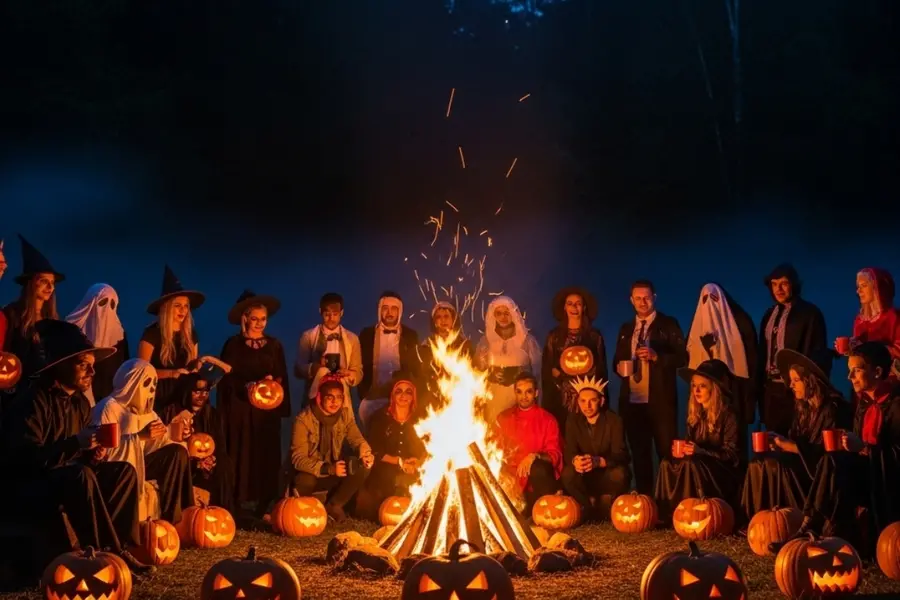
Every October, millions of people around world willingly seek out haunted houses, horror films, and eerie costumes — all for the thrill of being scared. But why do we enjoy fear when it’s staged? According to psychologists, the answer lies in how our brains interpret safe danger — a concept that allows us to experience fear without real threat.
Controlled fear and the brain’s reward system
When we watch a scary film or walk through a haunted attraction, our brains activate the amygdala, the region responsible for detecting threats and triggering the fight-or-flight response. This sets off a surge of adrenaline, cortisol, and dopamine — chemicals that increase alertness, energy, and excitement.
Dr Margee Kerr, a sociologist who studies fear at the University of Pittsburgh, explains that these responses can actually feel pleasurable when experienced in a controlled environment. “When we choose to be scared, the body releases feel-good chemicals like endorphins and dopamine once the threat passes,” she told Smithsonian Magazine. “That post-fear high is very real.”
The evolutionary roots of enjoying fear
From an evolutionary perspective, fear has always been a survival mechanism. Early humans who could detect and respond to danger quickly were more likely to survive. Modern fear-based entertainment taps into that same biological system — but in a safe way. By simulating danger, Halloween experiences allow us to test our resilience without risk.
As neuroscientist Dr Dean Burnett noted in The Guardian, fear-based activities are a way to practise emotional regulation. “We get to engage our primal instincts but under conditions we can control,” he explained. “It’s thrilling because it’s safe.”
Read more: Halloween
Social bonding and shared fear
There’s also a social side to the psychology of Halloween. Studies have shown that people tend to bond more closely after shared fear experiences. When we scream, laugh, or cling to others in a haunted house, our brains release oxytocin — the same hormone linked to trust and connection.
That’s why Halloween parties, scary movie marathons, and group costume events feel especially satisfying — they combine excitement with community.
Escapism and emotional release
In modern life, where real fears often come from work stress, global news, or uncertainty, Halloween offers a form of catharsis. Experiencing fear in a fictional or festive setting allows people to release pent-up tension. It’s an emotional reset — a reminder that we can confront fear and come out laughing.
Psychologist Dr Frank Farley of Temple University told APA News that horror and thrill-seeking activities appeal most to those with what he calls the “Type T” personality — people drawn to excitement, novelty, and risk. For them, Halloween is an annual invitation to safely flirt with danger.
A ritual that makes fear fun
Ultimately, Halloween turns fear into play. Whether it’s through costumes, ghost stories, or eerie decorations, the season creates a cultural space where fear is celebrated, not avoided. It’s the rare time of year when our ancient instincts, social connections, and love for adrenaline all collide.
In other words, the reason we enjoy Halloween’s strange thrill is simple: it’s one of the few moments where being scared feels good — and perfectly safe.
Published: 31 Oct 2025, 08:13 am IST
Related Topics
Disclaimer: Kindly avoid objectionable, derogatory, unlawful and lewd comments, while responding to reports. Such comments are punishable under cyber laws. Please keep away from personal attacks. The opinions expressed here are the personal opinions of readers and not that of Mathrubhumi.
