

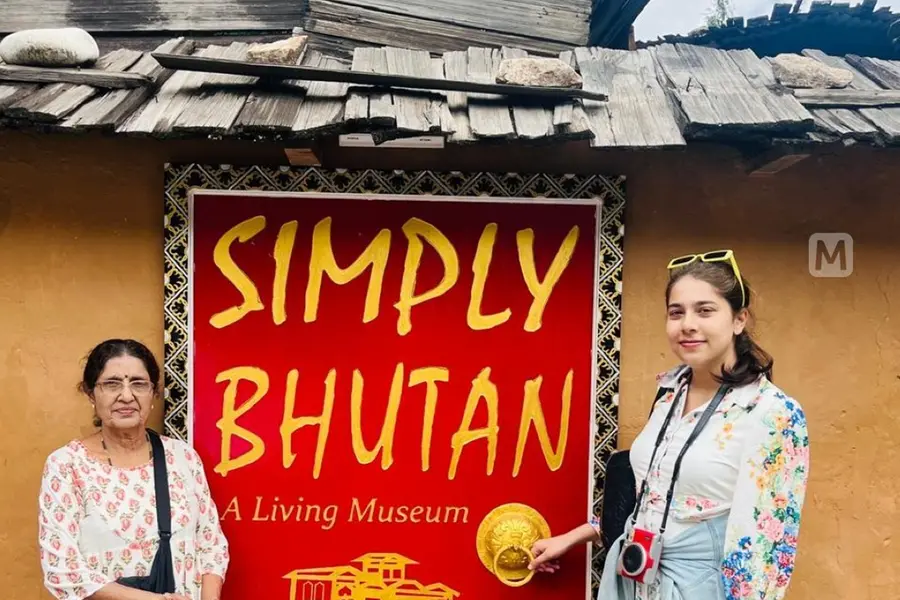
When I first heard the name "Simply Bhutan," which is situated in Thimpu, I must admit that I felt a bit skeptic. The name seemed rather ordinary, and I did not believe that a visit to a traditional museum could be anything but bland. However, stepping through the doors of this place completely changed my perception. It is a typical tourist spot and is packaged well. You can wear their traditional dress, do their local dance, shoot an arrow and do many more. The vibrant traditions of Bhutan come to life, offering a glimpse into the country’s rich history. In the third chapter of my Bhutan Travelogue, I share my experience at this living museum, where traditional Bhutanese life unfolds before your eyes. While the first part talked about the trekking to the Tiger's Nest the second part delved into how Bhutan practices differ from us.
Nestled close to Thimphu, the museum’s entrance greets you with a torn and mutilated horn blast, and the ancient gate—over 200 years old—invites you into a world imbibed in culture. Simply Bhutan is not just a museum; it’s an experience that provides insights into traditional Bhutanese dwellings, cuisine, folk dances, music, archery, and local games. With an entrance fee of 1000 ngultrum (Rs 1000), I felt like the history of Bhutan was unfolding all around me.
Also Read
Upon entry, our group was warmly welcomed with a taste of Aara, the home-brewed wine of Bhutan. It tasted a bit strong for me. Our regular trip guide is not allowed to run the tour. A special guide would lead us and take us in a manageable group. First a brief on the Bhutanese monarchy is given. Our first stop was the mud-rammed house that represented Bhutan’s medieval period. The guide passionately explained how traditional Bhutanese homes are constructed from rammed earth, using a boat-shaped wooden tug to shape the walls. I found it interesting to learn that as people mix the mud to create the walls, they sing songs to pass the time. Three people dressed in their traditional attire demonstrated the process with a song.
Next, we ventured into various musical instruments from the past. The guide picked up some of them, demonstrating their unique sounds and sharing stories about their significance in Bhutanese culture. We then entered the traditional Bhutanese kitchen, where an array of pots, bowls, ladles, and other kitchen tools were on display. The guide explained the process of brewing butter tea, known as Suja, and showed us a large noodle maker, further getting deep into the culinary traditions of this beautiful country. There is also a display of the ancient swords, spears, the fertility gods, the hot stone bath, and many more.
One of the most entertaining stops was this lively room where we all gathered for a snack of butter tea and rice flakes. Picture this: we’re lounging on comfy sofas, sipping tea, when suddenly the slow, graceful rhythm of a Bhutanese dance begins, and—surprise!—everyone’s invited to join in. Regardless of age, many of us, including myself, found ourselves living to the moment, twirling around with women dressed in traditional Kira. It was laughter, awkward dance moves, and pure fun! Our guide was there, snapping photos and videos, capturing every hilarious, unforgettable moment.
We also got a fun opportunity to try out a tourist-friendly version of Bhutan’s traditional game of archery. Dressed in local attire, the men kindly helped us with our shots, though most of us missed the target! It was my first time ever holding a bow and arrow, and I figured it wouldn’t be too hard. I pulled the string back with way too much force, only to have the arrow land right at my feet! One good shot to the eye would be rewarded with a celebratory dance. Luckily, one of our team members nailed the target, and the performers burst into song and dance. It felt like we were becoming part of the culture, even if our archery skills were nil!
The most unforgettable moment of my visit to Simply Bhutan was meeting Pema Tshering, an incredible foot carver whose talent left us in awe. Born with cerebral palsy and spinal deformities, Pema has learned to use only his feet to create beautiful, intricate wood carvings. Listening to our guide share his inspiring story and watching him work in his workshop was very touching. Besides his carving, Pema is also a national archer, having won a silver medal in archery at the Paralympics.
While I regret not purchasing his paintings during my visit, a generous friend in my group did. As we prepared to leave, Pema offered a humble thank you with his foot, a simple gesture that left a lasting impression on my heart.
Visiting Simply Bhutan was a journey through the heart of Bhutanese culture. From the warm welcome to the beautiful stories shared by our guide, every moment was enjoyable and filled with charm. The tour itself lasts just over an hour, but the memories—and the photos you’ll keep looking back at—are sure to stick with you for much longer!
Published: 07 Oct 2024, 07:32 am IST
ABOUT THE AUTHOR
Related Topics
Disclaimer: Kindly avoid objectionable, derogatory, unlawful and lewd comments, while responding to reports. Such comments are punishable under cyber laws. Please keep away from personal attacks. The opinions expressed here are the personal opinions of readers and not that of Mathrubhumi.