
From five tops to two pairs of shoes, this simple packing method helps you create more outfits with fewer pieces and less suitcase stress.
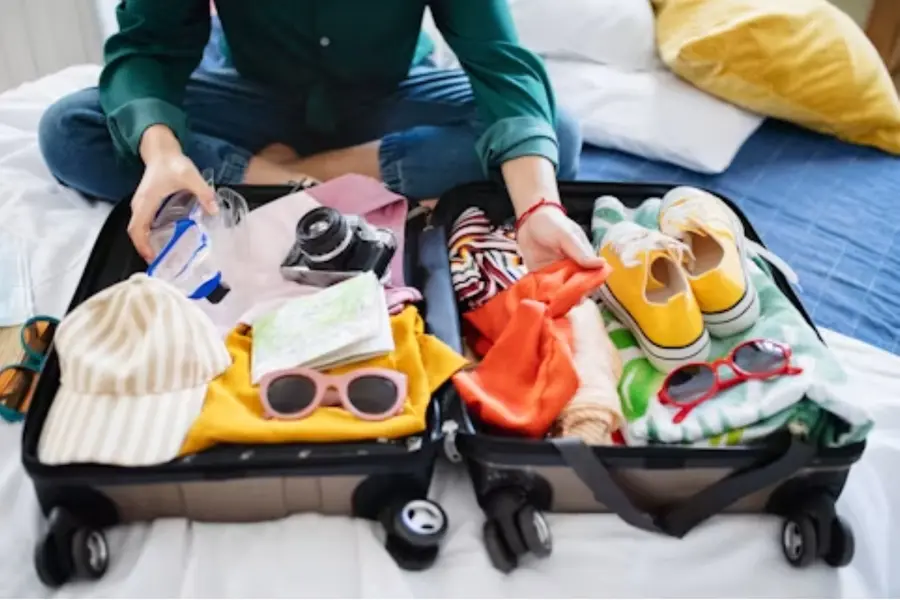
Packing for a holiday often starts with good intentions. A few outfits go into the suitcase, followed by an extra pair of jeans, another top, a jacket that might come in handy and, before you know it, there is barely any space left.
If overpacking is a familiar part of your travel routine, the 5-4-3-2-1 packing formula is worth trying. It offers a simple way to put together a compact travel wardrobe without leaving you with too few options.
The idea is simple. Pick a limited number of clothing and accessory pieces that can be worn in different combinations. The result is a suitcase that is easier to carry and a wardrobe that gives you plenty of outfit choices.
So, what exactly is the 5-4-3-2-1 packing formula?
The formula breaks your travel wardrobe into five categories: 5 tops, 4 bottoms, 3 layers, 2 pairs of shoes and 1 special item.
It is not meant to be a strict checklist. You can change the numbers depending on where you are going, how long you are staying and what the weather is likely to be.
Start with 5 tops
Choose five versatile tops that you can wear in more than one way. These could include T-shirts, shirts, kurtis, blouses or other everyday options.
The trick is to pick colours and styles that work with several pieces in your suitcase. A top that goes with three different bottoms gives you far more options than one that only works with a single outfit.
Pick 4 bottoms
Next, choose four bottoms. Jeans, trousers, skirts, shorts or comfortable travel pants can all work, depending on your destination.
Try to avoid packing pieces that have only one possible combination. Neutral or complementary colours can make mixing and matching much easier.
Add 3 layers
Three layering pieces can help you deal with changing temperatures while also giving your outfits a different look.
Depending on your destination, this could mean a light jacket, cardigan, shrug, sweater, stole or another easy-to-carry layer. For colder destinations, you may need to adjust this part of the formula and prioritise warmer clothing.
Keep shoes to 2 pairs
Shoes can quickly take up valuable suitcase space, which is why the formula keeps this category small.
Ideally, carry one comfortable pair that can handle plenty of walking and another that suits the rest of your itinerary. The second pair could be sandals, formal shoes or something suitable for an evening out.
Leave room for 1 special item
The final piece is your one special item. It could be a statement outfit, an accessory, a scarf or something you have specifically packed for a dinner, celebration or another occasion.
This is also where you can add a little personality to your travel wardrobe without filling your suitcase with clothes you may never wear.
Why does the formula work?
The biggest advantage is that it makes you think about what you will actually wear.
Instead of throwing clothes into your suitcase based on a series of "what if" situations, you start with pieces that can work together. One pair of trousers could go with several tops, while a single jacket could be worn over multiple outfits.
It can also make getting dressed during the trip easier. With fewer pieces and more combinations, you spend less time digging through your suitcase looking for something that works.
But you don't have to follow it by the book
The 5-4-3-2-1 formula is a starting point, not a packing law.
A beach holiday will need a very different wardrobe from a winter trip to the mountains. A business trip may require formal clothing, while a week-long backpacking holiday could call for even fewer pieces.
Think about the destination, forecast, activities and length of your stay before deciding what makes the final cut.
The next time you find yourself sitting on an open suitcase wondering whether you really need that fifth pair of shoes, the 5-4-3-2-1 method might be a useful place to start.
Published: 11 Aug 2026, 08:46 am IST
ABOUT THE AUTHOR

Related Topics
Disclaimer: Kindly avoid objectionable, derogatory, unlawful and lewd comments, while responding to reports. Such comments are punishable under cyber laws. Please keep away from personal attacks. The opinions expressed here are the personal opinions of readers and not that of Mathrubhumi.