
As tensions rise in the Strait of Hormuz, Oman’s Musandam offers a stark contrast to Iran's coast.
The Strait of Hormuz has become a focal point of global anxiety. With Iran tightening its grip on maritime traffic following a series of confrontations involving the United States and Israel, the world’s most critical oil corridor is under renewed scrutiny. The narrow passage, just 39 km at its slimmest, moves nearly 20% of global crude. Any disruption sends oil prices surging, insurers scrambling and warships rushing in.
While India, the US and other nations bolster naval patrols and Oman seeks to mediate, attention is increasingly turning to the opposite side of the chokepoint, the rugged, fjord-slashed Musandam Peninsula. Although overshadowed by the geopolitical storm, this Omani exclave offers a strikingly different picture of the Strait’s southern bank.
A strategic Peninsula shaped by history
Musandam’s unusual position on the map is the result of centuries of shifting power along the Gulf’s coastline. Today it belongs to Oman, though it is separated from the rest of the country by the United Arab Emirates. That divide is a modern one; Musandam has been part of Oman’s maritime sphere for hundreds of years.
Long before formal borders, the region was tied together by tribal alliances and seafaring routes. Musandam’s location at the entrance to the Strait made it a natural outpost of influence. From the 17th century onwards, Omani rulers, first under the Yaruba and later the Al Said dynasty, consolidated coastal power, with Musandam serving as a strategic lookout over one of the world’s busiest maritime arteries.
When the British established treaties with the Trucial States (now the UAE) in the 19th and 20th centuries, Musandam remained aligned with the Omani sultanate. When the UAE was formed in 1971, those historical loyalties became permanent borders, leaving Musandam as an exclave on the edge of one of the world’s most volatile waterways.
The ‘Norway of Arabia’: A stark, surreal landscape
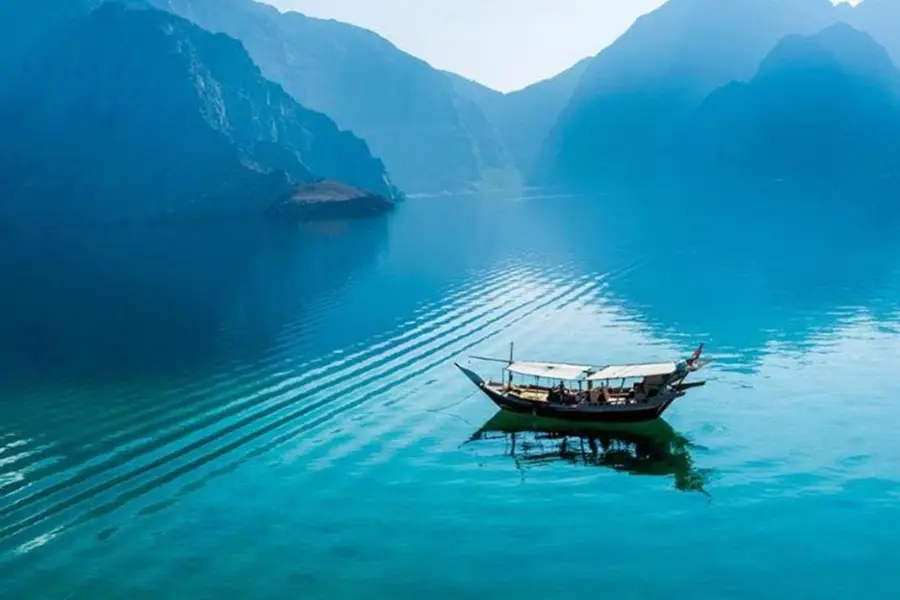
Musandam’s dramatic coastline has earned it the nickname the “Norway of Arabia”. Here, sheer limestone mountains plunge straight into turquoise water, forming deep khors, fjord-like inlets carved by tectonic uplift and erosion.
Places such as Khor Najd and the Elphinstone Inlet create a landscape that feels almost otherworldly. Unlike their Scandinavian counterparts, these fjords rise from desert rock rather than pine forests, making the contrast even more striking.
What travellers can experience in Musandam
Most visitors enter through Khasab, the peninsula’s small hub. The 17th-century Khasab Fort offers a glimpse into Omani history, but the most sought-after experiences lie offshore.
- Dhow cruises and dolphin encounters: Traditional wooden dhow boats glide through the fjords, often followed by pods of dolphins. The slow pace and wide decks give the impression of stepping back into the region’s maritime past.
- Snorkelling around Telegraph Island: The former British telegraph relay station has become a diving and snorkelling hotspot. Its surrounding waters teem with coral and colourful fish.
- Mountain adventures at Jebel Harim: The highest peak in Musandam offers rugged 4x4 trails and landscapes studded with ancient fossils, remnants of prehistoric seabeds.
- Remote villages by sea: Communities such as Kumzar, accessible only by boat, preserve unique cultural identities shaped by isolation. Lima and Seebi Island provide gateway points to beaches and coves favoured by divers.
Isolated geography
Covering roughly 1,800 square kilometres, Musandam is dominated by the northern Hajar Mountains. Steep cliffs and fractured coves make overland travel difficult, leaving several settlements accessible only by sea. The terrain has shaped a distinct local culture and has also helped preserve the region’s natural beauty.
Most travellers reach Musandam by road from Dubai via the Ras Al Khaimah border crossing, though flights into Khasab are available.
Tourism growth
Since 2022, Musandam has become a popular escape for UAE residents and tourists seeking nature-focused experiences. Streamlined border procedures, tourist lanes and visa-on-arrival options made cross-border day trips far easier. UAE-based operators offered seamless online bookings, multilingual guides and all-inclusive packages.
By 2025, Musandam tour providers, including Jazara and Saifco, launched door-to-door transfers from Dubai hotels, complete with dhow cruises, meals and snorkelling gear, often at prices starting around AED 250. Demand surged as travellers embraced short, scenic getaways.
Despite remaining open to visitors, Musandam is feeling the effects of rising tensions across the Strait of Hormuz. Travel advisories urge caution, naval patrols have increased and shipping lanes are under tighter surveillance. Border crossings remain operational but may experience stricter checks. Insurance rates for tour operators have climbed, prompting some travellers to delay their trips.
Published: 07 Apr 2026, 06:09 pm IST
Related Topics
Disclaimer: Kindly avoid objectionable, derogatory, unlawful and lewd comments, while responding to reports. Such comments are punishable under cyber laws. Please keep away from personal attacks. The opinions expressed here are the personal opinions of readers and not that of Mathrubhumi.
