
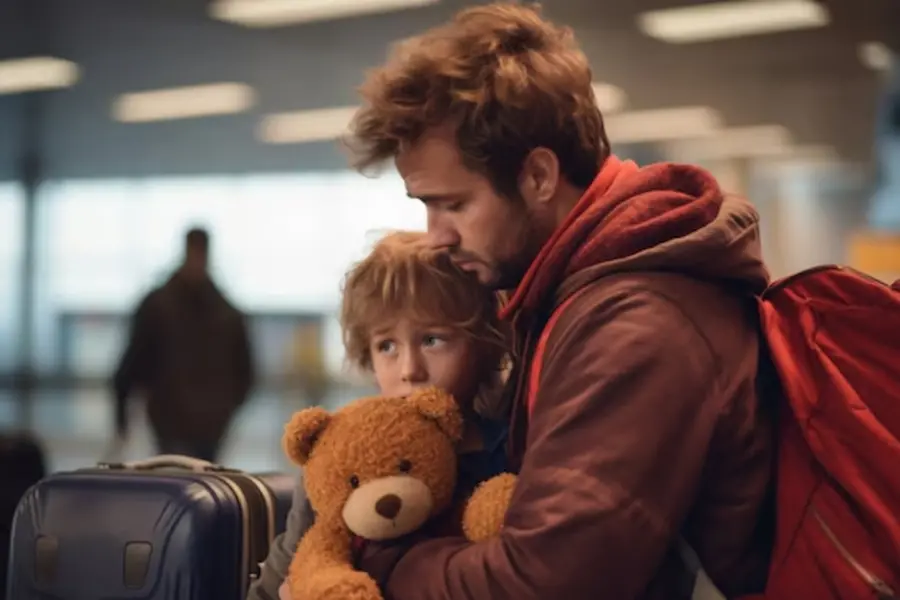
The recent crash landing of a Delta Air Lines flight in Toronto has reignited concerns over child safety in air travel. An 18-month-old child was among the 21 passengers injured, underscoring the dangers of allowing infants to travel unrestrained on a parent’s lap. While aviation experts, safety regulators, and paediatricians recommend secured seating for young children, airlines continue to permit lap-held infants, largely due to cost concerns for families.
The debate is not new. In the 1989 United Flight 232 crash in Iowa, a mother lost her 22-month-old son after following flight attendants’ instructions to place him on the floor. Three of the four lap infants aboard were injured, while the strapped-in children survived with fewer injuries. More recently, in 2012, a six-month-old died when a plane overran a Canadian runway, and in 2024, unrestrained infants on an Alaska Airlines flight narrowly escaped being sucked out when a door plug blew out mid-air.
Globally, aviation authorities like the U.S. Federal Aviation Administration (FAA) and Canada’s Transportation Safety Board acknowledge that separate seats with car seats are safest for children under two. The International Civil Aviation Organization (ICAO) also recommends proper restraints for young passengers. However, these remain recommendations rather than legal requirements.

The Indian context
In India, domestic airlines follow the Directorate General of Civil Aviation (DGCA) guidelines, allowing infants to fly on an adult’s lap with a seatbelt extension. However, turbulence-related injuries have occurred. In 2018, an Air India flight from Amritsar to Delhi experienced severe turbulence, leading to injuries when overhead panels collapsed. Although no infants were harmed in that incident, aviation experts argue that India must rethink its approach to child safety on flights, particularly as the country witnesses a rise in domestic air travel.
On IndiGo flights, the number of infants permitted per flight varies depending on the aircraft type. An Airbus A320 can accommodate up to 12 infants per flight, while an ATR aircraft allows a maximum of six. However, only one infant is allowed per adult passenger. Since infants are not assigned separate seats, they must be seated on an adult’s lap, and no extra seats can be booked for them. In cases where a valid proof of age for the infant is not provided, the applicable full fare must be paid, and travel will be subject to seat availability.
Why no mandate?
The FAA’s main argument against mandating child seats is an outdated 1990s study suggesting that if parents were required to purchase an additional seat, they might opt to drive instead—a mode of travel statistically riskier than flying. Yet, experts like NTSB’s Tom Chapman believe this rationale is outdated, especially given today’s more affordable airfare options.
For parents, cost remains a factor. Some, like US traveller Clare Ronning, see car seat requirements as unnecessary expenses, while others, like Meredith Tobitsch, prioritise safety despite the additional cost. In India, where budget airlines dominate, the added cost of a separate seat may be even more prohibitive for families.
What needs to change?
Safety advocates argue that airlines and governments should make child safety a priority. Some suggestions include:
- Mandating car seats: Countries like Australia and the UAE require car seats for infants on flights. India could follow suit with clear guidelines.
- Discounted infant tickets: Airlines could offer discounted fares for infant seats, making it more affordable for families to comply.
- Stronger awareness campaigns: Many parents assume flying with an infant on their lap is safe simply because it’s allowed. Clearer warnings could help parents make informed decisions.
As air travel expands in India and worldwide, ensuring the safety of the youngest passengers should be a non-negotiable priority. While affordability is a valid concern, it must not outweigh the potential risk to children’s lives.
Published: 22 Feb 2025, 04:59 pm IST
Disclaimer: Kindly avoid objectionable, derogatory, unlawful and lewd comments, while responding to reports. Such comments are punishable under cyber laws. Please keep away from personal attacks. The opinions expressed here are the personal opinions of readers and not that of Mathrubhumi.
