

Once marked by folded hands and hushed greetings, respect for teachers has taken on new forms in the Gen Z era—sometimes casual, sometimes deeply personal. This Teacher’s Day 2025, Mathrubhumi spoke to teachers across India to understand how students’ ways of showing respect have changed, and whether the guru–shishya bond still holds the same meaning.
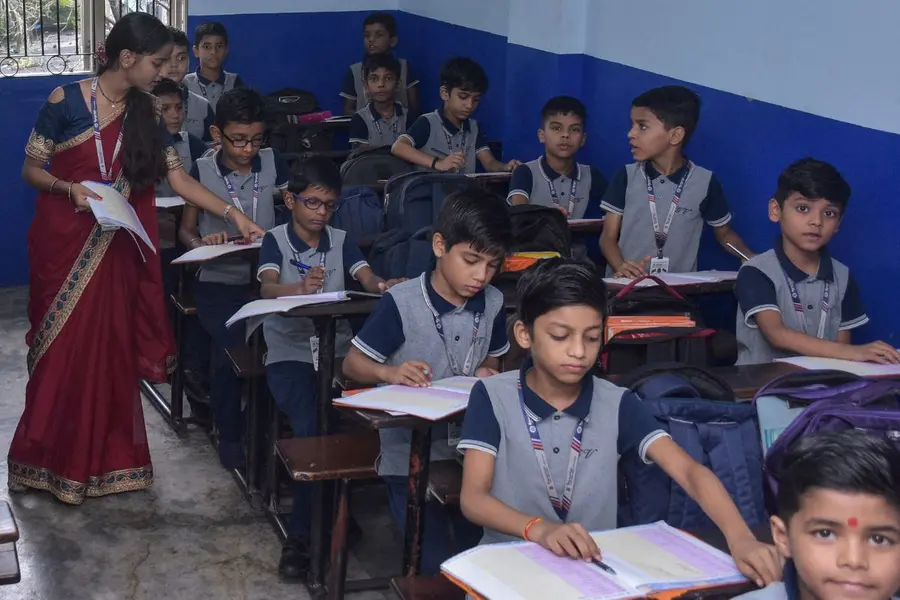
Kozhikode: Teacher’s Day has long stood as a reminder of the sacred guru–shishya bond in Indian tradition, once marked by folded hands, hushed greetings, and unquestioned reverence. But in 2025, many teachers across India say the meaning of respect in classrooms has changed—less about ritual and fear, more about comfort, openness, and sometimes even indifference.
“I used to study only from the Guru’s face. We have a tradition of giving the Guru’s name but that has changed today. Today, there is a possibility that teachers aren’t respected in that intensity anymore,” recalled Sumanandini P, from Orkkatteri LP School, Kozhikode.
Maimoona Bi Abdulla, now teaching at Kunil Education Trust School, Kasaragod, shared her own before-and-after view. “As a student back then, we respected our teachers. If they gave us homework, we did it ourselves because most parents were not educated. I remember punishments with the scale on both hands—we were damn scared. We depended on teachers for everything. Now, as a teacher, I see that things have changed. Parents are educated, technology is everywhere, and students don’t rely on teachers the same way. For some, punishment means nothing. They think they know everything, and respect is missing,” she said.
Others feel the shift is less a decline than a redefinition. Twinkle Banik, 29, IB MYP Language and Literature facilitator and SA in charge at Oakridge International School, Gachibowli, noted: “In the past, saying ‘Good morning, ma’am’ was common, but now it’s a casual ‘Hi ma’am.’ Just two days ago, a student sent me patting emojis, and when I joked that I should be the one doing that, she replied, ‘No ma’am, sometimes teachers need it too.’ That really captures their essence.”
However, the sentiment is far from unanimous. Saurav Kumar, of Girls Middle School, Nayatola, Motichak, Bihar, argued that respect has eroded. “At present, about 65% of children do not respect teachers, while for 35% of children, teachers are still their guides and source of inspiration,” he said, stressing that rural classrooms still see stronger bonds than urban ones.
Javeri Nayak, 31, visual art teacher at Orchids The International School, Chennai, believes today’s children are more outspoken and aware. “They do respect, but the way of showing it is different from our time,” she said.
Some educators are more critical. Vijaychandran Nair KP, assistant professor at Yeldo Mar Baselios College, Kochi, lamented: “Many students don’t even get up when teachers enter the classroom. They don’t like being advised. Some don’t even show up on time for interviews. It reflects a larger indifference.”
At the same time, others stress that respect is not gone, just reshaped. Adheena George, from Gnanodayam UP School, Chittanda, Thrissur, explained: “Respect today is built on trust and dignity rather than hierarchy. Children may appear less patient or more outspoken, but that reflects the times, not a lack of values.”
Rohith Raj, chemistry teacher at National English Medium HSS, Chemmad, Malappuram, added: “Gen Z values fairness and collaboration. When teachers are authentic and supportive, students show respect through trust, participation, and involvement.”
And Rekha Saw, high school teacher at the District Institute of Education and Training, Dumka, reminded that the teacher’s role remains vital. “Earlier respect was based on discipline and distance. Today, it is based on friendship and understanding. The importance of teachers has not diminished, only the expression has changed,” she said.
As India marks Teacher’s Day 2025, one theme runs through classrooms from Kasaragod to Dumka: the rituals of respect may have faded, but the teacher–student relationship continues to evolve—less about authority, more about connection, and still at the heart of learning.
Published: 05 Sept 2025, 04:23 pm IST
ABOUT THE AUTHOR
Related Topics
Disclaimer: Kindly avoid objectionable, derogatory, unlawful and lewd comments, while responding to reports. Such comments are punishable under cyber laws. Please keep away from personal attacks. The opinions expressed here are the personal opinions of readers and not that of Mathrubhumi.