
As governments debate banning social media for under-16s, families across Europe are asking whether stricter age limits will truly protect teenagers or simply push their digital lives underground.
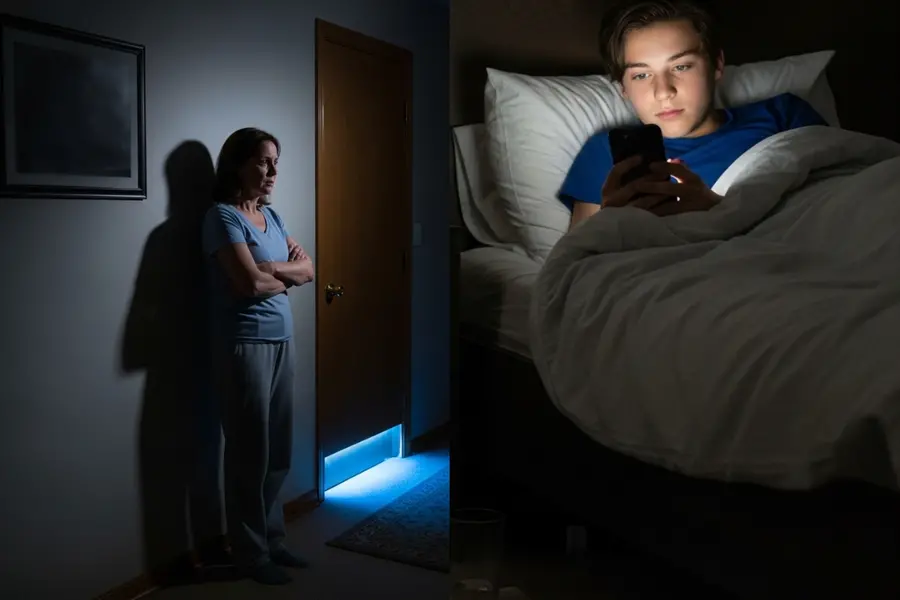
It is 01.47am. A parent walks past their teenager’s bedroom and sees the faint blue glow of a screen under the door. “Five more minutes” has stretched into an hour. The next morning brings tired eyes, short tempers and another quiet argument about screen time. Across Europe, scenes like this are becoming routine — and they sit at the heart of a growing political debate: should social media be banned for under-16s, or is the problem far more complicated than simply switching off the apps?
In homes across Europe, the smartphone has become both a lifeline and a lightning rod. For many parents, the late-night glow of a screen sparks worry about sleep, safety and self-esteem. Now, policymakers are responding. Spain has moved to tighten age limits for social media access, reigniting a wider European debate over whether banning platforms for under-16s is a necessary shield or a simplistic fix.
Also Read

Why age limits are back in focus
Under the EU’s General Data Protection Regulation (GDPR), which has been in force since 2018, member states can set the legal age for consenting to data processing in digital services between 13 and 16. Spain chose 14. The current political push seeks to revisit and potentially strengthen these protections in response to mounting evidence about online risks.
Reports from EU Kids Online have documented a steady decline in the age at which children access the internet, own smartphones and register on social networks. A recent UNICEF report examining the impact of technology on childhood and adolescence highlighted concerns about addictive smartphone use, exposure to pornography, rising conflict, and increased mental health challenges.
A separate report promoted by Spain’s Ministry of Youth and Children described social networks as a high-risk environment for minors, citing overexposure to harassment, crimes against sexual freedom, harmful behaviours and reduced face-to-face interaction. These findings align with broader studies linking heavy social media use to anxiety, depression, self-harm and suicide among adolescents.
The case for banning access
Supporters argue that adolescence is a critical developmental stage. The prefrontal cortex, responsible for impulse control and decision-making, is still maturing. Social media platforms, designed around engagement and reward mechanisms such as likes, scrolling and personalised feeds, may intensify vulnerability.
Features such as endless scrolling, algorithm-driven content and night-time notifications are seen as reinforcing dependency. Critics of current platform models argue that engagement-driven algorithms can amplify polarisation, harmful content and unrealistic standards of beauty or success.
From this perspective, a ban functions as a circuit breaker — limiting exposure during formative years and reducing risks linked to online harassment, exploitation and data harvesting.
Why critics warn of unintended consequences
Opponents caution that prohibition alone may not work. Many teenagers are technologically adept, and enforcing age restrictions has historically been inconsistent. Age verification rules, including those introduced in the US under the Children’s Online Privacy Protection Act of 1998 and in Spain under the 2007 LOPD regulation, have often been weakly implemented.
There are also concerns about digital literacy. Social media has become a central space for communication, activism and cultural participation. Delaying access may reduce opportunities for guided learning about misinformation, privacy and responsible online behaviour.
For some young people — including LGBTQ+ teenagers or those in geographically isolated communities — online platforms provide essential support networks. Removing access without alternatives could deepen social isolation.
A broader regulatory shift
Rather than focusing solely on prohibition, many experts advocate a “safety by design” approach. Proposed measures include greater algorithmic transparency to prevent harmful content spirals, chronological feeds to reduce addictive patterns, and robust age verification systems that go beyond self-declared birth dates.
In Spain, policymakers have signalled that any age restriction must form part of a wider framework. This includes stronger oversight from regulators such as the Spanish Data Protection Agency and the National Markets and Competition Commission, alongside clearer accountability for schools and digital education providers.
The debate also extends to parental and institutional responsibility. Children’s first exposure to social media often follows the purchase of a smartphone or school-related digital tasks. Families frequently report feeling pressured, as teenagers risk social exclusion if they are not online.
Beyond prohibition
The challenge, experts argue, is to balance protection with participation. Legislating age limits may be justified in safeguarding development and privacy, but lasting change may require reshaping the digital environment itself.
As artificial intelligence increasingly shapes online experiences, the conversation has shifted from whether children should be online to how they can engage safely and democratically. Regulators across Europe face growing calls to move beyond recommendations toward active enforcement and sanctions where necessary.
The question is no longer simply whether under-16s should have access to social media. It is whether governments can create a digital ecosystem that protects young users without disconnecting them from the modern world they are growing up in.
Published: 10 Feb 2026, 02:48 pm IST
Related Topics
Disclaimer: Kindly avoid objectionable, derogatory, unlawful and lewd comments, while responding to reports. Such comments are punishable under cyber laws. Please keep away from personal attacks. The opinions expressed here are the personal opinions of readers and not that of Mathrubhumi.