

"Isn't everything we do in life a way to be loved a little more?" If love isn't one-size-fits-all, why should relationships be? As more couples rethink monogamy, experts weigh in on whether open relationships bring freedom or expose uncomfortable truths.
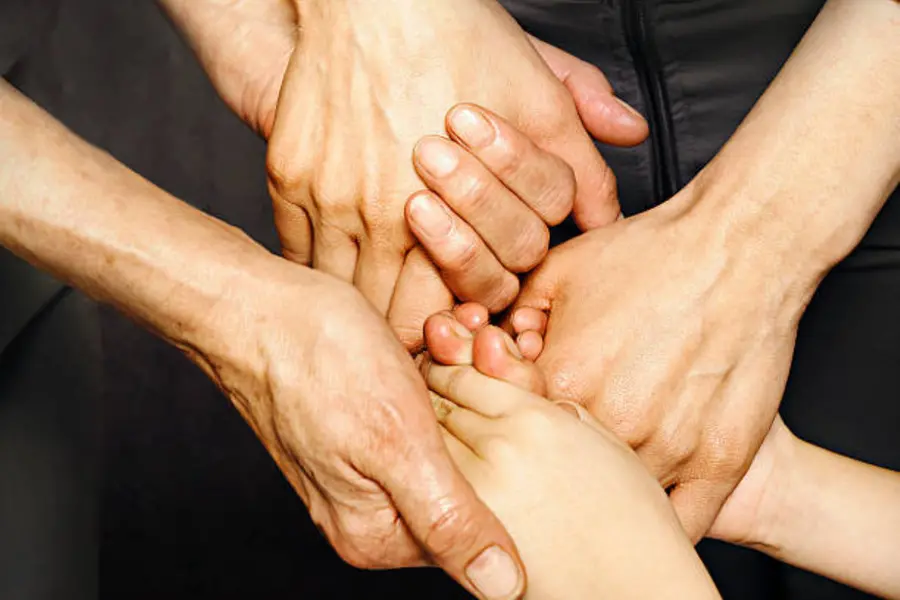
Marriage and monogamy have long been treated as the default blueprint for lasting relationships. But a growing number of couples are questioning whether lifelong exclusivity is the only path to intimacy and commitment.
For some, open relationships offer greater sexual freedom without sacrificing emotional security. For others, they are a relationship model that simply doesn't work.
So, are open relationships actually healthy? The answer is more than a simple yes or no. Research, therapists and couples living this reality suggest that success depends less on the relationship structure itself and more on trust, honesty, communication and mutual consent.
Why some couples choose open relationships
For Kolkata-based Suchandra and Roy (names changed), who have been together for a decade and plan to marry later this year, opening their relationship was never about dissatisfaction with each other.
"Roy and I decided to get married only because renting a home or sharing our wealth becomes easier. But we've never been the type to give up on our desires. We've both discussed our intentions to enter into an open relationship only because we feel we shouldn't stifle our sexual desires," says Suchandra.
The couple believes their decision stems from a natural tendency to question traditional expectations.
"I find it (open relationships) so fascinating. Because I don't think it's typically what we expect. But this characteristic and natural inclination away from the norm does make a lot of sense for people like us who are more attracted to the idea of an open relationship because it isn't the norm. It is, well, it does kind of go against a lot of our traditional beliefs," says Roy.
He also offers a word of caution, "A disclaimer if you are personally extroverted or you do typically like to question authority, and ingrained ways of thinking or you're high on agreeableness, that doesn't necessarily mean that you should approach your partner right this second and tell them you want to open your relationship. Each person has their own unique personality profile. And other factors are going to play a role."
Open relationships are not a new concept
Although open relationships often seem like a modern trend, they have existed in different forms throughout history, including in ancient Greece, Rome, China, Mongolia and Japan. The terms open marriage and open relationship gained popularity after the publication of ‘Open Marriage’ by George and Nena O'Neill in 1972.
Unlike polyamory, which may involve multiple emotional and romantic relationships, open relationships usually revolve around one committed primary partnership while allowing consensual sexual experiences with others.
Popular culture has also brought the conversation into mainstream media.
Netflix's ‘Wanderlust’ explores a married couple navigating non-monogamy, while films like ‘Vicky Cristina Barcelona’ examine unconventional relationships. Public figures have also spoken about it, including Will Smith, who told GQ that he and Jada Pinkett Smith's marriage evolved because "both [were] miserable and clearly something had to change."
The foundation is consent before everything else
According to therapist and relationship counsellor Asha Saxena, open relationships are only healthy when both partners genuinely want them.
"I think strong foundations are essential in any relationship, but particularly in a situation where things can get murky quite quickly, and you are letting other people into your relationship, especially when it's sexual as well. If you're dragging someone into this situation, if they're hesitant, if you need to pressure them, not only is that incredibly unfair, but it's probably going to do a lot of damage not just to your relationship but also to that person's self-esteem and their long-term attachment style," she says.
In other words, an open relationship should never be presented as an ultimatum or a solution to existing relationship problems.
Is India becoming more open to non-monogamy?
While monogamy remains the dominant relationship model in India, attitudes are slowly changing.
A survey conducted by Gleeden in partnership with IPSOS among 1,503 married Indians across 12 Tier-1 and Tier-2 cities found:
- 82% believe lifelong faithfulness is possible.
- 44% believe it is possible to love two people simultaneously.
- 37% feel someone can cheat while still being in love.
- 55% admitted they have fantasised about intimacy with someone other than their partner.
- More than six in 10 respondents said they had explored some form of non-traditional relationship.
- 22% reported being in a non-monogamous relationship.
While the findings suggest growing curiosity, therapists point out that curiosity and readiness are not the same thing.
The biggest challenge isn't sex, it's jealousy
Therapist Viraj Mehta believes one of the biggest misconceptions is that open relationships simply mean sleeping with other people.
"Most people believe it's okay to engage sexually with someone without intimating their partner, that's cheating or infidelity. Most people's biggest opposition to open relationships in India, from my experience counselling couples, is that they create jealousy that doesn't need to be there."
He explains that many people fear their partner will eventually leave them for someone else or enjoy another relationship more.
"We may constantly be worried that our partner will find someone else they're going to fall madly in love with and leave us, or there's this constant suspicion or concern that your partner is having better sex with other people or likes the people they're dating more than you. And I think many of these fears are rooted in unconscious jealousy and are unlikely to be true. Everything will be different with another person, not better or worse."
Mehta adds that if a relationship already has a strong emotional foundation, removing the expectation of sexual ownership can sometimes feel liberating rather than threatening.
Do certain personalities prefer open relationships?
Research suggests that personality traits may influence openness toward non-monogamy.
Saxena points to the Big Five personality traits; openness, conscientiousness, extraversion, agreeableness and neuroticism.
According to her, people who are comfortable with open relationships generally score higher in openness to new experiences and extraversion, while often scoring lower in neuroticism.
"This naturally makes a lot of sense if you rate higher on openness to experiences. It's likely that this will also include receptiveness to new sexual experiences and engaging and exploring some of those connections offered by an open relationship."
However, she warns that agreeableness can become problematic if someone agrees to an open relationship simply to keep their partner happy.
"Open relationships rarely work if one party is not fully committed, excited, or dedicated to the idea, and it can create a bit of a power imbalance and even resentment."
Mehta adds that flexibility, honesty, curiosity and a willingness to challenge conventional social expectations can also influence someone's comfort with non-monogamy.
Trust looks different but becomes even more important
For Mumbai-based Mitesh and Rahul (names changed), who have been together for 15 years and in an open relationship for five, communication has become even more important than before.
Raised in a society where queer relationships were often stigmatised, they see openness as an extension of living authentically.
"A lot of our progress towards being more accepting of non-monogamy and different models of relationships did arise from the queer community and what they've done and their thoughts on the matter. So it's super interesting to see how sexuality, culture, and society interact and intersect when we talk about non-monogamy," says Rahul.
Instead of avoiding uncomfortable conversations, they actively discuss trust, boundaries and expectations.
"We talk more about what trust means to us and what we need. I also think some of the psychology behind it is informative for us, for people who may be more monogamous, as well as understanding what personality traits make us more receptive to this idea, or discussions around socio-sexuality. I think it's really important to examine our approaches."
Can open relationships actually work?
Therapists generally agree that open relationships are neither inherently healthier nor less healthy than monogamous ones. Their success depends on the same factors that determine any strong relationship, trust, communication, emotional maturity and shared expectations.
Relationship therapist John Kim echoes this view, arguing that open relationships cannot repair an already struggling partnership. Instead, they demand an even stronger foundation.
According to him, successful open relationships usually involve:
- A stable, trusting primary relationship.
- Complete honesty from both partners.
- Mutual enthusiasm, not reluctant compromise.
- Clearly defined boundaries around sex, emotional involvement and communication.
- Regular conversations as feelings evolve.
He also notes that couples must honestly ask themselves whether they can emotionally accept their partner having intimate experiences with someone else without resentment, competition or keeping score.
The verdict
Open relationships are not a shortcut to fixing unhappy marriages, nor are they simply a licence to have multiple sexual partners. They require extraordinary levels of communication, self-awareness and emotional security.
For some couples, consensual non-monogamy strengthens trust and allows both partners to explore their identities without threatening their bond. For others, the emotional challenges outweigh the benefits.
Ultimately, there is no universally "correct" relationship model. Whether a couple chooses monogamy, an open relationship or another form of ethical non-monogamy, the healthiest relationships are those built on mutual respect, informed consent, honesty and the freedom for both partners to choose the life that genuinely works for them.
Published: 10 Jul 2026, 03:52 pm IST
ABOUT THE AUTHOR
Related Topics
Disclaimer: Kindly avoid objectionable, derogatory, unlawful and lewd comments, while responding to reports. Such comments are punishable under cyber laws. Please keep away from personal attacks. The opinions expressed here are the personal opinions of readers and not that of Mathrubhumi.