
Many parents worry that saying sorry to their children will weaken their authority.
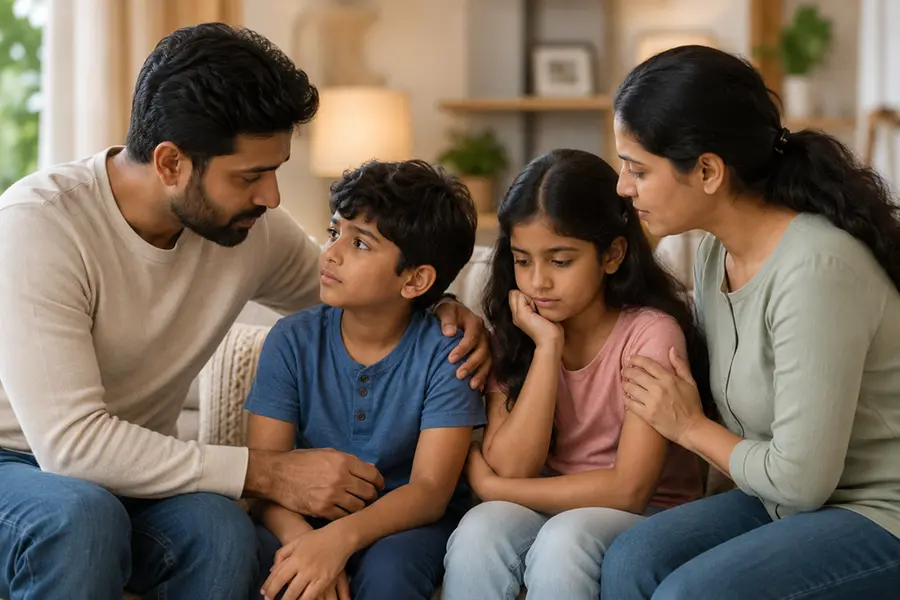
Every parent has been there. A stressful day, an overflowing to-do list and one small act of defiance from a child can quickly turn into raised voices and hurt feelings. While many parents later feel guilty, some hesitate to apologise, fearing it may undermine their authority.
Psychologists, however, say the opposite is often true.
Rather than signalling weakness, a sincere apology after an argument can help repair trust, model healthy behaviour and teach children an important lesson about accountability. The key, experts say, is that the apology must be genuine, age-appropriate and followed by actions that reinforce the message.
Why saying sorry matters
Parents are often seen as authority figures, but they are also a child's first role models. According to experts, children learn how to handle conflict not simply through instructions but by observing how adults behave when relationships become strained.
The Child Mind Institute advises parents to talk to children once emotions have settled after an argument. A parent acknowledging, "I'm sorry I lost my temper," helps children understand that strong emotions can be managed and repaired. The organisation notes that such conversations also reassure children that they remain loved, even when disagreements occur.
Psychologists say this process teaches children that making mistakes is part of being human. What matters is taking responsibility rather than pretending nothing happened.
Repair is as important as the argument
Conflict itself is not always harmful.
Relationship researchers at the Gottman Institute say children benefit from watching adults resolve disagreements respectfully. While frequent hostile conflict, insults or aggression can negatively affect children's emotional wellbeing, seeing parents repair a disagreement demonstrates that relationships can recover after conflict.
This idea is often referred to by psychologists as "rupture and repair", moments of conflict followed by genuine efforts to reconnect. Experts believe these experiences help children develop emotional security because they learn that relationships are resilient rather than fragile.
An apology teaches accountability
For many parents, apologising raises another concern: Will children stop respecting them?
Research suggests otherwise.
A 2025 study published in the Journal of Research on Adolescence found that parental apologies can improve parent-adolescent relationships when they are sincere and focus on acknowledging the parent's behaviour rather than making excuses. Researchers concluded that genuine apologies may help rebuild trust after interpersonal conflicts between parents and teenagers.
Psychologists writing for Psychology Today also argue that apologising demonstrates confidence rather than weakness. By admitting mistakes, parents show children that accountability is a strength, not something to avoid.
What makes an apology meaningful?
Experts stress that not every "sorry" carries the same weight.
The Family Institute recommends four essential elements of a meaningful apology:
- Clearly acknowledge what went wrong
- Avoid shifting blame or making excuses
- Apologise specifically for the behaviour
- Ask whether there is anything that can help repair the relationship.
Simply saying "I'm sorry you felt upset" may sound dismissive because it focuses on the child's reaction instead of the parent's behaviour. A more effective apology identifies the specific action, such as shouting, using hurtful words or reacting unfairly.
Boundaries still matter
Experts emphasise that apologising does not mean abandoning rules or discipline.
A parent can acknowledge losing their temper while still maintaining the original boundary. For example, a parent may apologise for shouting but still explain why a particular behaviour was unacceptable.
This distinction helps children understand that emotions and behaviour are separate. A parent's reaction may have been inappropriate, but the expectation or household rule can still remain in place.
The lesson children carry into adulthood
When children repeatedly see adults accept responsibility, apologise sincerely and work towards repairing relationships, they are more likely to develop those same skills themselves.
Psychologists say these everyday interactions build emotional intelligence, empathy and healthier approaches to conflict resolution. Instead of believing that authority means never admitting fault, children learn that trust grows when people acknowledge mistakes and try to do better.
In the end, experts agree that the goal of parenting is not perfection. Arguments will happen. What often shapes a child's emotional wellbeing is what comes after the disagreement.
Published: 19 Jul 2026, 03:43 pm IST
Disclaimer: Kindly avoid objectionable, derogatory, unlawful and lewd comments, while responding to reports. Such comments are punishable under cyber laws. Please keep away from personal attacks. The opinions expressed here are the personal opinions of readers and not that of Mathrubhumi.
