
Navratri and Durga Puja may honor the same goddess, but they’re celebrated worlds apart—one with nine nights of fasting and dance, the other with five days of pandals, feasts, and art.
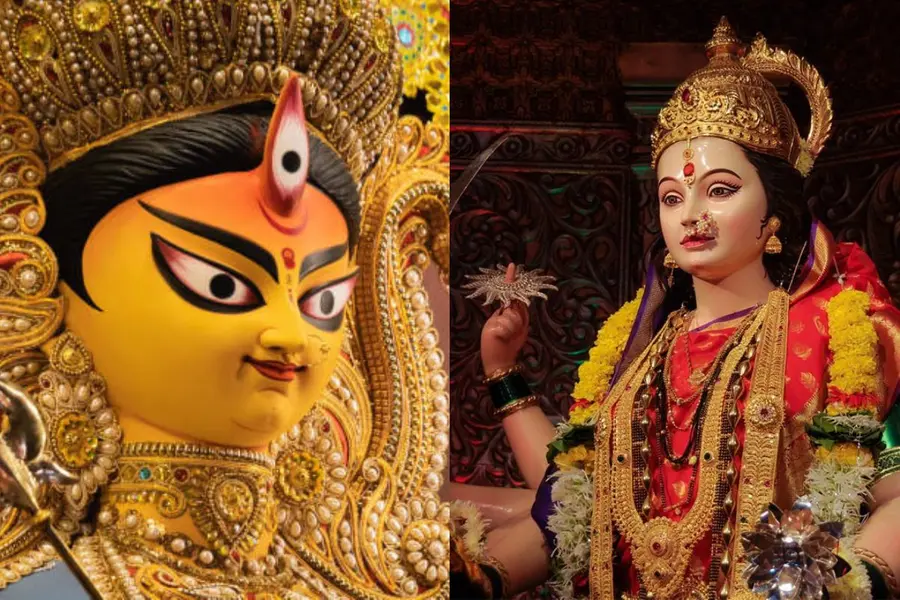
If you’ve ever been in New York, Toronto, or London during autumn, chances are you’ve stumbled into the whirlwind of Indian festivals. Two names often pop up together—Navratri and Durga Puja.
At first glance, both honor Goddess Durga, both dazzle with music, dance, and food, and both bring communities together.
However, here’s the twist: while inspired by the same divine figure, they unfold in completely different flavors.
The Basics: Timing and Meaning
“Navratri” literally translates to nine nights. Over this period, devotees worship nine distinct forms of Durga, each symbolizing a different strength.
It’s celebrated nationwide but shines brightest in Gujarat, Maharashtra, and parts of northern India.
Durga Puja, in contrast, is more condensed—five days of grandeur that dominate West Bengal, Assam, Odisha, and Bengali communities worldwide.
At its heart lies the dramatic story of Durga slaying the buffalo demon Mahishasura, symbolizing the triumph of good over evil.
The Atmosphere: Devotion vs Carnival
Navratri carries a dual spirit—devotion through prayer and energy through dance. Days are often spent fasting and praying, while nights explode into Garba and Dandiya.
Attending a Garba night in places like New Jersey or Leicester feels like cardio disguised as a Bollywood party.
Durga Puja, meanwhile, feels like a cultural carnival. Temporary temples called pandals showcase towering idols of the goddess, surrounded by art, theater, dance, and poetry.
Add to that community feasts, and you’ve got a celebration that feels like both a spiritual ritual and a cultural festival rolled into one. For Bengalis, it’s not just an event—it’s an identity.
The Rituals: Cleanse vs Feast
The contrast is sharp when it comes to food traditions. During Navratri, many follow strict fasting rules, often cutting out grains, meat, and alcohol, and sticking to simple vegetarian meals. It’s seen as a physical and spiritual reset.
Durga Puja flips the script: it’s about abundance. Think khichuri, fried treats, and the iconic Bengali sweets like rosogolla and sandesh. Community meals (bhog) serve thousands, making it as much about fellowship as faith.
Where They’re Celebrated
In India, Navratri dominates the west and north, while Durga Puja reigns supreme in the east. Abroad, they both thrive but in different ways.
In the US, Garba nights in Chicago, Dallas, and New Jersey are packed with both Indian and non-Indian participants.
Canada’s Bengali communities in Toronto and Vancouver recreate Kolkata-style pandals, complete with idols and bhog.
London hosts both—the city’s Garba nights buzz with energy while neighborhoods like Camden and Ealing glow with Puja festivities.
Symbolism: Same Goddess, Different Lens
Navratri emphasizes the goddess in her nine avatars—from Shailaputri to Siddhidatri—each representing a unique power. Durga Puja zeroes in on the climactic battle with Mahishasura, a timeless reminder that courage and truth always prevail.
Why It Matters Beyond India
For the diaspora and global communities, these festivals aren’t just religious—they’re cultural showcases. They invite everyone, regardless of background, to experience Indian traditions in vibrant, inclusive ways.
Where else could you whirl in circles to Garba beats one weekend, then admire breathtaking art installations and feast on Bengali delicacies the next?
At their core, both celebrations honor feminine power and resilience. Navratri is about prayer, discipline, and dance-driven devotion. Durga Puja is about artistry, food, and collective joy. Different in style, yet united in spirit.
So, if you’re abroad this fall and see either festival happening near you—step in. Whether you end the night with sore feet or a happy food coma, you’ll walk away with a piece of India in your heart.
Published: 23 Sept 2025, 10:17 am IST
Related Topics
Disclaimer: Kindly avoid objectionable, derogatory, unlawful and lewd comments, while responding to reports. Such comments are punishable under cyber laws. Please keep away from personal attacks. The opinions expressed here are the personal opinions of readers and not that of Mathrubhumi.
