
Inspired by poet Jibanananda Das, a retired Kolkata cab driver has spent over 25 years navigating the city's busiest roads without using a car horn, believing empathy, not noise, makes roads safer.
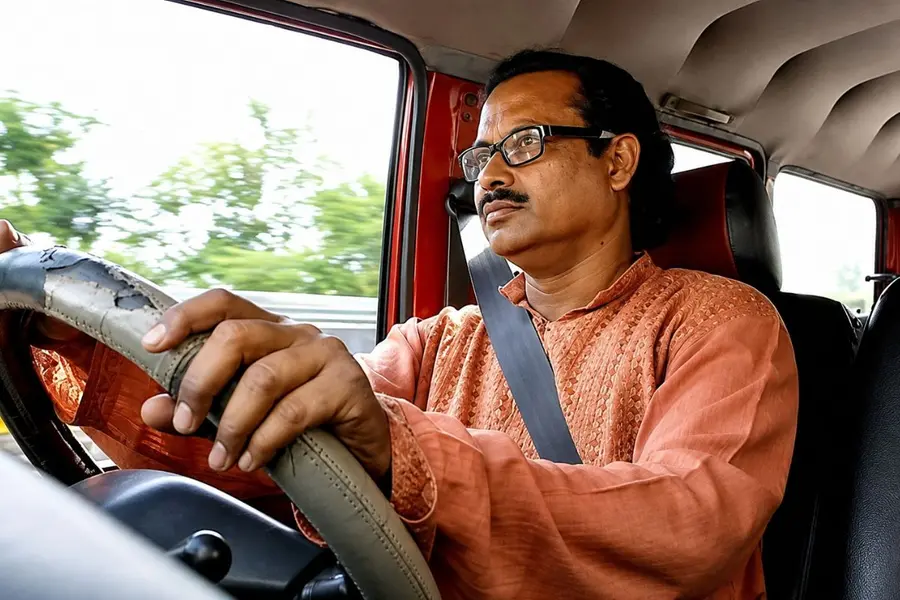
The loudest statement on Kolkata's roads may well be made in complete silence.
For retired cab driver Dipak Das, that silence began with a few haunting lines by poet Jibanananda Das: 'Amra jaini morey aajo, tobuo keboli drissher jonmo hoy' ('We haven't died even today, yet scenes are created ceaselessly').
As he sat beneath a banyan tree reading the poem, its quiet imagery was shattered by a barrage of car horns outside a nearby school.
The jarring contrast moved him to remove the horn from his car that very day, a decision he has stood by for more than 25 years.
The remarkable story, first reported by The Telegraph, traces Das's journey from one of Kolkata's busiest cab drivers to a man who believes patience and empathy, not noise, make roads safer.
A professional driver since 1990, Das spent decades behind the wheel of Kolkata's iconic yellow taxis before later driving white air-conditioned cabs, often working shifts that stretched beyond 12 hours.
Though now retired, he still takes his car out for leisurely drives, continuing the practice that has defined his journey for over two decades.
His decision dates back to an afternoon spent reading poet Jibanananda Das beneath a banyan tree. Immersed in verses celebrating nature, birds and silence, he was abruptly interrupted by relentless honking from vehicles outside a nearby school as parents arrived to collect their children.
The contrast stayed with him.
Determined to act, Das removed the horn mechanism from his own vehicle that very day to see whether driving without it was even practical. According to him, it never became a problem.
'I have been a driver since 1990. I drove taxis, rented cars, every kind of cab to make a living,' Das told The Telegraph, recalling his years on Kolkata's roads.
Over time, he became convinced that excessive honking reflects impatience more than necessity.
Das believes many motorists are never truly taught road etiquette or empathy while learning to drive. In his view, every commuter is rushing somewhere, but repeatedly sounding the horn rarely makes traffic move faster.
Instead, he argues, people have gradually become desensitised to constant noise. Scientific evidence echoes those concerns.
According to the US National Institutes of Health, prolonged exposure to traffic noise above 85 decibels can damage hearing, while chronic noise pollution has also been linked to high blood pressure, cardiovascular disease and elevated stress levels.
Das says meaningful change must begin with children. While many schools organise 'No Horn Day' campaigns, he points out that the same students are often picked up in vehicles whose drivers continue honking unnecessarily.
For him, quieter roads are not simply about following traffic rules but about respecting fellow commuters.
'Maybe we are in a hurry, but honking won't solve that. Roads won't magically widen if we keep pressing the trumpet sign on our steering wheel,' he said.
Published: 06 Aug 2026, 10:22 am IST
ABOUT THE AUTHOR

Related Topics
Disclaimer: Kindly avoid objectionable, derogatory, unlawful and lewd comments, while responding to reports. Such comments are punishable under cyber laws. Please keep away from personal attacks. The opinions expressed here are the personal opinions of readers and not that of Mathrubhumi.