
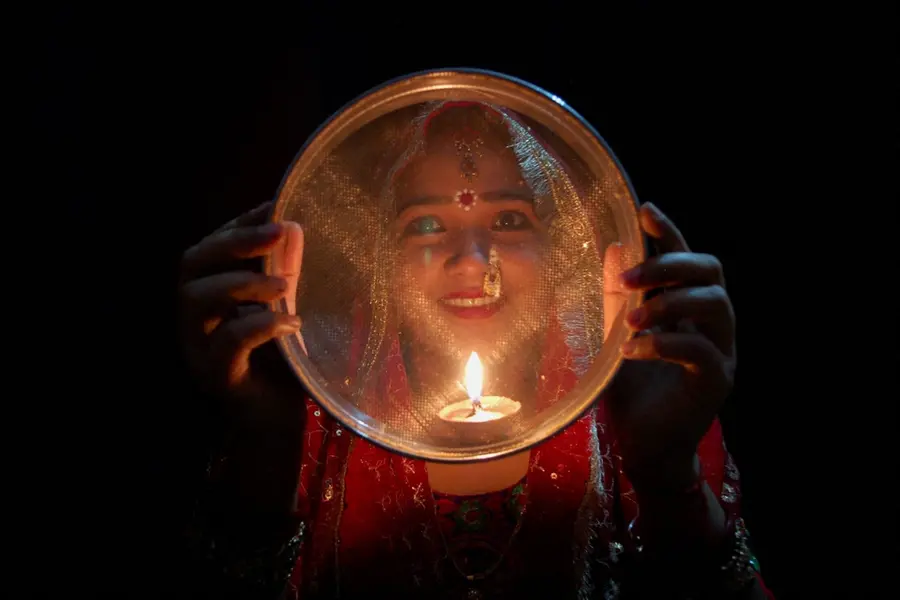
Karwa Chauth is a special festival celebrated mostly in Northern India. It is known as a symbol of deep love, commitment, and devotion between husbands and wives.
This year, Karwa Chauth is being celebrated on October 20. On this day, wives fast from sunrise to moonrise, praying for the long life and good health of their husbands. The festival is deeply connected to the moon as the fast is broken after seeing the moon.
Moonrise timings
This year, the moon is expected to be visible between 7:50 pm and 9:05 pm. Once the moon appears, women break their fast after seeing it, which is a key part of the celebration.
| Moonrise Timings City Wise | |
| Delhi | 7:54 pm |
| Greater Noida | 7:53 pm |
| Jaipur | 8:05 pm |
| Ahmedabad | 8:28 pm |
| Kolkata | 7:24 pm |
| Mumbai | 8:37 pm |
| Bengaluru | 8:32 pm |
| Chennai | 8:20 pm |
| Hyderabad | 8:18 pm |
The Meaning of Karwa Chauth
The name ‘Karwa’ refers to an earthen pot, and ‘Chauth’ means the fourth. Women use this earthen pot during the rituals to offer prayers to the moon. The festival is celebrated on the fourth day of the Kartik month in the Hindu calendar, which falls in October or November in the English calendar.

Stories behind Karwa Chauth
Several stories are linked to Karwa Chauth. One of the most popular is the tale of 'Veeravati'. Veeravati was a queen and the only sister to seven caring brothers. After getting married, she observed her first Karwa Chauth fast for her husband's long life. However, as the day went on, she became weak from hunger. Her worried brothers played a trick on her by setting up a mirror in a tree, making it look like the moon had risen.
Believing them, Veeravati broke her fast. Unfortunately, she soon received the news that her husband had fallen ill and died. Heartbroken, she prayed to Goddess Parvati, who revealed that Veeravati's fast had been incomplete because of the trick. Veeravati then kept another fast and prayed to Lord Yama, the god of death, who restored her husband's life.
Another famous story is about a devoted wife named 'Karwa', whose husband was attacked by a crocodile while bathing in a river. Karwa tied the crocodile with a cotton thread and prayed to Lord Yama, asking him to save her husband. Moved by her devotion, Lord Yama granted her wish and sent the crocodile to hell.
These stories, along with the tale of 'Satyavan and Savitri', are shared with women who keep the fast on Karwa Chauth. They show the power of love and how true devotion can overcome even death.
Karwa Chauth rituals
The rituals of Karwa Chauth have remained the same for centuries. While the fast and moon sighting are well-known, the rituals begin early in the morning and involve the entire family.
- Sargi: The early morning meal
The day starts with a meal called 'Sargi', which is prepared by the mother-in-law for her daughter-in-law before sunrise. This meal is a special tradition and includes fruits, nuts, sweets, and other foods that provide nourishment.
After eating this meal, the women begin their fast, which lasts until they see the moon. This pre-dawn meal is not just about food, but also serves as a bonding moment between the mother-in-law and daughter-in-law.
- Fasting from sunrise to moonrise
The fast is known as 'Nirjala', meaning it is done without food or water. Throughout the day, women pray for their husbands' long life, health, and prosperity. Later in the day, they dress in their finest clothes, often red or green, wear jewelry, and apply henna on their hands, much like a bride would.
- The main puja ceremony
As the evening approaches, women gather for the 'puja' or prayer ceremony. They sit in a circle with their 'Karwas' (earthen pots) filled with water, with a small lamp inside. This lamp symbolises light and energy.
During the puja, a story, often about Veeravati or Karwa, is narrated to highlight the importance of faith and devotion. Women pass the Karwas around while chanting prayers for their husbands’ well-being.
- Breaking the fast
The fast is broken after the moon rises. Women look at the moon through a cloth or sieve and then see their husbands through the same sieve, symbolically asking for blessings from the moon for their husband. The husband then gives his wife her first sip of water and a bite of food, marking the end of the fast.
Published: 20 Oct 2024, 06:03 pm IST
Related Topics
Disclaimer: Kindly avoid objectionable, derogatory, unlawful and lewd comments, while responding to reports. Such comments are punishable under cyber laws. Please keep away from personal attacks. The opinions expressed here are the personal opinions of readers and not that of Mathrubhumi.