
Developed by Science, the device gently cleans your entire body in minutes using water jets and microbubbles, all while playing music and monitoring vital signs.
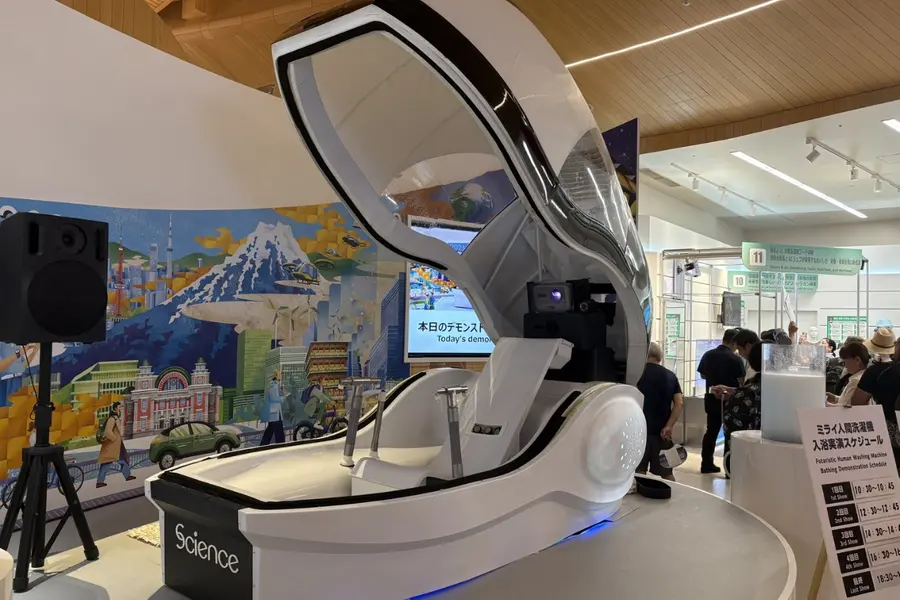
A human washing machine that captivated visitors at the recent World Expo in Japan is now available for purchase, a company spokeswoman announced Friday.
Users enter the pod, lie down, secure the lid, and experience a gentle cleaning process akin to a washing machine, minus the spin cycle, accompanied by music. The prototype, dubbed the human washer of the future, drew massive crowds during the six-month Osaka Expo that concluded in October after hosting over 27 million attendees.
Developed by Japanese firm Science, the device updates a concept first showcased when Osaka hosted the event in 1970. "Our (company) president was inspired by that as a 10-year-old boy at the time," spokeswoman Sachiko Maekura told AFP. She added that the machine "not only washes your body but also your soul," while tracking heartbeats and vital signs.
Interest surged after a US resort inquired about commercialisation, prompting Science to produce it. An Osaka hotel has acquired the first unit for guest services, and major electronics retailer Yamada Denki plans to install it to attract shoppers.
"Because part of the appeal of this machine is rarity, we plan to produce only about 50 units," Maekura said. Local reports indicate a retail price of 60 million yen ($385,000).
What is a human washing machine?
A human washing machine is a futuristic, pod-shaped device developed by Japan's Science Co., designed to automatically clean and dry a person's entire body in about 15 minutes without requiring manual effort. Users lie down inside the transparent capsule, roughly 1m wide, 2.5m deep, and 2.6m tall, close the lid, and experience a gentle wash using high-pressure water jets, fine mist showers, and microscopic air bubbles (microbubbles) that penetrate pores to remove dirt, dead skin, and sebum. The process includes biometric sensors monitoring heart rate, vital signs, and skin condition to personalise the cycle, with calming music, nature visuals, and AI adjustments for relaxation, often described as washing "both body and soul.
Published: 28 Nov 2025, 04:07 pm IST
Disclaimer: Kindly avoid objectionable, derogatory, unlawful and lewd comments, while responding to reports. Such comments are punishable under cyber laws. Please keep away from personal attacks. The opinions expressed here are the personal opinions of readers and not that of Mathrubhumi.
