
Why do some mental health conditions draw empathy while others face fear and stigma? Research explores the social psychology behind the sympathy gap
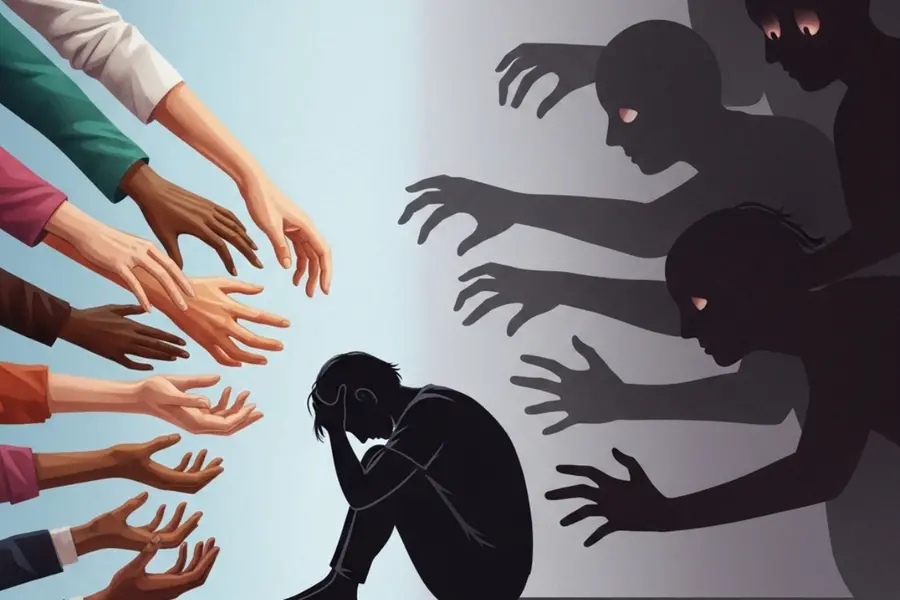
Public attitudes toward mental health are uneven, with more common conditions such as anxiety and depression generally receiving greater social acceptance than severe or less familiar disorders.
Experts say familiarity plays a key role in shaping sympathy. When mental health symptoms match what society already recognises as distress, they are more likely to be seen as suffering rather than character weakness.
Also Read

Research shows that fear is a major driver of stigma. Studies measuring social distance preferences found that depression and anxiety generated lower stigma levels, while schizophrenia and personality disorders generated higher levels of avoidance.
A cross-cultural study also found that recognition of conditions influences attitudes. Around 70% of participants correctly identified attention deficit hyperactivity disorder (ADHD), but only about one-third correctly recognised bipolar disorder from clinical descriptions.
Conditions such as schizophrenia, bipolar disorder and some personality disorders are often misinterpreted through moral judgement rather than medical understanding.
Mood instability may be viewed as selfishness, suspicion as hostility, and hallucinations as dangerous behaviour. This moral framing can lead to dismissal of symptoms or reduced willingness to offer help.
Personality disorder diagnoses are particularly affected by stigma. Borderline personality disorder is sometimes wrongly associated with attention-seeking or manipulation, while clinically it is characterised by emotional instability, intense fear and psychological distress.
Narcissistic personality disorder is also frequently used in everyday language as a label for cruelty or selfishness, although medically it is understood as a rigid coping style that can mask insecurity and vulnerability.
Social media language often reinforces stigma. Mental health terms are sometimes used as insults or jokes, with words such as “psychotic” or “bipolar” being applied casually in online conversations.
Analyses of social media posts have shown that mental health conditions are more likely to be trivialised or used in negative contexts compared with physical illnesses.
The pattern reflects a hierarchy of sympathy. Distress that can be framed as the result of a clear external event, such as trauma from disaster or violence, often attracts more empathy because it fits a simple narrative of suffering.
However, research indicates that even trauma survivors may face negative stereotypes, including beliefs that they are permanently damaged, unpredictable or socially risky.
The sympathy gap is also visible in comparisons with physical illness. Diseases perceived as largely outside personal control, such as cancer, stroke or dementia, tend to attract greater public support.
When illness is linked to behaviour, sympathy may decrease. In mental health, severe conditions are sometimes wrongly interpreted as personal choice or character failure, despite strong biological and developmental influences.
This creates a paradox where people with the least control over their symptoms may receive the least social understanding.
The research highlights ongoing challenges in mental health awareness efforts. While public education has improved recognition of some conditions, empathy has not expanded equally across all types of psychological distress.
Scholars argue that reducing stigma requires extending understanding beyond familiar diagnoses to include conditions that are perceived as frightening, disruptive or difficult to interpret.
Debates about stigma are particularly relevant in entertainment and public discourse, including incidents such as discussions around mental behaviour portrayal during events organised by the British Academy of Film and Television Arts.
Mental health professionals emphasise that stigma can delay treatment, discourage help-seeking and worsen outcomes.
Experts say future awareness campaigns should focus not only on increasing knowledge but also on building empathy for conditions that are less socially visible or more misunderstood.
Published: 26 Feb 2026, 11:58 am IST
Related Topics
Disclaimer: Kindly avoid objectionable, derogatory, unlawful and lewd comments, while responding to reports. Such comments are punishable under cyber laws. Please keep away from personal attacks. The opinions expressed here are the personal opinions of readers and not that of Mathrubhumi.