
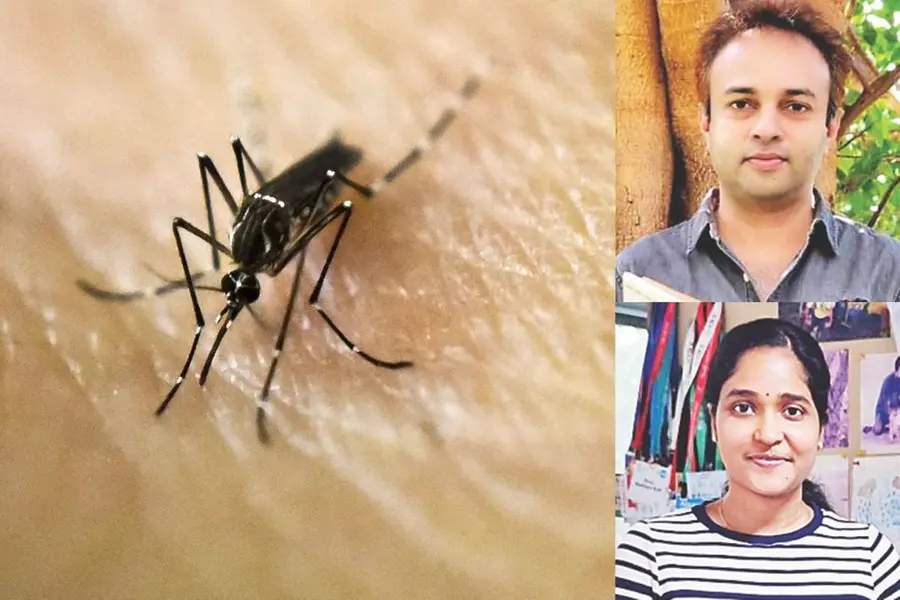
Alappuzha: In a remarkable achievement, a team led by Malayali scientist Dr Roxy Mathew Koll from the Indian Institute of Tropical Meteorology (IITM), Pune, has developed an innovative model capable of predicting dengue outbreaks up to two months in advance. This pioneering work, spearheaded by Dr Koll, a native of Bharananganam in Kottayam, includes crucial contributions from research scholar Sophia Jacob, hailing from Mookkannur, Ernakulam.
This state-of-the-art system harnesses the power of artificial intelligence (AI) and machine learning (ML) to uncover and analyse the intricate relationship between weather patterns and dengue fever. By evaluating rainfall and temperature data, the model predicts mosquito breeding conditions and the likelihood of dengue transmission, offering a critical tool for early intervention in dengue-prone regions like Kerala.
The potential of this breakthrough is immense, as it equips authorities with the ability to proactively combat dengue outbreaks, saving countless lives.
Dr Koll highlighted the pressing need for localised research, though efforts in Kerala faced setbacks due to a lack of cooperation from the Health Department and the Climate Change-Public Health Nodal Officer. Despite this, the study underscores the urgency for timely interventions as rising temperatures and shifting monsoon patterns threaten to amplify dengue cases and mortality rates across India.
According to the study, dengue cases could surge by 13 percent by 2030, 23-40 percent by 2050 and a staggering 30-112 percent between 2081 and 2100 if current trends persist. The research, which offers profound insights into the complex interplay between India’s climate and dengue, has earned international recognition, being published in the prestigious scientific journal Scientific Reports.
Kerala and Dengue Challenge
Kerala emerged as the state with the highest number of dengue-related fatalities in India in 2023, with 153 deaths. Fluctuations in rainfall often lead to water stagnation, creating ideal breeding grounds for mosquitoes. Warmer temperatures further accelerate their life cycle, increasing the risk of dengue transmission.
Kerala’s dense population and rapid urbanisation exacerbate these challenges, making advancements like this predictive model a game-changer for public health in the region.
This achievement showcases the power of scientific innovation in addressing one of the most pressing public health challenges of our time.
Published: 23 Jan 2025, 09:34 am IST
Disclaimer: Kindly avoid objectionable, derogatory, unlawful and lewd comments, while responding to reports. Such comments are punishable under cyber laws. Please keep away from personal attacks. The opinions expressed here are the personal opinions of readers and not that of Mathrubhumi.
