
Fibre plays a crucial role in maintaining digestive health, and experts suggest that several non-vegetable foods can significantly boost daily fibre intake.
It often starts with something small — feeling sluggish after meals, irregular digestion, or low energy during the day.
Many people try to fix this by eating more vegetables, but fibre doesn’t come from vegetables alone. A balanced diet that includes a variety of fibre-rich foods can quietly improve digestion, stabilise energy levels and support long-term health.
Also Read

According to gastroenterologist Saurabh Sethi, adults should aim for 25 to 35 grams of fibre daily. Including diverse, non-vegetable sources of fibre can help meet this requirement more easily while also adding variety to everyday meals.
Why fibre matters for your body
Fibre plays a vital role in maintaining digestive health. It helps prevent constipation, supports healthy gut bacteria and contributes to better blood sugar control. Regular intake is also linked to lower cholesterol levels and reduced risk of heart disease.
A consistent intake of fibre-rich foods ensures smoother digestion and sustained energy throughout the day, making it an essential part of a healthy diet.
1. Chia seeds for a quick fibre boost
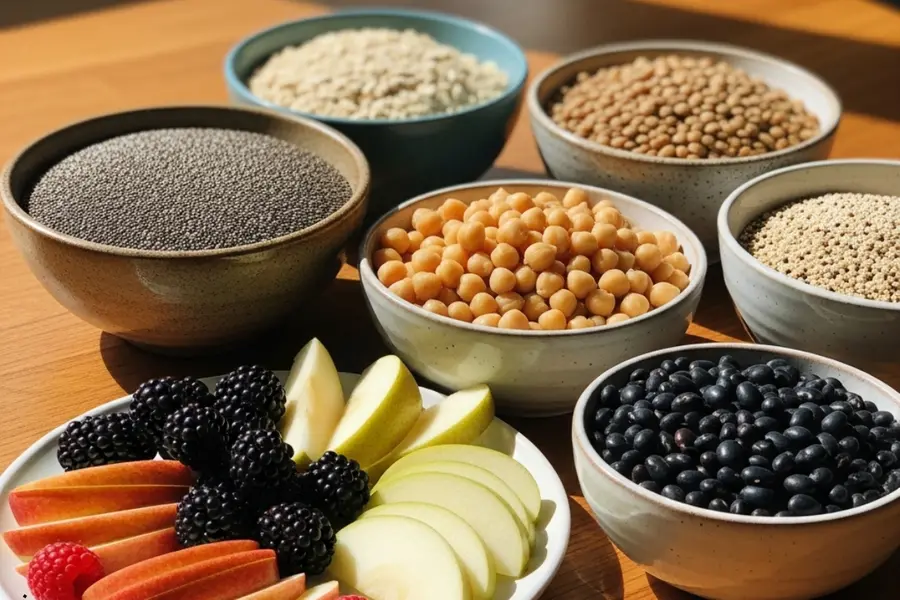
Chia seeds are one of the easiest ways to increase fibre intake. Just two tablespoons provide around 10 grams of fibre. They can be added to water, smoothies or breakfast bowls without much effort.
2. Black cumin seeds for added nutrition
Black cumin seeds offer about 5 to 6 grams of fibre per two tablespoons. They also add flavour to meals and can be sprinkled over dishes or mixed into dough.
3. Lentils as an everyday staple
Lentils are a common part of Indian diets and provide around 8 grams of fibre per half cup when cooked. They are also rich in protein, making them a balanced food choice.
4. Chickpeas for versatility and health
Chickpeas contain about 6 grams of fibre per half cup. They can be used in curries, salads or roasted as snacks, making them both nutritious and convenient.
5. Berries for fibre and antioxidants
Raspberries and Blackberries are excellent fruit options, providing around 8 grams and 7.5 grams of fibre per cup respectively. They also supply antioxidants that support overall health.
6. Apples and pears for daily intake
Pears and apples, especially when eaten with the skin, provide about 5 to 6 grams of fibre. They are simple additions to a daily diet and easy to carry as snacks.
7. Oats for heart and gut health
Oats contain around 5 grams of fibre per half cup. They are known for helping lower cholesterol and are a popular breakfast option.
8. Quinoa as a healthy grain alternative
Quinoa provides about 5 grams of fibre per cup when cooked. It is also gluten-free and rich in essential nutrients.
9. Black beans for sustained energy
Black beans offer around 7.5 grams of fibre per half cup. They support digestion and help maintain steady energy levels.
Building a balanced, fibre-rich diet
Incorporating these foods into everyday meals can gradually improve digestion and overall health. Instead of relying on a single source, combining different fibre-rich foods ensures better nutrition and variety.
Experts recommend increasing fibre intake slowly and staying well-hydrated to avoid discomfort. For personalised dietary changes, consulting a healthcare professional is advisable.
Published: 06 Apr 2026, 03:18 pm IST
Related Topics
Disclaimer: Kindly avoid objectionable, derogatory, unlawful and lewd comments, while responding to reports. Such comments are punishable under cyber laws. Please keep away from personal attacks. The opinions expressed here are the personal opinions of readers and not that of Mathrubhumi.