
Ugandan designer Mushirah Rabaab created 'Layers of Life', a couture gown inspired by the seven anatomical layers involved in a C-section
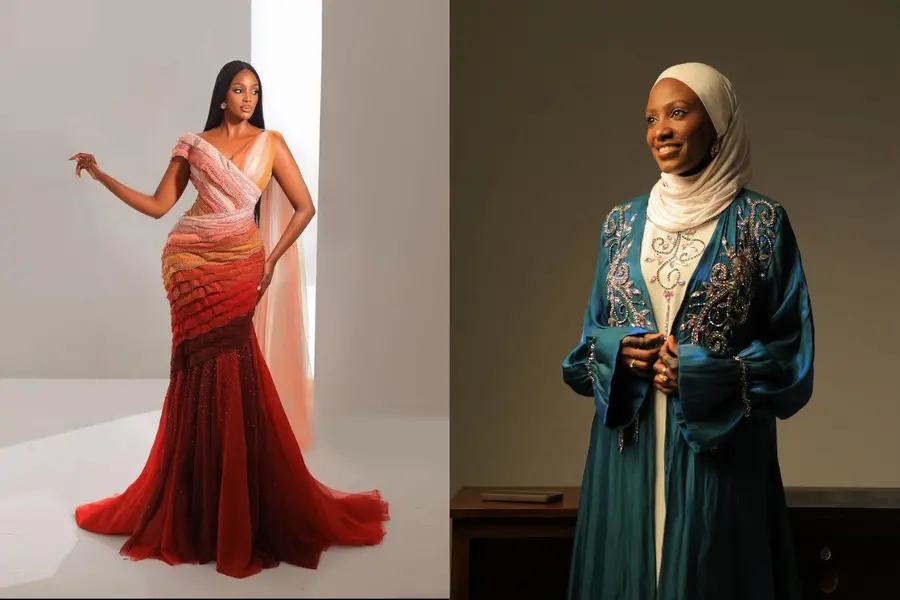
At a pageant where fashion is often about making a statement, Miss World Uganda Ella Muhosa's gown told a story that many women know intimately.
Ella Muhosa appeared on the World Designer Award stage in a beige ombre creation inspired by a C-section scar, bringing the realities of childbirth into a space usually dominated by beauty and glamour. The look became a tribute to the strength, sacrifice and endurance of motherhood.
Titled 'Layers of Life,' the gown was created in seven colours, representing the seven layers of skin that are cut through during a C-section. Behind the label 'Keesha' was a designer whose name was, until then, largely unknown to the world - Mushira Rabab.
It was Mushira's experiences of motherhood that led her to create 'Layers of Life'. Motherhood taught her something far more powerful than conventional beauty standards ever could - that the female body is capable of extraordinary strength, endurance, and transformation.
She chose to tell that story through the language she knew best, fashion. Mushira Rabab talks about the experiences, emotions, and journey that gave birth to a gown the fashion world could not ignore.
Who is the woman behind Miss World Uganda's world-famous gown, 'The Layers of Life'?
I am Mushirah Rabaab Abdallah, CEO of KEESHA, a Ugandan couture brand. I am a self-taught fashion designer and creative. I've always been drawn to storytelling through fashion, and I believe clothing can communicate things that words sometimes cannot. It started when I was a child. I loved playing with dolls and making little outfits for them. Over time, I realized that creating clothes was the way I naturally expressed my creativity and ideas.
Can you take us back to the moment you thought of translating a C-section into a couture gown?
I was sitting alone at a coffee shop, reflecting on maternal healthcare in Uganda and the experiences women go through. I started thinking about how something so significant in a woman's life could be translated into fashion, and the concept slowly came to me.
Fashion celebrates visible beauty. You chose to celebrate what lies beneath it. Why?
Because some of the most powerful parts of a woman are the parts we don't see. I wanted to celebrate what happens beneath the surface and the strength it represents. Motherhood made me realize just how capable and powerful the female body is. It gave me a much deeper appreciation for everything a woman's body can endure and create. Although I didn't have a C-section myself, I had many women around me who went through C-sections. Hearing their experiences and seeing what they went through was deeply touching.
A C-section scar is something women are often pressured to hide. Did you want to transform that narrative? Why was it important to bring something so intimate and medically complex into high fashion?
I wanted the scar to represent strength rather than something to be ashamed of. It's evidence of what a woman has survived, endured, and accomplished. These are real stories that women live through. I want her to feel seen, respected, and proud. I want her to look at her scar and see strength rather than something she needs to hide. I wanted to show that fashion isn't only about beauty; it can also educate, start conversations, and give visibility to stories that are often overlooked.
Do you believe fashion can change how society views women's bodies after childbirth?
Yes. Fashion has a powerful voice. When we use it to tell stories differently, we can challenge perceptions and help women see their bodies with more pride and compassion.
The gown represents the seven anatomical layers of a C-section. How did you turn something so clinical into something visually poetic?
I translated each anatomical layer into a different visual element, texture, and construction technique. The goal was to make something medically complex feel beautiful, intentional, and emotionally meaningful. The deeper anatomical layers were the most challenging because I had to interpret something very clinical while still maintaining the elegance and movement expected from couture.
The entire process took about 50 days. It involved research, development, pattern-making, construction, detailing, and many hours of hand craftsmanship.
How did Miss Uganda, Muhoza, react when you first explained the concept to her?
She was extremely happy about it. As a domestic violence advocate herself, she understood the importance of giving women and their stories a voice, and she carried the story with so much grace.
What was going through your mind when you finally saw the gown on the Miss World stage?
It was incredibly emotional. This was my first international gown, so watching it walk on such a global stage was a moment I will never forget. It means so much because it takes a story rooted in Uganda and allows the world to hear it. I'm grateful that fashion gave me a platform to start that conversation. It shows that Ugandan designers have stories, creativity, and craftsmanship that deserve a place on the global stage. I hope this opens more doors for the incredible talent we have here.
You called it 'The Layers of Life'. What are the layers of Keesha that the world doesn't see?
The world sees the designer, but behind that is a woman who has had doubts, taken risks, become a mother, and continuously chosen to believe in herself. Those are some of the layers that shaped me.
Do you think the global fashion industry is finally understanding the depth of African design?
I think there is a growing appreciation for African design, but there is still so much more to discover. Africa isn't just a source of inspiration; we are creators with our own stories, techniques, and perspectives.
When your daughter looks back at this gown one day, what do you hope she understands about the woman who created it?
I hope she understands that her mother wasn't afraid to tell stories - especially stories that mattered to our community. I want her to know that she should never be afraid to speak about her own story or give a voice to someone else's. Motherhood has made me more empathetic, but it has also made me much more determined. I want my daughter to grow up seeing her mother pursue her dreams fearlessly.
Published: 07 Sept 2026, 06:49 pm IST
Disclaimer: Kindly avoid objectionable, derogatory, unlawful and lewd comments, while responding to reports. Such comments are punishable under cyber laws. Please keep away from personal attacks. The opinions expressed here are the personal opinions of readers and not that of Mathrubhumi.
