
Learn more about Chhath Puja, a sacred Hindu festival honouring the Sun God. Find out dates, detailed rituals, timings, and preparations in Bihar.
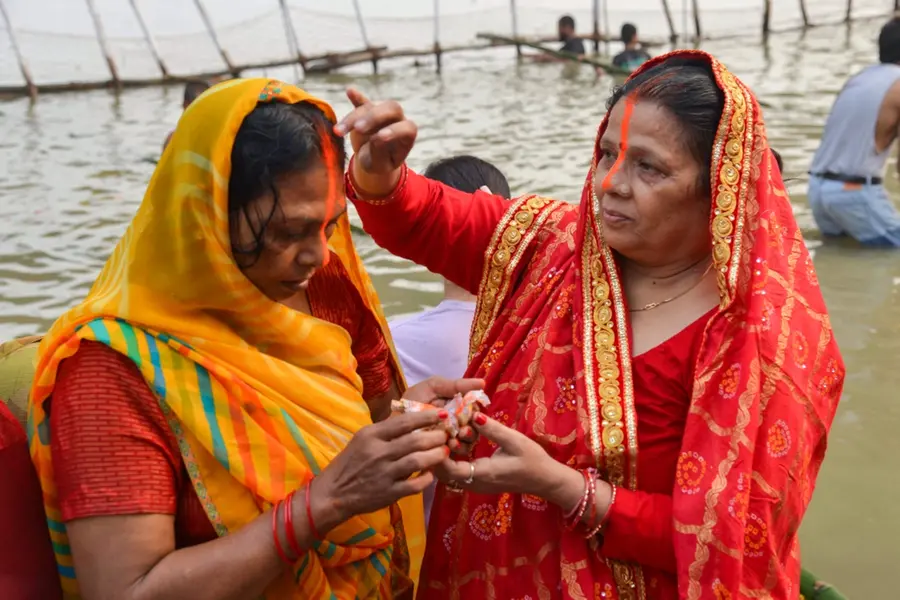
Patna: With just a day left for the start of Chhath Puja 2025, ghats along the rivers in Bihar are being decked up for one of the state’s most sacred and eco-conscious festivals. Local administrations have launched large-scale cleaning drives, setting up barricades, lighting arrangements, and medical camps to ensure the safety and comfort of thousands of devotees who will gather to worship the Sun God (Surya Dev) and his consort Usha, the goddess of dawn.
Markets, too, are abuzz with activity. Shops are overflowing with thekua (traditional jaggery-based sweets), sugarcane stalks, fruits, earthen lamps (diyas), and bamboo baskets, all essential offerings for the festival.
What is Chhath Puja?
Chhath Puja, also known as Surya Shashti, Dala Chhath, and Chhath Parv, is a four-day festival dedicated to the worship of the Sun God and Usha, believed to bring prosperity, health, and longevity to devotees’ families. The rituals, observed primarily in Bihar, Jharkhand, Uttar Pradesh, begin just after Diwali and Bhai Dooj, marking the end of the festive season.
The celebration emphasises purity, discipline, and devotion, with devotees observing rigorous fasts and performing rituals at sunrise and sunset near water bodies.
Chhath Puja 2025 dates and ritual timings
The four-day festival will be celebrated this year from Saturday, October 25, to Tuesday, October 28. Below is the day-by-day schedule of rituals and timings:
Day 1 – Nahay Khay (October 25, Saturday)
The festival begins with Nahay Khay, a day of purification. Devotees bathe in rivers or ponds, clean their homes, and prepare a simple meal made without onion or garlic. This marks the start of the fasting period.
Sunrise: 6:28 am | Sunset: 5:42 pm
Day 2 – Kharna (October 26, Sunday)
On Kharna, devotees observe a day-long fast, breaking it only after sunset with prasad made of jaggery, rice, and milk. This prasad is first offered to Chhathi Maiya, the goddess associated with the festival, before being shared with family and friends.
Sunrise: 6:29 am | Sunset: 5:41 pm
Day 3 – Sandhya Arghya (October 27, Monday)
This is the most significant day of the festival, when devotees offer Arghya (water and prayers) to the setting sun while standing waist-deep in water. Ghats come alive with devotional songs, diyas, and chants as families gather to seek blessings for well-being and prosperity.
Sunrise: 6:30 am | Sunset: 5:40 pm
Day 4 – Usha Arghya (October 28, Tuesday)
The festival concludes with the Usha Arghya, where devotees offer prayers to the rising sun. This marks the completion of the 36-hour fast. The ritual ends with Parana, where devotees break their fast by consuming prasad and water.
Sunrise: 6:30 am | Sunset: 5:39 pm
Medical response units, control rooms, and lost-and-found counters have been established to handle emergencies, while boat patrols will monitor river safety. As chants of “Chhathi Maiya ke Jai” echo along the ghats and diyas float across the rivers, Bihar once again readies itself for one of the most spiritually charged festivals of the year.
Published: 23 Oct 2025, 04:02 pm IST
Related Topics
Disclaimer: Kindly avoid objectionable, derogatory, unlawful and lewd comments, while responding to reports. Such comments are punishable under cyber laws. Please keep away from personal attacks. The opinions expressed here are the personal opinions of readers and not that of Mathrubhumi.
