
Speculation is mounting over potential U.S. military action against Iran’s Kharg Island, a critical oil export hub. While seizing the island could cripple Iran’s economy, it could also lead to severe consequences.
We all remember how America went to Vietnam, then Iraq, then Afghanistan. Each time, they said it would be quick. Each time, they stayed for years, lost thousands of lives, spent billions of dollars, and came back without a clear victory. Now, it seems like history is quietly preparing to repeat itself — this time with Iran.
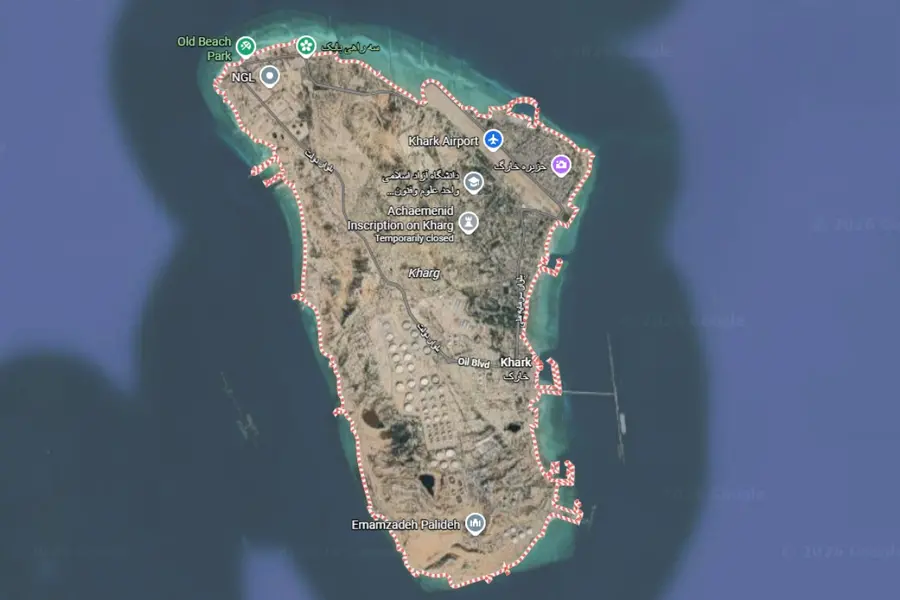
President Donald Trump is now seriously talking about invading Kharg Island, a small piece of land sitting in the Gulf near Iran's coast. You may wonder — why this island? Simple answer. About 90% of Iran's oil leaves the country through this one island. If America controls Kharg, it can choke Iran's biggest source of income. Even past American presidents like Jimmy Carter and Ronald Reagan had thought about attacking it. Saddam Hussein actually did strike it. Trump himself has done it before, too.
If America captures Kharg Island, it could block around 2.4 to 2.8 million barrels of Iranian oil every single day. That sounds powerful on paper. But here is the problem — blocking that much oil from the world market will push global oil prices through the roof. When oil prices rise, everything becomes expensive. Petrol, transport, food, electricity — common people everywhere, including in India, will feel it in their pockets.
Now think about what happens after the soldiers land on that island. They cannot just plant a flag and go home. They will need food, water, ammunition, and medical support — all delivered by air or sea, every single day. Iran knows this. Iran's mainland is so close to Kharg that their missiles can easily reach it. Drones can be sent in waves. Runways can be bombed. Supply ships can be targeted. The soldiers sitting on that island will be like sitting ducks.
And it does not stop at Kharg. To fully cut off Iran's oil, America would also need to capture three more terminals — Jask, Lavan, and Sirri. Each one adds more soldiers, more risk, more complexity. A simpler option would be to just stop Iranian oil tankers at sea as they sail out of the Gulf. Less dramatic, but far less dangerous.
There is also talk about going after Iran's uranium stockpile — about 400 kg of enriched uranium, most of it believed to be hidden underground in a city called Isfahan. A military raid to grab or destroy this would be one of the biggest operations in modern history. But more of it is buried deep under Natanz and Fordow as well. Hitting all three places at the same time? Even America, with all its power, may find that too much to handle.
Now, let us talk about Iran's side. Many people assume Iran will quickly give up when pressed hard enough. But Iran's government has survived painful economic sanctions for decades. They are used to suffering. Their people are used to hardship. The Islamic Revolutionary Guard Corps — Iran's elite military force — has fought America before, quietly, using roadside bombs and missiles in Iraq. They know how to bleed an enemy slowly.
Trump, on the other hand, has elections coming in just eight months. His own country's patience is not unlimited. Every American soldier injured or killed, every expensive missile fired, every aircraft lost — it adds pressure back home. Already, one E-3 Sentry aircraft — a massive, expensive radar plane that acts like a flying eye for the military — was destroyed in Saudi Arabia. America has also already fired more than 850 Tomahawk cruise missiles in this conflict, which is more than what was used in the entire 2003 Iraq war. That could be nearly one-third of America's total global stock of these missiles.
This is not just America's problem. Their allies are watching nervously. Military planners in the Pacific region — keeping an eye on China — are also deeply worried. If America's navy is stretched thin, if expensive weapons are being used up fast, if aircraft are being lost, the whole balance of power shifts.
The most important voices right now should be the people inside Trump's own circle — people like J.D. Vance, Tulsi Gabbard, and Pete Hegseth, who have personally fought in Middle East wars. They saw how those missions became long, painful mistakes. They know what a trap looks like from the inside.
The question is simple. Will they speak up before it is too late? Or will America once again march into a war that started with confidence and ended with regret?
History does not always repeat itself. But right now, it is trying very hard to.
(Girish Linganna is an award-winning science communicator and a Defence, Aerospace & Geopolitical Analyst. He is the Managing Director of ADD Engineering Components India Pvt. Ltd., a subsidiary of ADD Engineering GmbH, Germany.)
Published: 01 Apr 2026, 08:17 pm IST
Disclaimer: Kindly avoid objectionable, derogatory, unlawful and lewd comments, while responding to reports. Such comments are punishable under cyber laws. Please keep away from personal attacks. The opinions expressed here are the personal opinions of readers and not that of Mathrubhumi.
