
Cheaper than satellites and more versatile than ground towers, Red Balloon Aerospace's Super Pressure Balloon promises to deliver internet, disaster alerts, and surveillance to India's remote regions.
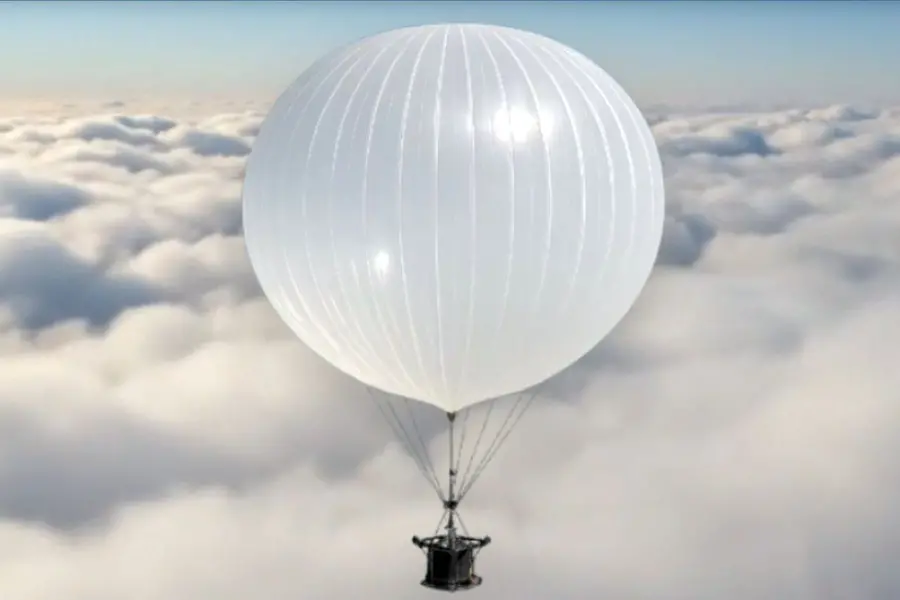
If you are driving around the winding roads of Vijayawada in a couple of months from now, you might just spot a new sight in the skies, do not be surprised if you see a large balloon floating high above in the sky. This is not an ordinary balloon but a part of a cutting-edge technology mission by Red Balloon Aerospace, aiming to unlock what experts call "near space".
Near space refers to the layer of the atmosphere between 20 and 40 kilometres above the Earth, far higher than commercial aircraft can fly, but below satellites orbiting in space. For years, this zone has remained largely unused.
Now, companies like Red Balloon Aerospace are looking at it as the next frontier for communication, monitoring, and data services.
What exactly is being launched?
The company plans to launch a Super Pressure Balloon (SPB), a special type of high-altitude balloon designed to stay in the sky for long periods, sometimes up to 100 days.
Unlike regular weather balloons, these are built to maintain steady altitude and carry advanced equipment.
This balloon carries high-resolution cameras capable of capturing images with clarity between 25 and 75 centimetres, along with other sensors that can collect valuable data from large areas below.
How is this different from satellites or towers?
Today, most communication and monitoring systems depend on satellites in space or towers on the ground, and both have limitations. Satellites are powerful but extremely expensive and take years to build and launch.
EXPLAINED: Why India opening door to 'green jet fuel' makes sense
Ground towers, on the other hand, struggle to reach remote villages, forests, mountains, and coastal regions. This new balloon technology sits right in between. It is much cheaper than satellites, faster to deploy taking weeks instead of years, capable of covering large areas continuously, and fully recoverable, meaning it can be repaired and reused.
In simple terms, it acts like a "tower in the sky".
How will this help rural India?
One of the biggest impacts of this technology could be in improving connectivity in rural and remote parts of India. Millions of people still live in areas where mobile networks are weak or unavailable.
With a balloon floating high above, internet and telecom services can reach villages, tribal regions, and coastal belts. Emergency communication during disasters like floods and cyclones can improve, and real-time monitoring of large areas becomes possible.
This could help bridge the long-standing digital divide between urban and rural India.
The Super Pressure Balloon is not just about communication. It can also monitor pipelines, power grids, and industrial networks, help in disaster management by providing live data, support border and coastal surveillance, and assist researchers and universities with affordable access to near space.
This makes it useful for both civilian and strategic purposes.
Will this be affordable?
According to the company’s leadership, the goal is to make near space accessible to more people, not just large organisations with big budgets. Startups, universities, and research teams could use such platforms for experiments and data collection at a much lower cost.
Also Read: Meet the entrepreneur who wants to bring 'flying hospital' to India
While the technology is promising, there are still challenges to overcome. These include getting regulatory approvals, managing airspace safely, and controlling the balloon's movement in changing winds. How these challenges are addressed will determine how quickly this technology can scale.
The idea of placing platforms in near space could be a major shift in how we think about communication and monitoring. Instead of choosing between expensive satellites or limited ground infrastructure, this offers a middle path like cost-effective, flexible, and scalable.
If successful, this launch could mark the beginning of a new era where India not only uses space technology but also leads in developing innovative solutions closer to home.
As the balloon rises over Vijayawada, it will carry more than just equipment, it will carry the promise of better connectivity, smarter monitoring, and a more inclusive digital future. For millions living in remote parts of India, this small dot in the sky could one day make a very big difference.
Published: 24 Apr 2026, 05:54 pm IST
Disclaimer: Kindly avoid objectionable, derogatory, unlawful and lewd comments, while responding to reports. Such comments are punishable under cyber laws. Please keep away from personal attacks. The opinions expressed here are the personal opinions of readers and not that of Mathrubhumi.
