

A defeat for the Left Democratic Front (LDF) in the 2026 Assembly elections would mean, for the first time since the 1970s, that communist parties hold no state government anywhere in India.
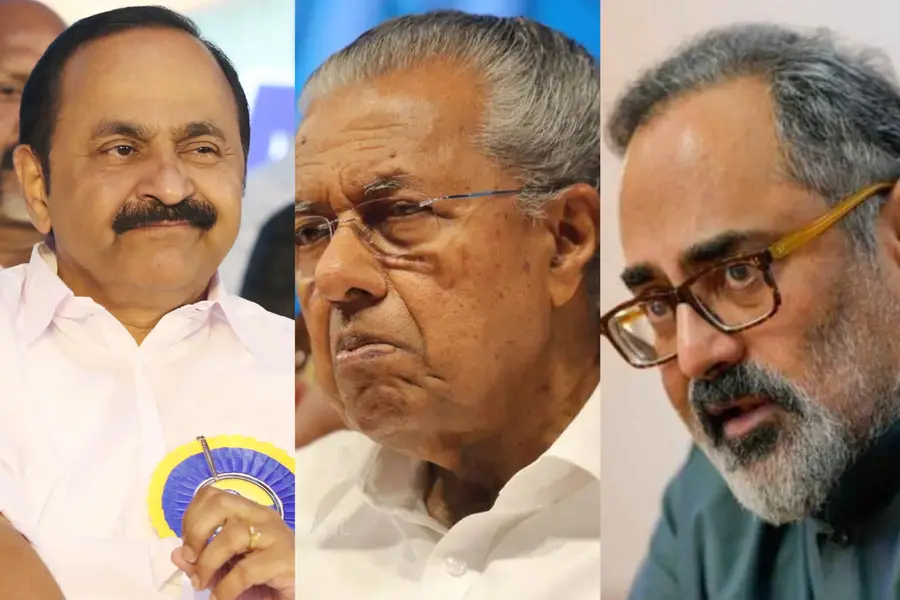
On December 13, CPM leaders and workers huddled at the party headquarters at AKG Centre, were watching with trepidation the electoral seismograph, recording the rattling that the party was facing from Kasaragod to Parassala, in the local body elections. The citadel- Thiruvananthapuram Corporation, was grabbed by archenemy, the BJP.
The Bharatiya Janata Party (BJP) had captured control of the state capital for the first time in its nearly five decades of history, winning 50 of 101 municipal wards. For the Communist Party of India (Marxist) (CPM), which had governed the corporation virtually unchallenged since 1980, the loss was a great loss of face more than an electoral setback – it was the symbolic crash of its longest-standing urban fortress. A capital is the seat of government and the primary political and administrative hub. A victory in the capital city's local body elections provides a major psychological and symbolic boost not only to a political party, but also conveys a powerful message to the citizens of the State and across the country. The clear message is that the State is ready to accept a seismic shift in its governance structure.
The Congress-led United Democratic Front (UDF) swept through urban and rural Kerala after a long hiatus. The Left had been humbled to controlling just one of six major corporations, and the ruling front faced its worst defeat in decades. For political observers of India’s Left politics, the rumblings of the electoral defeat extend far beyond the state boundaries. Kerala represents the Indian Left’s last bastion. If the Left Democratic Front (LDF) loses the 2026 Assembly elections, it would mark the first time since the 1970s that communist parties hold no state government anywhere in India – a crippling blow to their national relevance.
In Kollam, where the Left had an undisputed run for 25 consecutive years, the UDF wrested control with a decisive 15-seat victory. In Kochi, the state’s commercial capital, the UDF won 47 seats, reducing the Left to 22 – a shocking reversal from the closely contested 2020 result. Thrissur, previously balanced between the two fronts, swung impressively towards the UDF. The municipal results told the same story. The LDF, which won 43 municipalities in 2020, was reduced to just 28. The UDF surged to 54, while the BJP – almost non-existent in municipal contests five years ago – captured two, including the prestigious Tripunithura.
In northern Kerala, LDF experienced significant setbacks. The UDF, due to the partnership of the Indian Union Muslim League (IUML), made spectacular gains in Malappuram district, winning 11 of 12 municipalities in an area where the Left had been maintaining a distinct presence.
What led to the Left’s debacle? Hindus across the State were perturbed by the scale of the robbery and plunder of temple gold at Sabarimala and other Temples and the overall perception that the Left government was anti-Hindu in outlook and deed.
Christians were peeved about the developments at Munambam in Ernakulam district. Munambam, located in Kerala's Ernakulam district, has been at the centre of protests and court cases after over 404 acres of land were declared as Waqf property. 500 Christian families faced the threat of eviction due to the Waqf claim over their land. The perceived nonchalance of the Left and the deceptiveness of the UDF cost both parties dearly. The BJP achieved a symbolic victory in a Christian stronghold, which would have more repercussions in 2026, as the UDF, because of its overt and covert understandings with many fundamentalist groups, is giving jitters to everyone. Initially, the local Christian families had decided to stay away from the local body polls, but eventually participated in the election process to make sure their voice was heard, and they chose the BJP. The land dispute is still not resolved and may come to play a major role in the coming 2026 elections. Though the Kerala High Court ruled that the land in Munambam was not Waqf property, the Supreme Court has stayed the High Court's decision and ordered status quo on the dispute. Both the UDF and LDF cannot afford to maintain an ambivalent attitude to the dispute, as two powerful communities which were avid supporters of the UDF are now clashing. In the battle between the two minorities, any decision, whether for or against a particular community, can have major electoral disadvantages across the state. The tilt of the Christians towards the BJP could mean a major upheaval in the offing in 2026.
Chief Minister Pinarayi Vijayan’s personal image has suffered a severe jolt due to alleged involvement in the gold scandals, mysterious foreign visits to notorious money laundering cities, his daughter’s money dealings and finally, his last innings has debilitated the party, perhaps forever. With just about four months left for the decisive April 2026 Assembly elections, there is hardly any time for steering away from the threatening iceberg.
It will be pack-up time for many sycophant-bureaucrats, who have been clinging to many lucrative posts, even after their retirement. 2026 will also see a spate of investigations, arrests, anticipatory bail applications, as new political alignments emerge. Observed events and expected changes may cause the end of a political cycle, a guarantee of change and a balanced transition. Kenyan politician calls it "voting in the forces of change." Let us see what Keralites will do in April 2026?
The author is former Director General of National Academy of Customs, Indirect Taxes & Narcotics
Published: 15 Dec 2025, 02:42 pm IST
ABOUT THE AUTHOR
Related Topics
Disclaimer: Kindly avoid objectionable, derogatory, unlawful and lewd comments, while responding to reports. Such comments are punishable under cyber laws. Please keep away from personal attacks. The opinions expressed here are the personal opinions of readers and not that of Mathrubhumi.