
The Theyyam season has begun in North Kerala, with writers RC Karippath and Ambikasuthan Mangad urging efforts to preserve the ritual’s purity, artistry and human values.
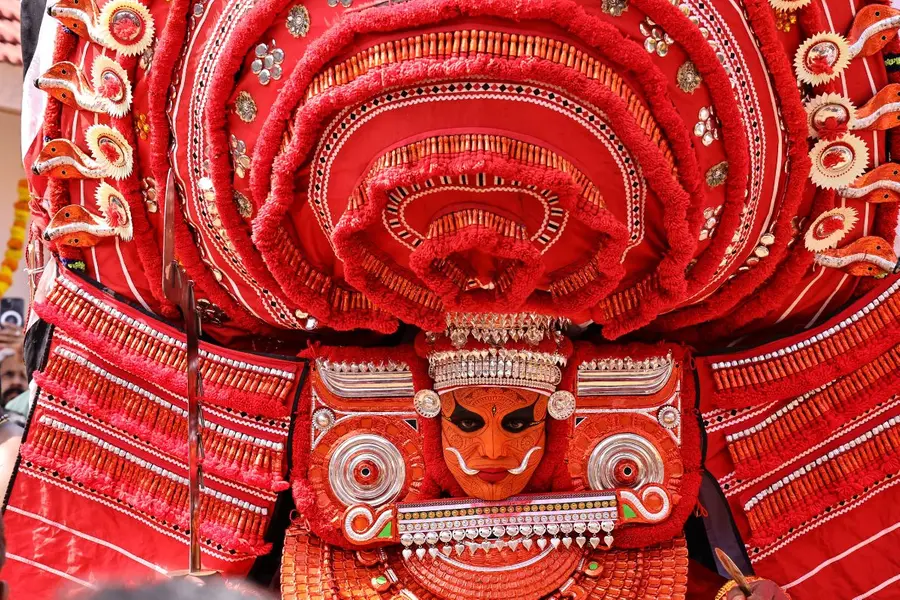
The Theyyam season has dawned once again in northern Kerala, stretching from mid-October through to late May or early June. As sacred Theyyams stir in the secluded sanctuaries of northern villages, a rich cultural ritual is poised to unfold.
Dr. RC Karippath, renowned author of Theyyaprapancham (The World of Theyyam), and celebrated Malayalam writer Dr. Ambikasuthan Mangad, known for his evocative Theyyam stories, join forces to celebrate the living heritage of Theyyam.
Change in Kavus and Rituals
RC Karippath: The unique cultural and spiritual values of Theyyam, Kerala’s ritual art form, must be preserved. The individuality of the Kavus (sacred groves) is gradually being lost. A journey from Mahe, in Kannur, to Kumbala, in Kasaragod, reveals how these sacred spaces have changed.
Theyyam is an evolving tradition performed in every kavu (sacred grove). Once a deity is consecrated in a particular kavu, it cannot manifest in a nearby shrine upon hearing the beat of the chenda (drum). Yet, modern practices have brought undesirable changes to the costumes and overall appearance of the Theyyams. Plastic and artificial materials are used, and less care is now given to traditional facial and upper-body painting.
The Thottampattu, an essential ritual song, is often left incomplete. Sadly, there are times when no one remains to listen. In some places, while the Thottampattu (the ritualistic singing) is being sung in one corner, popular Nadanpattu (folk songs) is being performed in another, reflecting a distressing decline in ritual discipline and reverence.
Ambikasuthan Mangad: In the past, Theyyam performances were surrounded only by devotees. Today, it has increasingly become a spectacle and a form of artistic display, driven largely by social media. The growing popularity of video clips and photographs has eroded the sacred uniqueness of the ritual.
Theyyam should never be showcased in processions or staged performances. It is disheartening to see the art form used to attract tourists or performers pausing to greet them with a “good morning.” Even in films, the rituals and traditions must be faithfully observed.
Those who wish to experience the true spirit and beauty of Theyyam should travel to the sacred groves of North Kerala, where it can still be witnessed in its authentic ritual setting.
Problems Faced by Koladharis (the Theyyam performers)
Ambikasuthan Mangad: Koladharis, the performers who bring Theyyam to life, face severe physical and mental hardships. These issues must be openly discussed. What needs correction should be addressed, and what is unnecessary should be set aside.
Many Koladharis suffer from illnesses, unhealed wounds, and a lack of money for treatment. Each performer enters the ritual space with uncertainty; anything can happen there. Dangerous rituals must be re-examined and, where needed, changed to protect those who risk their lives in devotion.
RC Karippath: The Theyyam season is brief, leaving performers struggling to make a living during the rest of the year. The grievances of Kanaladis, those who perform with or in fire, often go unheard. It must not be forgotten that beneath the divine form of Theyyam is a human being. It is that same person who leaps into the coal pit in devotion.
Special insurance coverage should be provided for Koladharis who risk their lives performing dangerous rituals, donning elaborate costumes and stepping between falling fireballs in acts of faith and tradition.
Religious harmony and social friendship
RC Karippath: Centuries ago, Theyyam nurtured a vast world of religious harmony. Rituals such as 'Perumkaliyattam' and 'Wayanattu Kulavan' Theyyam symbolise gatherings where faith transcends boundaries. The Mappila Theyyams, including 'Ummachi Theyyam' and 'Bappiriyan Theyyam', stand as shining examples of this unity.
This is a land where Muslim brothers greet 'Vishnumoorthi Theyyam' as he visits the mosque carrying rice. The moving call of Vishnumoorthi—“Odapparappe…”, echoes the beauty of interfaith friendship. When Theyyam asks, “Have I not waited five times a day for prayer and fasted without food?”, it conveys a profound message of shared devotion and humanity.
The defeat of 'Pottan Theyyam' is among the most powerful poetic expressions in Malayalam against caste discrimination. The words of Koormal Ezhuthachan, “Even if you kill me, I will shed blood; even if I kill you, you will shed blood”, offer hope for equality and brotherhood.
Theyyam serves as a healing force. When a performer places a hand on the head of someone in grief and says, “ I will stand to cure 96 diseases and 108 ailments,” it brings solace and strength to the heart.
Ambikasuthan Mangad: Theyyam also instils a deep sense of morality in individuals. Layers of ancient history lie hidden within its Thottams and Uriyattams, the songs, speech and performances that accompany the ritual. Works such as the Thottam of 'Pottan Theyyam' deserve a place in the Malayalam poetry syllabus.
The 'Makam Thottams' are particularly striking, offering valuable insights into the language and life of earlier times. They reveal words that gleam like precious gems, connecting the present to the past. The Thottams of defeat echo the cries of those once hurt and oppressed, preserving their voices through rhythm and verse.
Are the rituals being disrupted?
Ambikasuthan Mangad: When the number of spectators dwindles, the Koladhari often shortens the Theyyam rituals. The performer reduces the duration of singing and dancing and removes the Thirumudi (the sacred veil) sooner, diminishing the depth and spirit of the performance itself.
RC Karippath: Theyyam embodies both faith in the divine and the essence of beauty. It should never be regarded as a mere disguise or performance. Within it lies a rich blend of simple yet profound art forms; it is the very heartbeat of the land.
The challenge today is that the devotee and the Theyyam have transformed into a spectator and an artist. When people approach it only as an audience, the Koladhari too begins to treat the rituals as mere formalities.
A ritual, or anusthana, is not a display; it is a continuation of a sacred tradition passed down through generations. If the new generation fails to understand its meaning, Theyyam risks becoming nothing more than a spectacle.
Published: 27 Oct 2025, 02:05 pm IST
Related Topics
Disclaimer: Kindly avoid objectionable, derogatory, unlawful and lewd comments, while responding to reports. Such comments are punishable under cyber laws. Please keep away from personal attacks. The opinions expressed here are the personal opinions of readers and not that of Mathrubhumi.
