
Explore the negative impact of Trump`s tariffs on India`s economy, global trade, and the monetary/fiscal strategies employed by India and the US to navigate these challenges
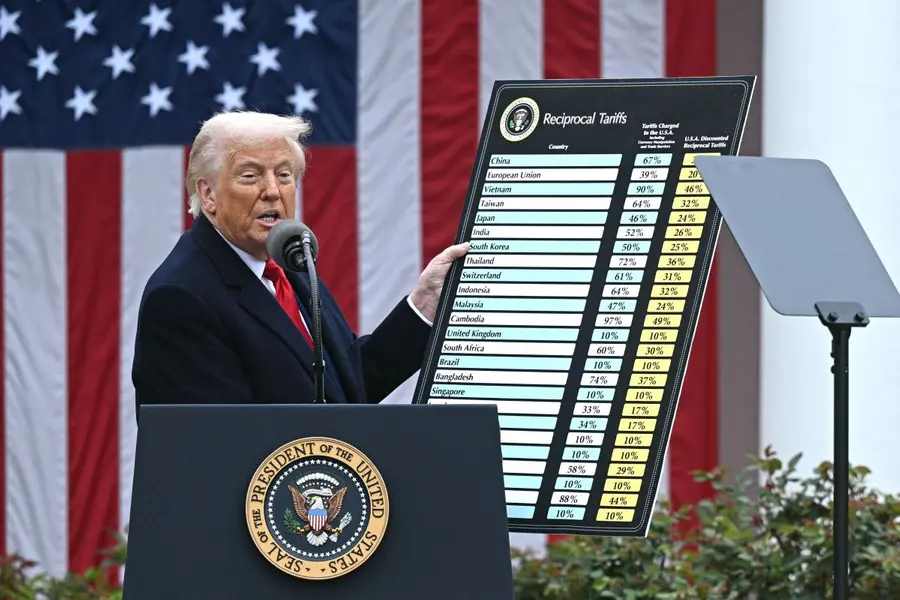
The “Liberation Day” tariffs imposed by President Trump earlier this year have become a pivotal moment in global trade, drawing sharp criticism from economists worldwide. Among the loudest voices is Gita Gopinath, former Chief Economist of the IMF, who has described today, the impact of these tariffs as a “negative scorecard.”
While the stated goal was to revive American manufacturing, reduce trade deficits, and boost government revenues, the reality has been far more complicated and concerning.
The tariffs indeed generated higher revenues for the US government, but these came at the expense of American firms and consumers who faced increased costs. Inflationary pressures, although moderate across the board, were pronounced in everyday household goods like furniture, appliances, and coffee. Importantly, the tariffs have not translated into an improved US trade balance nor a notable revival of domestic manufacturing as promised. Instead, they have acted largely as a tax burden on businesses and consumers, disrupting supply chains without the economic gains envisioned.
From the perspective of trading partners like India, the outlook is even more alarming. The tariffs have escalated trade tensions and increased costs for exporters, especially in key sectors such as textiles, gems, leather, and engineering products. The threat of losing competitiveness in the US market has put significant pressure on India’s export engine, one of the pillars of its economic growth.
Gravity Models of trade: Nearshoring in uncertain times
To understand how economies adjust to such shocks, economists turn to the gravity model of trade, which posits that the volume of trade between two countries is directly proportional to their economic size and inversely proportional to the distance between them. This helps explain why countries close to each other tend to trade more—distance adds transportation costs, risks, and time delays.
In the current geopolitical environment—clouded by tariff wars, sanctions, and trade uncertainties—this gravity principle is reshaping global supply chains. Companies and countries are increasingly adopting “nearshoring” or “friend-shoring” strategies, relocating production closer to home markets or to politically aligned nations. This minimizes risks associated with distant, politically unstable, or adversarial trading partners and creates more resilient, shorter supply chains.
For India, this shift presents both challenges and opportunities. On one hand, tariffs and geopolitical frictions add uncertainty to global trade. On the other, India stands to gain as multinational companies look to diversify supply chains away from traditional hubs like China or the United States. Proximity, alongside political and economic alignment, becomes a critical factor in trade partnerships moving forward.
Monetary responses: Fed and RBI Act to stabilize
In the face of these trade disruptions, monetary authorities have sought ways to mitigate the adverse effects. India’s Reserve Bank of India (RBI) has been active in stabilizing the rupee, which depreciated sharply under the pressure of tariff-induced capital outflows and widening trade deficits. The RBI intervened heavily in the offshore currency markets and cut policy interest rates to support liquidity and encourage lending to vulnerable sectors such as textiles, gem and jewellery, auto components, and MSMEs.
Meanwhile, the US Federal Reserve has been balancing the challenge of containing inflation caused partly by tariffs without choking economic growth. The Fed’s policy approach remains cautious, signaling readiness to adjust rates as inflation signals evolve. Both central banks are playing crucial roles in cushioning the ripple effects of tariffs on inflation, currency volatility, and credit availability.
Fiscal measures: India’s strategic response beyond GST cuts
Fiscal policy forms another key pillar in India’s response to the tariff shocks. The government has moved swiftly to boost domestic demand while addressing export vulnerabilities. One of its most visible moves has been lowering the Goods and Services Tax (GST) on numerous consumer goods, ranging from staples to small vehicles and electronics. These cuts aim to stimulate consumption, a vital driver of India’s growth, especially when exports face headwinds.
However, India is not relying on GST alone. There is a concerted push to diversify export markets to reduce dependence on the US and China. Strengthening trade diplomacy and negotiating favourable terms are also high on the agenda. Additionally, targeted fiscal spending on infrastructure, technology adoption, and skill development is underway to enhance competitiveness in key sectors.
This multifaceted fiscal playbook is designed to sustain growth momentum, preserve employment, and shield the economy from external shocks.
The limits of GST cuts and currency pressures
Despite these measures, GST reductions, while helpful, have significant limitations. They operate primarily on the domestic demand side and do not directly offset the tariff-induced loss of export competitiveness. The sectors most affected by US tariffs—textiles, leather goods, gems, and jewelry—still face price disadvantages abroad, which GST cuts cannot rectify.
Moreover, the rupee has been under sustained pressure, reaching historic lows against the US dollar. This depreciation increases the cost of imports, such as crude oil and electronic components, fueling inflation within India. It also raises costs for heavily indebted companies reliant on foreign currency loans. These factors combine to create a challenging environment where internal demand stimulus alone cannot fully shield the economy.
To conclude, India’s challenge lies in orchestrating monetary, fiscal, and diplomatic tools to sustain growth and protect its trade interests in a volatile global economy.
The unfolding saga offers lessons on economic interconnectedness, the limits of protectionism, and the importance of adaptive strategies built on economic fundamentals and geopolitical realities. India’s resilience in these turbulent times will be measured by how effectively it leverages these lessons to shape a more robust and diversified trade future.
(The author is Professor at National Institute of Public Finance and Policy, India. She is elected as Member of Governing Board of Management of International Institute of Public Finance (IIPF), Munich. She is also affiliated as Research Associate with the Levy Economics Institute of Bard College, New York. She is the pioneer economist working with the Chief Economic Advisor, Ministry of Finance, Government of India, in 2004. She is the author of Fiscal Consolidation, Budget deficits and Macroeconomy) and co-author of the book Social Sector in Decentralised Economy: India in the Era of Globalisation.)
Published: 09 Oct 2025, 02:21 pm IST
Related Topics
Disclaimer: Kindly avoid objectionable, derogatory, unlawful and lewd comments, while responding to reports. Such comments are punishable under cyber laws. Please keep away from personal attacks. The opinions expressed here are the personal opinions of readers and not that of Mathrubhumi.
