
Discover the alarming gap in India`s private schools: adult perceptions vs. student realities. Learn how AI, stress, & teaching quality affect student sync. Click to see findings!
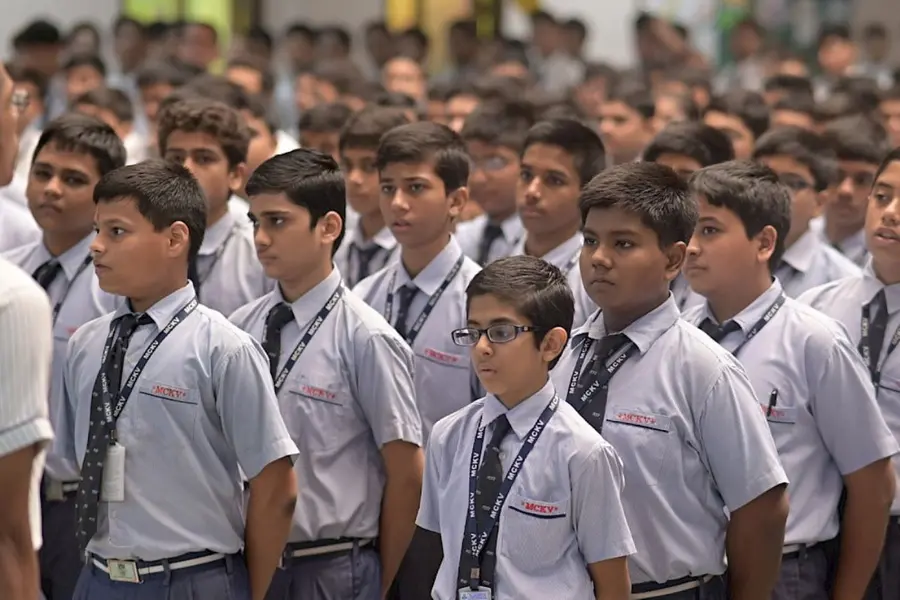
From the insights of more than 3,000 stakeholders, a study shows mismatches around stress, teaching quality, AI adoption, and emotional safety, which call upon schools to reconsider how closely they listen to student realities.
But a quiet, consequential gap is growing inside India's private schools. It is the gap between how adults believe school feels and how students actually experience it. Parents, teachers, and school leaders often take for granted that they understand the rhythms of campus life; new evidence now suggests that students are living a very different reality-one shaped by accelerating technology, emotional pressure, uneven teaching quality, and a growing disconnect between institutional image and everyday experience.
This is the central finding of Jetri's latest national study, The Student Sync Index 2026, a wide-ranging examination of whether India's private K-12 schools are genuinely aligned with the needs, aspirations and lived realities of the students they serve. Drawing on responses from more than 3,000 students, teachers, parents and school leaders across the country, the report introduces the concept of "Student Sync": a measure of how close - or how far apart - adult perceptions are from student experiences.
Now's a good time for the study. Schools in India are moving through times of change at a rapid pace. Artificial Intelligence tools are showing up in classrooms faster than policies can regulate their use. The academic competition is still tight, and stress levels are higher than they have ever been. Parents are more involved and vigilant than before, but it is possible that their idea of what students actually feel and confront is muddled. Against this backdrop, the Student Sync Index gives a data-driven snapshot of modern school life, asking not if schools are performing well on paper-but if they're actually in step with the young people inside them.
The common thread throughout many of the findings, though, is that students are adapting to change faster than the systems created to support them. And it is nowhere as real and impending as in the world of AI and technology. While schools debate guidelines and controls, students are already experimenting, learning and problem-solving using AI tools. It creates a gap in digital fluency not only between students and teachers but within classrooms themselves. Some teachers meaningfully incorporate technology into their classrooms, while others shun or limit it entirely, leading to inconsistent learning experiences that depend much on which classroom a student may find themselves in.
That inconsistency extends beyond technology into teaching quality more broadly. The report highlights a concern voiced time and again by students: learning should not depend so crucially on the individual teacher assigned to a subject. In a time when teaching quality, classroom engagement, and autonomy are highly variable, students experience school less as a cohesive institution and more as a patchwork of disconnected encounters. To students, such unpredictability can lead to the erosion of trust in the system and heighten anxiety around achievement.
Another fault line is around motivation and purpose. Where adults might read academic focus and high marks as indicators of student motivation, the data paint a more fragile picture. Students report chasing marks without a sense of meaning. Academic pressure is relentless, while structured opportunities to explore purpose, curiosity and intrinsic motivation are less consistent. This makes for a culture where achievement is measured relentlessly, but fulfilment is rarely discussed with equal seriousness.
Perhaps one of the most striking areas of misalignment involves that of stress and emotional safety. Parents in the study frequently believe their children are coping well; students report significantly higher levels of stress, emotional fatigue and pressure. This gap is one of visibility: distress is often internalised, masked by routine or dismissed as part of a normal academic life. Schools may have wellness policies on paper-but the day-to-day emotional climate students endure can be more regulated than supportive.
This is an important distinction between safety and regulation. Many schools manage to maintain order, discipline, and structure, but struggle to establish environments in which young people feel emotionally secure enough to show vulnerability. When rules dominate relationships, students might comply yet not feel authentically supported. Over time, this undermines trust and can make it increasingly difficult for schools to identify and respond to more profound well-being needs.
The extracurricular activities, often showcased as part of holistic education, are also put into question. The Student Sync Index asks if the extracurriculars really create agency and leadership, or do they just fill timetables and make school profiles look great? Students question who is truly allowed to lead, create and influence their school lives. According to the data, opportunities for leadership are not always inclusive or empowering as schools assume; sometimes, these might reinforce hierarchy, rather than nurturing initiative.
The study also examines the powerful role of school image, rankings, and board affiliation. Often, parents trust in the institutional reputation to such an extent that they usually believe a strong brand would mean a great student experience. But the report does raise a question: what happens when branding outweighs lived reality? For students, the daily texture of school life—teacher relationships, classroom culture, emotional safety—matters far more than external accolades. When these realities diverge from the school’s public image, frustration and disengagement can follow.
Teachers, too, occupy a complex position inside this ecosystem. While they are central to student experience, the report highlights how isolated teaching practices can undermine collective growth. Too many teachers work mostly in isolation from their colleagues today, with minimal collaboration, feedback, or shared reflection. Professional learning, in turn, becomes individual, rather than systemic, and overall teaching quality becomes hard to lift consistently across a school.
One of the premises underpinning the report's case is that teaching should be akin to a team sport rather than a solo performance. Collaboration, if embedded within school culture, allows teachers to learn from each other, adapt to newer tools such as AI with more confidence, and put their practices in line with student-centred goals shared among them. If left without support, even the most committed educators may not be able to keep pace with shifting student needs.
What makes the Student Sync Index unique is not simply its scope, but its framing. Rather than schools failing or succeeding, it frames alignment as a relational dynamic. Sync improves, drifts, or fractures depending on how attentively schools listen to the voices of students. The data indicate many schools believe themselves to be more in sync than students experience them to be—a gap that grows quietly if left unaddressed.
This misalignment is not born of neglect or indifference. In many cases, it reflects structural inertia. Schools are complex institutions shaped by curricula, examinations, parental expectations, and regulatory frameworks; change is often incremental. Students, by contrast, experience change continuously through technology, social media, cultural shifts, and global uncertainty. Where institutional pace lags behind lived reality, the gap widens.
The release of the Student Sync Index starts a call to action rather than a conclusion. It asks schools to look beyond assumptions and superficial indicators of success to deeper engagement with student experience. Listening to students is not framed as an act of concession, but instead as a strategic necessity in an era where education must evolve if it is to remain relevant.
Importantly, the report does not suggest that schools must abandon academic rigour. Rather, it challenges schools to balance performance with purpose, structure with empathy, and innovation with inclusion. Sync, here, means coherence between what schools declare to value and what students feel daily. As AI adoption accelerates, emotional pressures intensify, and families scrutinise education choices more closely, the cost of misalignment grows. Students who feel unseen or unheard may be compliant outwardly but disengage inwardly; over time, this influences not only well-being but learning outcomes and trust in institutions.
By placing student voice at the centre of its analysis, Jetri's Student Sync Index reframes the conversation about school quality in India. It suggests that the future of education will not solely be decided by rankings, infrastructure updates, or curriculum updates but by how honestly schools are willing to confront the gap between intention and experience. It does so by offering both a mirror and a map. The mirror reflects a school reality that is more complex and uneven than many adults realise; the map points toward a more responsive, humane, and future-ready model of schooling-one where alignment is not assumed, but continuously earned through listening, adaptation, and shared purpose. This is the simple yet tough question with which the Index leaves schools: not about whether they are doing their best, but whether what they are doing really feels right for the students they exist for.
Published: 12 Dec 2025, 02:19 pm IST
Related Topics
Disclaimer: Kindly avoid objectionable, derogatory, unlawful and lewd comments, while responding to reports. Such comments are punishable under cyber laws. Please keep away from personal attacks. The opinions expressed here are the personal opinions of readers and not that of Mathrubhumi.
