
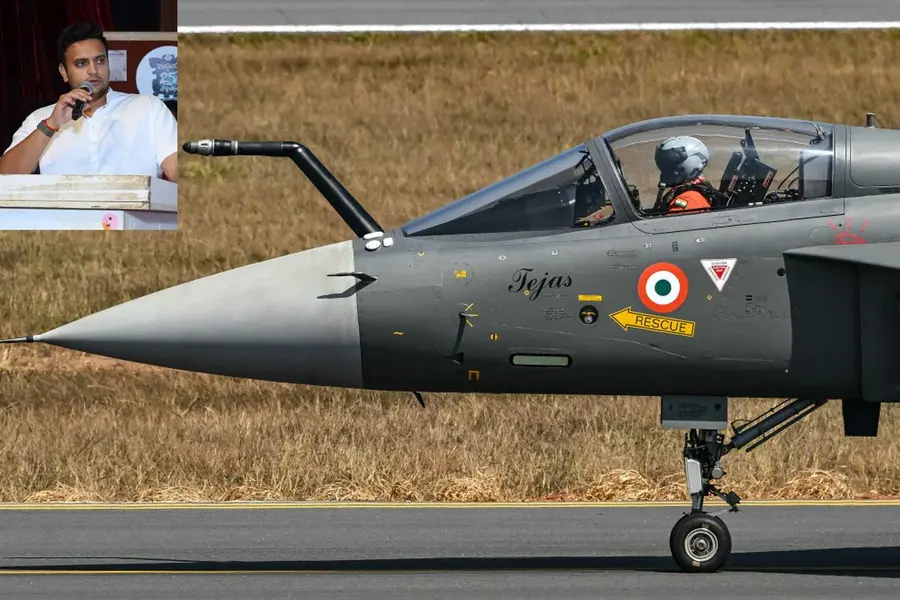
Andhra Pradesh Chief Minister N Chandrababu Naidu’s recent proposal to shift Hindustan Aeronautics Limited’s (HAL) Light Combat Aircraft (LCA) Tejas and Advanced Medium Combat Aircraft (AMCA) production to Andhra Pradesh has stirred controversy. While Naidu’s vision to make Andhra a defence manufacturing hub is laudable, his pitch to relocate HAL’s core operations from Bengaluru – India’s aerospace epicenter – is premature, impractical, and disrespectful to Karnataka’s historic legacy.
As Mysore BJP MP Yaduveer Krishnadatta Chamaraja Wadiyar has emphasized, HAL’s roots lie in the vision of Maharaja HH Dr Jaya Chamaraja Wadiyar, and any attempt to uproot it ignores both history and strategic sense.
Moreover, claims about AMCA production being finalized in Karnataka are inaccurate, as the project received its execution model sanction only on May 27, 2025, with no final decision on production sites.
Truth About HAL’s Origins: Mysore’s vision, not Nehru’s
Karnataka Deputy Chief Minister DK Shivakumar’s claim that HAL was founded by Jawaharlal Nehru is, as Yaduveer Wadiyar stated, “further from the truth.” HAL was established in 1940 --well before independence – through a partnership between American aviation pioneer William D Pawley and Indian industrialist Walchand Hirachand.
The pivotal force was Maharaja HH Dr Jaya Chamaraja Wadiyar, whose Mysore government provided 700 acres of free land in Bengaluru, invested Rs 25 lakh, and offered full support when other princely states like Baroda, Gwalior, and Bhavnagar declined.
On December 23, 1940, Hindustan Aircraft Company was incorporated under the Mysore Companies Act, with a hangar and runway ready in weeks. Yaduveer rightly noted, "Only the Maharaja of Mysore, Dr Jaya Chamaraja Wadiyar agreed” to back this venture, making Bengaluru India’s aerospace hub.
AMCA’s Status: Sanctioned, but no site yet
Contrary to assumptions, AMCA production is not confirmed for Karnataka or any state. On May 27, 2025, Defence Minister Rajnath Singh approved the AMCA programme’s execution model, a step toward developing India’s fifth-generation stealth fighter.
The Aeronautical Development Agency (ADA) in Bengaluru will lead the project with private industry, but production sites remain undecided. The first prototype is expected by 2028-29, with production slated for 2032-33.
Claims that Karnataka is the designated production hub are premature, as are Naidu’s efforts to claim it for Andhra. This uncertainty makes Naidu’s proposal speculative and divisive.
Bengaluru: The logical aerospace hub
Bengaluru is India’s aerospace capital, a legacy built by Maharaja Jaya Chamaraja Wadiyar. HAL’s Tejas production and ADA’s AMCA design work are based here, supported by unmatched technical manpower, research institutions, and supply chains. Karnataka has fueled HAL’s growth, providing land in Tumakuru for a helicopter unit and enabling a Rs 6,500 crore order for 83 Tejas Mk1A aircraft.
Naidu’s suggestion that Karnataka is ‘saturated’ is unfounded – Bengaluru’s ecosystem is primed for expansion. Shifting Tejas or AMCA facilities to Lepakshi, just 70 km away, offers no strategic advantage and risks disrupting HAL’s operations.
As Yaduveer warned, such moves could weaken HAL’s ability to “be the foremost in its sector.”
Naidu’s Pitch: Political and premature
Naidu’s offer of 10,000 acres in Lepakshi for HAL is bold, but pitching to relocate Tejas and AMCA facilities before production sites are finalized is hasty. His office clarified that Andhra isn’t seeking to shift existing units, yet the proposal’s tone sparked alarm in Karnataka. Minister MB Patil correctly stated that no state leader can uproot HAL from Bengaluru.
HAL’s facilities are ecosystems supporting jobs, innovation, and India’s defence readiness, tied to Mysore’s legacy. Naidu’s 23,000-acre defence corridor vision is promising, but it should focus on new units, not competing for unallocated projects like AMCA.
National interest over regional rivalry
India needs to ramp up defence production, with AMCA and Tejas Mk2 as priorities. Karnataka, contributing 65% to India’s aerospace sector, is best positioned to lead, but Andhra can play a complementary role. The Centre should encourage HAL to establish new facilities in Andhra --perhaps for drones or avionics – without disrupting Bengaluru’s ecosystem.
Yaduveer’s call to avoid “misrepresenting facts and glorifying the Nehru/Gandhi family” applies here: political narratives must not overshadow strategic needs.
What needs to be done
1.Honour HAL’s Founders: HAL must recognize Pawley, Walchand, and Maharaja Jaya Chamaraja Wadiyar in its records, celebrating Mysore’s role.
2. Correct Historical Claims: Shivakumar should retract his Nehru statement and acknowledge Mysore’s contribution.
3. Protect Bengaluru’s Role: The Centre must prioritize Karnataka for Tejas and AMCA until production sites are finalized.
4. Avoid Political Narratives: HAL’s legacy should not be twisted for electoral gain.
5. Collaborate with Andhra: Support Andhra’s defence ambitions with new HAL units, not relocated ones.
Yaduveer Wadiyar’s plea to strengthen HAL and honour its true history resonates strongly. Let Bengaluru remain India’s aerospace heart, let Andhra build its future, and let India’s defence soar through collaboration, not competition.
The author is a defence, aerospace & geopolitical analyst based in Bengaluru, Karnataka
Published: 28 May 2025, 07:32 pm IST
Disclaimer: Kindly avoid objectionable, derogatory, unlawful and lewd comments, while responding to reports. Such comments are punishable under cyber laws. Please keep away from personal attacks. The opinions expressed here are the personal opinions of readers and not that of Mathrubhumi.
